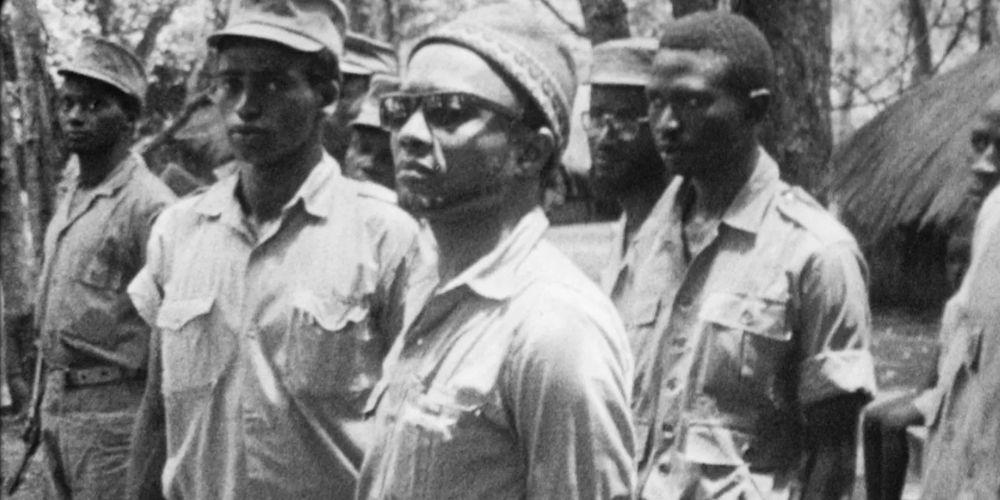
Spanish-born documentarian Miguel Eek’s latest film, simply titled Amílcar, tells the story of the titular revolutionary, engineer, poet, intellectual, and diplomat #Amílcar Cabral# (1924-1973) through readings of his «original letters, poems, and political writings,» with narration by #Nuno Miranda#. The film world-premiered in IDFA’s Envision Competition and won the Award for Outstanding Artistic Contribution in the section.
Cabral, the revolutionary leader
Told chronologically, Amílcar begins with his departure from Cape Verde to Lisbon, equipped with a scholarship to study agronomy. Known later as the founder of the #PAIGC (African Party for the Independence of Guinea and Cape Verde), Cabral is perhaps one of Africa’s lesser-known but extraordinarily influential anti-colonial leaders. Born in Portuguese Guinea (present-day Guinea-Bissau) to Cape Verdean parents, his return to #Africa after his studies shaped who we know him as today.
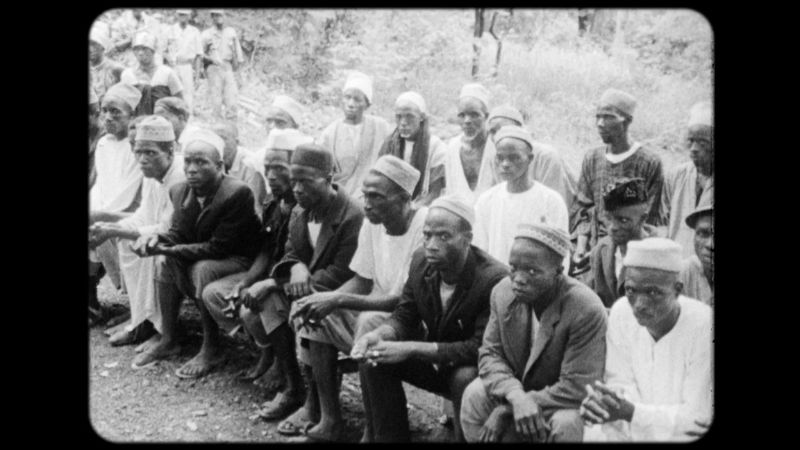
As the viewer learns, he led Portuguese Guinea and Cape Verde to their independence, although he was assassinated by disgruntled members of the PAIGC—just months before Guinea-Bissau formally declared its independence. (Cabral’s half-brother, Luís Cabral, eventually became the President of Guinea-Bissau.) Amílcar predominantly features videos of Cabral himself alongside extensive footage of the era, including newsreels from different countries and other national institutes of film and audiovisual works.
Eek creates an intentionally patchwork portrait of Cabral, using a highly subjective perspective to show his motivations and utmost ability to function as a leader, representing his cause at the #United Nations# and the most well-known #Marxist fora. Notably, Cabral’s PAIGC guerrilla movement sought to establish a socioeconomic foundation for the successful functioning of the independence struggle, which was won, enabling communities to farm and trade amongst themselves, and the film depicts such instances of training.
Cabral, the person
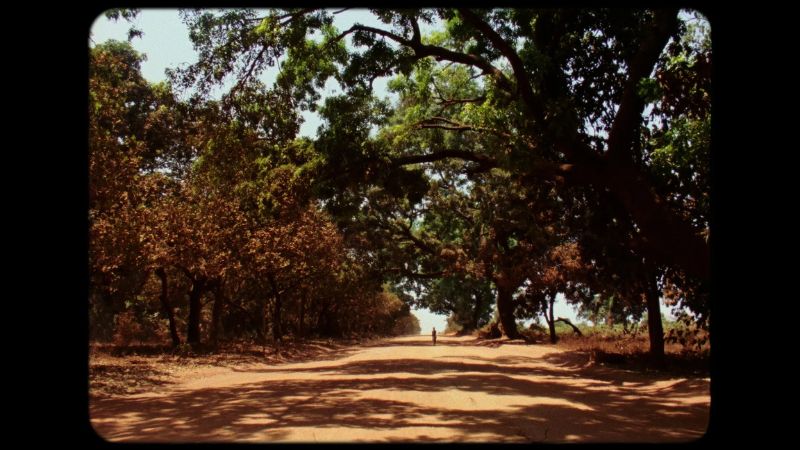
The film relies heavily on Federico Delpero Bejar’s careful editing of historical footage, creating a continuous, fluid sequence over 90 minutes. With Eek’s approach, plenty of questions remain: we are never granted the luxury of extensive exposition, leading to a considerably more pensive film than others that seek to tell of the lives of influential leaders. Occasionally, this makes the archival footage feel too vague or not expressive enough, as much of the b-roll consists of nature and animal footage to fill gaps.
Through Amílcar, we also discover Cabral as a person, including his own emotional and psychological struggles, such as his fear of an elevated ego or «the obsession with grandeur,» concerned about becoming accidentally corrupted by #power. «Today, the war against Portugal begins,» he writes, narrated almost in a nonchalant tone. This unwavering throughline is punctuated only by the counterrevolutionary spirit that tried to contain him: scanned reports documenting his activities, the archives of which are now held by the Portuguese International and State Defense Police (PIDE).