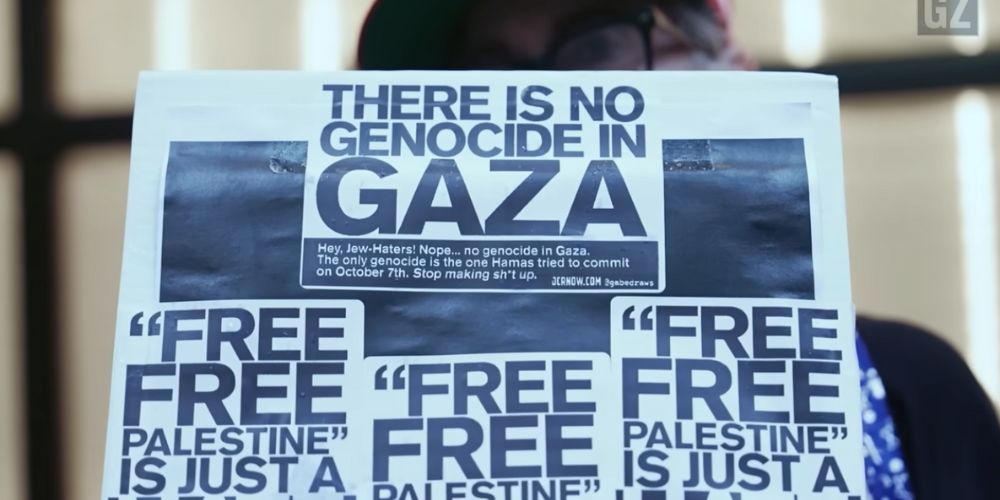
A Propaganda Film by Betar USA offers an accidentally perfect title: it is propaganda, and, by being so transparent about that fact, it exposes the machinery usually kept hidden. This 49-minute documentary, following Betar USA’s activities in 2025, two years after the 7 October events in #Israel, embraces the label its title claims. But in attempting to showcase Jewish strength and defensive activism, the film inadvertently creates something far more revealing: a meticulous documentation of a movement trafficking in #Kahanist ideology, vigilante intimidation, political manipulation, and explicit #Islamophobia. What emerges is not propaganda in service of Jewish safety, but rather evidence of how extremist movements gain institutional legitimacy when connected individuals shield them from accountability.
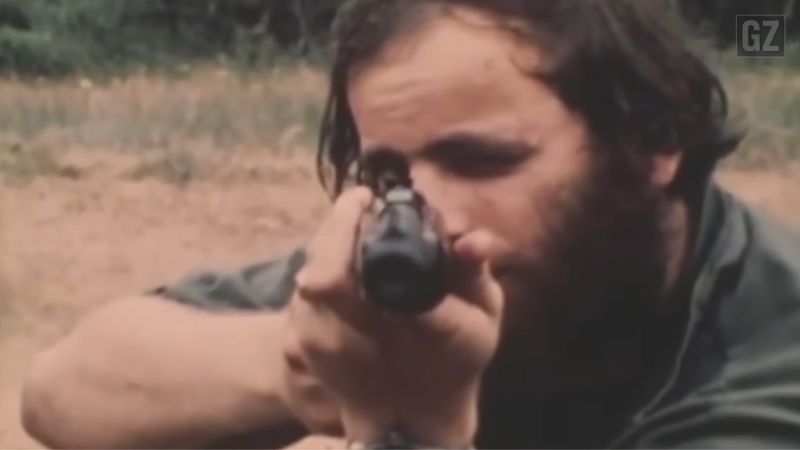
Meir Kahane
Betar USA presents itself as heir to a century-old Zionist legacy, founded by #Ze’ev Jabotinsky# and dedicated to «Jewish pride» and «fighting back.» The film follows chairman Ron Torosyan, a 50-year-old American-Israeli who runs a prominent New York PR firm, and social media director Yoni, an Israeli-American comedian (not funny), as they organise street actions, political fundraisers, and campus interventions. Their stated activities range from distributing «beepers» to perceived #Hamas supporters, to submitting deportation targets to the #Trump administration, to confronting anti-Zionist protesters at universities. Torosyan emphasises repeatedly that Jews must stop being passive, must stand up, must remember the #Holocaust and prevent another one.
Yet beneath this framing of defensive necessity, the film reveals something darker. Extended footage shows Kahane Chai rallies where speakers celebrate #Meir Kahane#, the rabbi whose movement was designated a terrorist organisation for its explicit #racism and violence. «The Arab is a cancer in our midst,» Kahane states in archival footage. «You don’t coexist with a cancer. A cancer you either cut out and throw out or you die.» The film doesn’t present this as historical context to be rejected. Instead, protesters chant «Kahana was right» throughout street actions, and Torosyan himself acknowledges, «At the end of the day, we can’t live with them. It’s painful to say it, but you can’t live with them. Finished. It’s over.» This isn’t fringe nostalgia kept at arm’s length. It’s the organising principle, presented without apology or qualification.
beneath this framing of defensive necessity, the film reveals something darker.
Vigilantism as strategy
The film documents vigilantism as strategy. The «beeper» stunt, referencing the #Mossad operation that killed #Hezbollah operatives, involves harassing random people on New York streets and outside mosques, offering them pagers while filming their reactions. One speaker admits the intent plainly: «Jihadis know when they come out to protest outside the synagogue, they know they’re going to be met. They know it’s going to be dangerous for them too.» Members wear masks during street confrontations, described as «fighting in the streets to protect the Jewish people», just as Israeli soldiers wear masks in #Gaza. Individual protesters are surrounded and told repeatedly, at close range, «You are a terrorist.» In the #West Bank#, Betar members conduct «guard duty» on contested hilltops to prevent Palestinian shepherds from accessing land, framing territorial expansion as protective vigilance. Torosyan declares that «every single dunam» is exactly this kind of battleground.
What makes this particularly significant is not grassroots extremism but institutional power. Torosyan runs Five W, a top-20 independent PR firm in New York with mainstream clients including Jeremy Lin. He claims to be the «biggest donor» to both NYC Mayor Eric Adams and Congressman Ritchie Torres, hosting Adams’ victory party and serving as Torres’ primary fundraiser. The film shows Torres at events, with one speaker noting, «one of my local rabbis calls me Ritchie Torah.» Torosyan discusses involvement in «Project Esther,» a government coordination effort, and mentions that a federal judge ruled Betar «nearly solely responsible» for one deportation case. He frames this proudly: «The only thing America should say to Betar is thank you.» This isn’t fringe activism operating at the margins. It’s coordinated institutional power with access to elected officials and law enforcement.
Open Islamophobia
The Islamophobia throughout is stunning in its openness. At a rally, a speaker declares: «Islam is not a religion. It’s a cult of death and destruction. No Muslims can serve in our government.» Outside a mosque, protesters shout sexually explicit slurs about Mohammed. Torosyan repeatedly describes Muslims collectively as potential terrorist threats: «When you have mass terrorists running around multiple cities, when you have college campuses being decimated by Free Palestine, it doesn’t take a genius to figure out that these people and Western values don’t go together.» The Holocaust is invoked constantly to justify preemptive violence against American Muslims, described as «sleeper cells waiting to awake.» This rhetoric, delivered by a PR professional with mayoral access, faces no apparent institutional consequences.
The film concludes with unintended honesty. After 49 minutes documenting intimidation, political influence, and Kahanist ideology, Torosyan admits: «Are we winning in PR at all? I don’t think we are.» The irony is precise. The film itself demonstrates why the «media war» proves unwinnable. It documents too much, reveals too clearly what lies beneath claims of self-defence and Jewish pride. When propaganda succeeds as documentation, it fails as persuasion. What remains is evidence of how extremist movements operate when wealth and connections provide insulation from accountability, when institutional capture allows explicit racism to masquerade as ethnic advocacy, and when the language of trauma becomes license for violence.
A Propaganda Film by Betar USA can be viewed on YouTube.