This year’s winner of the inaugural #Moldox International Documentary Film Festival for Social Change, a first-feature documentary by Moldavian director Olga Lucovnicova, is an eye-opening journey through diverse realities in which the #Soviet Union#, which officially dissolved in December 1991, is still alive, as #nostalgia after a society with more equality and less #consumerism, but also as ongoing suffering caused by the regime’s brutality towards common people, the so-called human cost of history. Lucovnicova, who won a Golden Bear for the best short film with Nanu Tudor (My Uncle Tudor) at the #Berlinale in 2021, this time focused on her family and relatives as well. She created an engaging and sensitive portrait of the private realities behind grand historical narratives that both contrast the official interpretation, but also represent, in a concentrated form, a joint, collective pain.
No escape
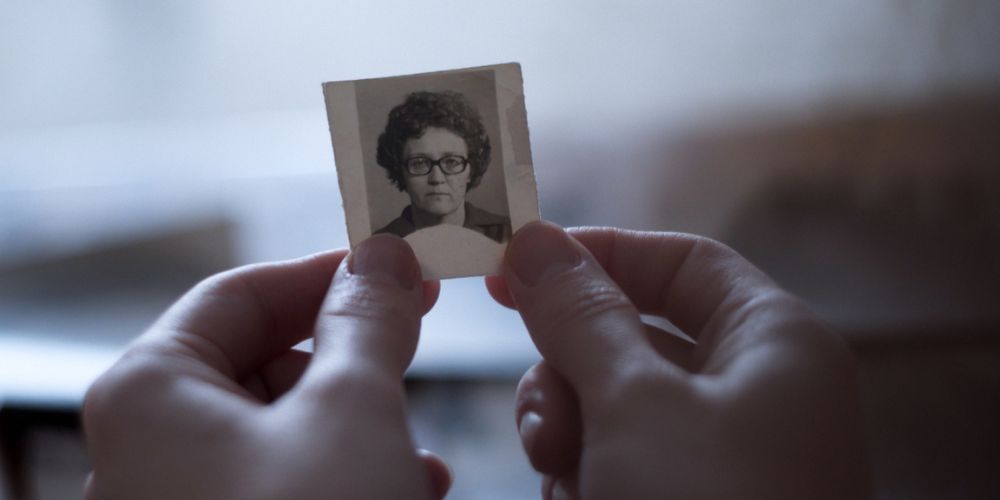
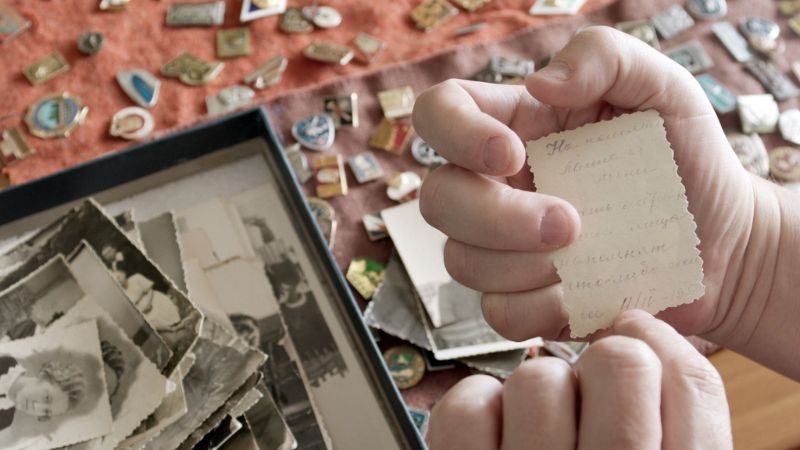
«I don’t understand how he can long for the past while trying to escape it,» the director observes about her father. Indeed. Her father, born about 60 years ago in Asha, a small metallurgical town in the southern Urals, the most eastern part of Europe, moved to Moldova, the most western part of the Soviet Union, after serving in the army. When he could, he transferred to Spain, the westernmost part of Europe, where he lives now. Yet, one fine day, he presented to his daughter Olga a box full of black and white photos of a beautiful Soviet girl, his mother, who in 1989 committed #suicide, and a pack of letters she wrote to him during their correspondence after he moved away from home, and before she decided to end her life. Out of curiosity about the unknown part of her family and feeling somehow obliged to resolve the mystery of the grandmother whose beauty resembles her own, she sets out on a journey to the southern Urals with her father. Back to the city of his childhood, still dominated by the Metallurgical plant where his mother, his stepfather, his younger brother and himself once worked, to the same apartment where he once lived with them, in front of the same window overlooking the yard with the same trees that now are much taller, where his stepfather is celebrating his 80th birthday with both sons and grandchildren, and is mourning his dead wife for more than 30 years.
Her observational approach permits Lucovnicova to maintain the distance.
The victims of history
Her observational approach permits Lucovnicova to maintain the distance. Even if she is eager to meet the expectations of her father, who seems incapable of reading his mother’s letters himself, she is only reading selected parts of these letters aloud in the film. She is aware of her impotence in fixing the broken family ties. After all, she was born after her grandmother’s suicide, in Moldova, and never met any of them before. Through this distance, she manages to place the question about the real source of the tragic destiny that seems to extend from her grandmother to other family members in a broader context. She highlights the individual suffering, failings, and disappointments that remain excluded from grand narratives, and also brings attention to the hidden beauty of their existence, from the glitter of Christmas adobes under the snow, to the cemetery in the woods, from their pride over their victories, their care for physical and intellectual shape, to their desire to love and be loved.
For peace
This distant gaze is also embedded in the camera, which often remains immobile. It is often focused on the symmetry and the frame, underlying that the view offered is one of many. The repetition of the motive of the window – into the warm blue sky of southern Europe, the freezing white fog of the Russian Urals, or the trees in the yard – underlie continuities. But they also point to differences between the easternmost and most Western parts of Europe, as well as within one state, one family, and one #war. On the computer screen, which represents a new, virtual kind of window, we can see that in the #Ukrainian war#, members of the same family fight on both the Russian and the Ukrainian side and are worried they might meet in battle. One can not help but ask, «Would they not agree to peace?»
Last Letters from my Grandma shines a spotlight on the common people. It reminds us that the conflicts and wars will one day become great historical narratives, and that they imply real people. We will never be able to fully understand their joys or their sufferings, but knowing of their existence might raise doubts about whether history is worth its human costs.