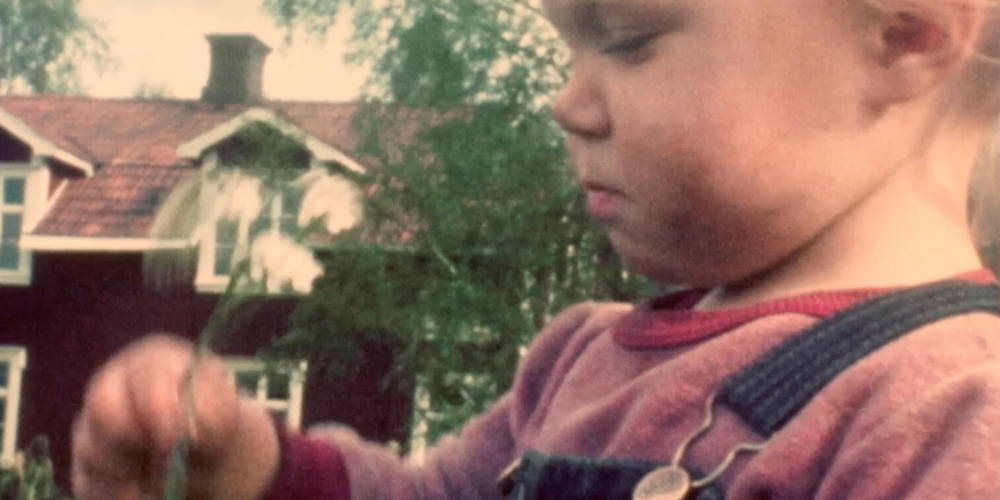
In the unjust and violent world of today, it’s not easy to keep one’s peace of mind. Even more difficult is to talk about it. Shards is a courageous and sincere essay film about the most deeply hidden darkness of this world, the one each of us carries within ourselves. Its author, Sara Broos, a Swedish artist and filmmaker, professional storyteller, film producer, and curator, is known for video installations, short films, and documentaries, and for her unique passion for both writing and filmmaking. Due to her outstanding ability to unite the power of images and words, her film Shards, a single-person narrative about human solitude and a search for meaning in a reality fragmented like the shards of a broken mirror, becomes a magnificent portrait of a possible, sustainable future for our common world.
The Darkness Within
One of the fundamental uncertainties of human existence is that we can’t see into each other’s heads, and, according to Freud’s theory of the unconscious, don’t even know what’s going on in our own heads. Despite Freud’s and other scholars’ efforts, the relationships between our inner life and the world around us remain a mystery to this day. This enigma also seems to be a common thread in Sara Broos’s work, which is often praised for her ability to talk about herself in a way that others find interesting as well. According to the article by Hilde Susan Jaegtnes, published in NYTID, her first three documentary films «have protagonists who turn their gaze inward to understand and endure their own lives». In Shards, Sara Broos speaks about herself not by turning her gaze inward but by carefully observing others. A clear and fascinating example of this approach is the introductory scene, which opens with an aerial shot of the waiting room in the psychiatric emergency department. All white, sterile and empty, while her soft voice-over remembers the people she met there while waiting for her turn: a girl with the cuts on her arms, an elderly man who has locked himself in the bathroom.
In the unjust and violent world of today, it’s not easy to keep one’s peace of mind.
The Eye
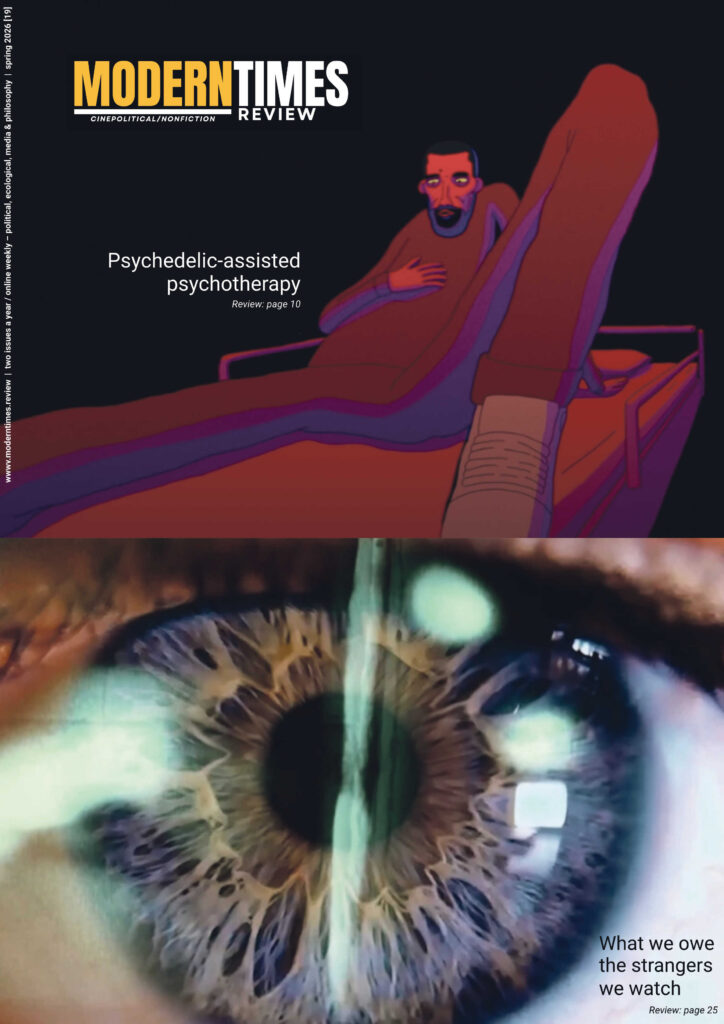
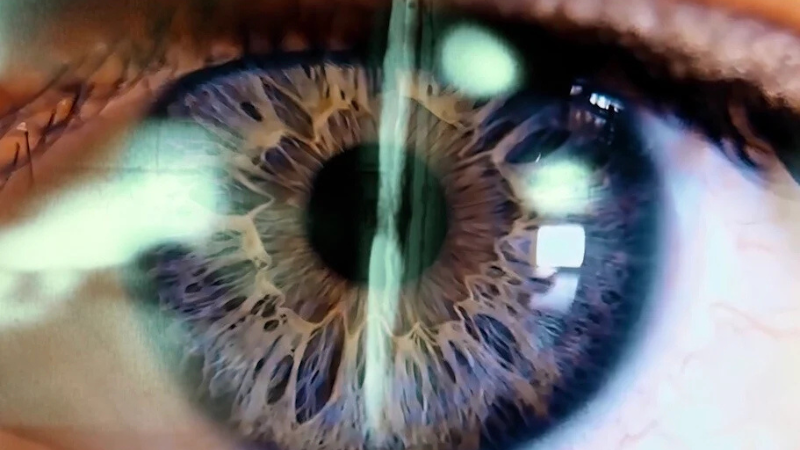
It is, of course, not by chance that she reports about the psychiatrist’s advice to «calm the pace inside» her head by showing, in close-up, an eye with eyelashes carrying traces of makeup. She, the narrator, is also the eye, and observation is her most powerful tool. It is inventive and witty, but most of all, careful observation, attentive and respectful to the people around her, their loves, fears, concerns, and desires. Her fascinating collection of documentary footage stems from various sources, including home movies and videos of her family members, as well as videos she recorded during her teenage travels around the world. Throughout the film, two rhythms intertwine. The fast exchange of shots in multiple expositions, accompanied by found sounds and music, resembling the speed of thoughts in human brain, or the mix of world events, gradually gives place to director’s memories of different people she met, calmly narrated in a form of striking short stories, on the background of distant and still observational shots, such as, for example, the one about the man on the train.
The Force of Empathy
While the director’s voice-over is the only voice we hear in the film, and the shots are mostly of crowds or empty spaces, the Shard is all about other people. They are mostly anonymous, except for the Portuguese writer and poet Fernando Pessoa, who, as Broos observes, sought anonymity during his lifetime but lost it after his death. Pessoa is commonly celebrated for writing under diverse names; Alberto Caeiro, Álvaro de Campos, and Ricardo Reis are only the best-known. Actually, during his life, Pessoa worked under more than 70 pseudonyms, and this, claims Broos, was because he indulged in anonymity. She shares the poets’ love of freedom of imagination and of the ordinary, and, like him, she believes that one can learn something from everyone because life is about affection and empathy.
Despite Freud’s and other scholars’ efforts, the relationships between our inner life and the world around us remain a mystery to this day.
The Courage
The metaphor of shards thus gets a completely different meaning. No longer a metaphor for a fragmented reality, or a permanent cause of tensions and conflicts between individuals holding partial knowledge of the truth, it is a motive for connection: only by learning from as many people as possible can one obtain a larger, more consistent knowledge of the truth. Broos’s observation does not avoid contemporary tragedies, refugees and migrants, war, or plastic at the bottom of the sea. But through her healing process, she reveals another aspect of our being in the world – the importance of learning from others. Those who tell you to take care of your freedom, and also those who courageously remind you to take care of your pain, because it is «the bird that only sings for you». No, it’s not easy to keep the peace of mind today, and talking about this is a political act. Broos’s film shows how the process of healing one’s mind might even lead to healing the world.