Nolwenn Hervé’s The Cord takes place in Maracaibo, Venezuela. In the country, public healthcare has been gutted so badly that bringing a child into the world now means a corridor of delay, shortage, fear, and physical risk. There is no reliable institution waiting at the other end.
Sanctions and shortages
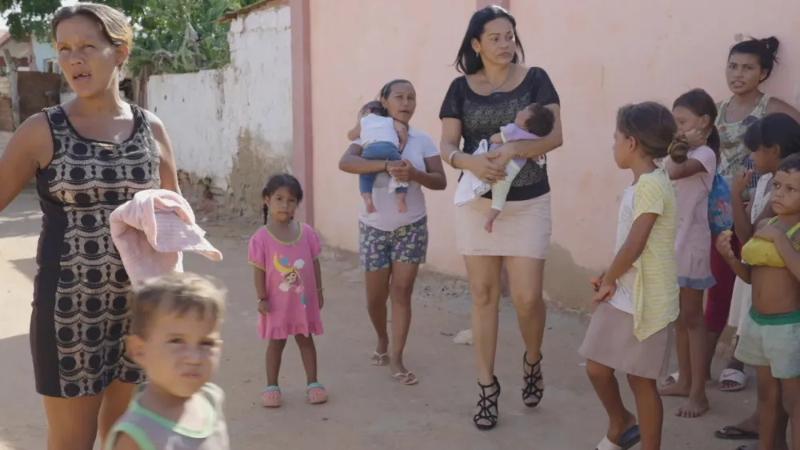
Human Rights Watch reported in its 2026 country chapter that public healthcare facilities in the country continue to lack essential medicines and medical equipment. Shortages of emergency medical supplies reached 36 percent in 2024. Access to contraception remains shaped by poverty. Humanitarian funding has been suspended or reduced in key areas, and overcompliance with U.S. sanctions has further restricted access to essential goods and services. None of this stays at the geopolitical level for long, of course. With relative immediacy, the pressures descend into daily survival, shaping how long a woman waits, how far she must travel, and the pain her body is expected to absorb during childbirth.
There is no reliable institution waiting at the other end.
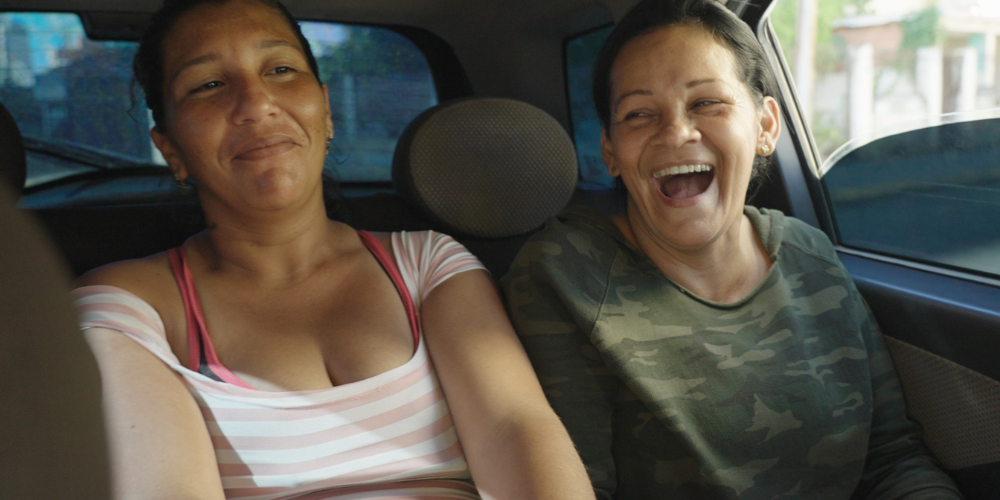
At the centre of The Cord is Carolina, a community worker who helps pregnant women navigate this volatile landscape. Hervé films her without the sentiment that often gathers around figures of grassroots care. Carolina does not appear as some kind of secular saint to be admired at a convenient will. She is a woman doing the necessary groundwork when institutions withdraw from their responsibilities. She drives women to appointments, looks for medicines, argues with systems, and always keeps moving. Carolina’s own story mirrors many of those she is helping, but though undoubtedly traumatised, her determined labour gives both ethical and political weight to the film.
Her cramped car doubles, triples, quadruples (and more) as an ambulance, waiting room, consultation space, corridor, shelter. Women often enter in fear, discomfort, hope, and fatigue, while conversations about sex, birth, danger, and survival unfold along the way. Hervé is very good at this repetition, understanding that just one missed medicine or a reroute says more about institutional failure than any expert talking head.
Ancestral knowledge
It is from these exhausting circuits that the seeds of Carolina’s most radical idea appear: the birth house. A practical dream: it’s a place where women might give birth with safety, continuity, dignity, and some measure of agency over their own bodies. Carolina draws on her grandmother’s animistic spirituality and on Flor, a Wayúu midwife whose work spans Indigenous communities in Venezuela and Colombia. The birth house grows from this seedling of spiritual collective memory. Something the modern, profit-driven «Western» clinic would never know what to do with.
That said, the film remains modest in its scope. A larger field presses at its edges, including a wider map of Indigenous continuity. Yet it’s that closeness that gives The Cord proximity. Hervé refuses spectacle or consolation. She shows a painfully lucid sense that healthcare is never exclusively technical. It is spiritual, territorial, political, and material. In modern times, Venezuela and the United States have forced those realities into merciless visibility.