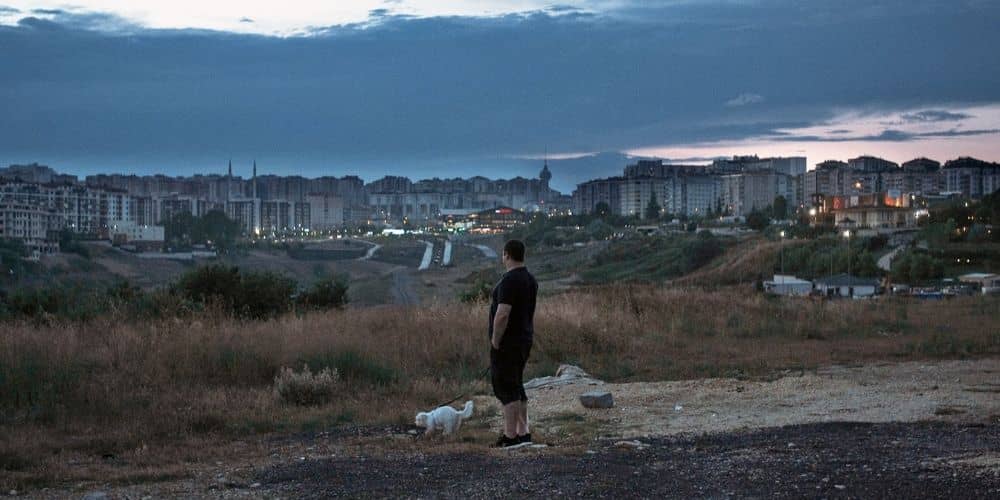
What defines an immigrant’s deportability? Jonas Schaffter’s debut feature-length documentary Arada (which translates as «In Between» from Turkish) throws into relief the contentious question that deportation poses by following three delinquent men of Turkish origin who had for decades claimed Switzerland home.
Vedat
The film opens with a scene of a roundly built man named Vedat, passing through a crowded #Istanbul street. As he makes his way across the street, a curious passerby strikes up a conversation: «Hey, are you famous? […]. Why are they filming you? » «It’s a project», Vedat responds tersely. «Are you the project?» – the passerby persists. «Yes, I am the project».
While Vedat alludes to his participation in Schaffter’s film, the inconspicuous dialogue, which could have easily ended up on the floor of the cutting room, reveals some unsettling truths of an immigrant’s reality, marked by an incessant feeling of being a ‘project’. There is a hope that this ‘project’ is a success that produces a man of #education or vocation, culminating in his naturalisation. Until the ‘project’ is proclaimed a success, however, the #immigrant doesn’t have the luxury of making many mistakes. Every further misstep could bring him back to his supposed homeland against his will, or in the case of the film’s protagonist, his parents’ homeland, a ‘homeland’ that is foreign to him. Having been deported just a few years ago, Vedat – whose «whole life was in Switzerland for 34 years» – still struggles to find a new home in #Turkey. He clings to the Swiss way of life, missing the mentality of «the introvert, quiet Swiss guy» and even «walking in the bad weather».

Duran
Social isolation and uncertainty also punctuate Duran’s life, a Swiss born second-generation immigrant, also known as a ‘secondo’ in Switzerland. Similarly to Vedat, he works as a call agent for a German-speaking company in Istanbul and feels like «at home» if someone speaks Swiss German on the phone. Born and bred in Switzerland, Duran, who is of #Kurdish descent, says he can’t use his real name and has to resort to his Swiss ‘pseudonym’ of Marcel Vögtli in a bid to «make a good impression on the phone» – or so he tells himself. «As soon as I enter the office, I am Marcel Vögtli, and I play the role of Marcel Vögtli», he says as the camera reveals the nameplate on the mailbox reading ‘Vögtli.’
Until the ‘project’ is proclaimed a success, however, the immigrant doesn’t have the luxury of making many mistakes.
When off work, Duran is holed up in a flat that he shares with another deportee before the latter leaves for #Russia to take up a job. The flat is in keeping with Duran’s spirits – disheveled, unsettled and worn out. A mug with a photo of his wife and son adorns a coffee table; alongside sits a receptacle littered with cigarette butts. «My daily routine is always the same. Nothing much changes», he notes with a tinge of hopelessness. Marked by long patches of uncertainty, his life seems to fill with joy, albeit short-lived, when he shares a laugh with his wife and son via a video call or during their rare visits to Istanbul.
Mustafa
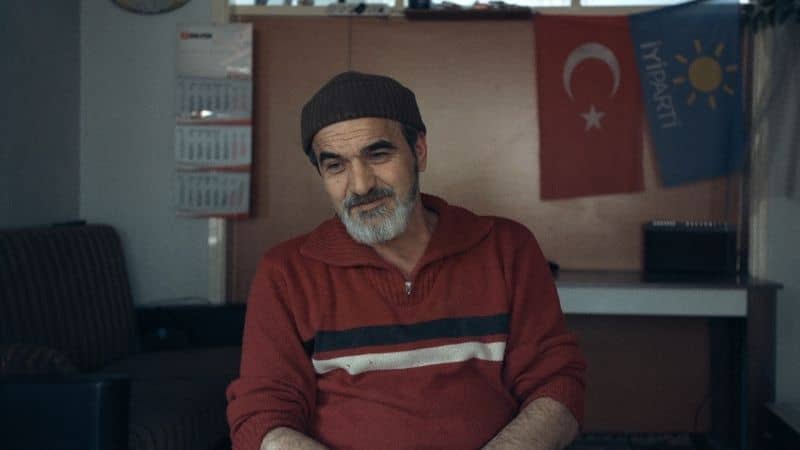
Mustafa, who was expelled in the 1990s, has reconciled himself to life in Turkey. Despite the passing of almost 30 years, he vividly remembers the day of his departure from Switzerland. «1994. 14th of November», he recounts. «My brother-in-law and my brother drove me to the airport. I left Switzerland at 1:15 pm. From the border. Zurich airport». Now in his 50s, he sees no fault of his own in his deportation. His «only problem», he claims, was not being able to say no to others. Whether there is a shed of truth or not, the documentary leaves unexplored. Mustafa now lives in the village of his ancestors, runs a humble farm, and appears to cherish time with his young children. However, the old aches resurface when he speaks of his – now adult – son whom he left behind in Switzerland. “Things aren’t going well with my son at the moment,” laments Mustafa. « When I had a heart attack, he didn’t even call me […]. I don’t know what’s going on in his head. […]. What can I do, if I’m not allowed to go to Switzerland? I won’t call him. He should call me. I’m the father», he says obstinately.
While one may find fault with Mustafa’s stance on fatherhood or failing to take ownership for past mistakes, what is clear is that the psychological toll of deportation is pervasive, disrupting families and shaping a deep-laden sense of ‘not belonging’ among the expellees. The film does not shy away from touching on the men’s criminal conduct in the lead-up to their deportation, running the gamut from drug dealing to breaking and entering to aggravated assault. The gravity of their offences is undeniable; however, Schaffter’s ability to introduce a man – his humanity and fragility – before his crimes is commendable. Ultimately, the discussion of the men’s crimes in the context of deportation also foregrounds a number of pressing questions about our penal system, which we have to address before we start navigating the intricacies of deportation policy: At what point does incarceration fall short as a state’s punitive response to crime? And how do we rehabilitate offenders as members of society as well as ensure their right to family and private life if we separate them from their support systems?