Vladimir Putin’s rubber-stamp parliament proposing a new law to outlaw «child-free propaganda» as his war in #Ukraine chews up and spits out 1,000 young men every day.
Defence ministry adverts promote a vision of exciting outdoor activities that never show the violence of an armed conflict.
We have become used to a world in which the old sacrifice the young to keep themselves in power.
Into the archives
Ville Suhonen’s new documentary, Children of War and Peace, about how Finland desperately turned to its youngest and fittest to beef up its defences against an aggressive neighbour in the 1930s, demonstrates the long history of bending young minds to military needs.
Delving deeply into the archives, Suhonen excavates fascinating footage of the key characters that promoted visions of glory and patriotic sacrifice to Finland’s children in the years following the country’s declaration of independence in 1917.
Long under the heel of Tsarist #Russia – and before that, #Sweden – the leaders of Finland’s fragile new democracy understood how vulnerable the country was. War hero General Carl Gustaf Mannerheim exemplified the view that at 15, a boy was ready to become a soldier, and politicians, sociologists and journalists queued up to amplify the message.
We have become used to a world in which the old sacrifice the young to keep themselves in power.
The Mannerheim League
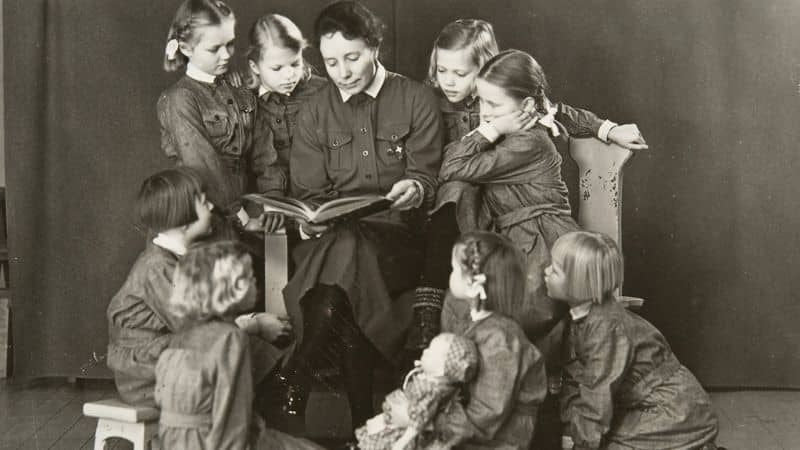
The #Mannerheim League# was established to ensure Finnish mothers reared healthy children with free #healthcare and regular check-ups. But behind the positive social benefits, the discrete message was that national defence needed a population prepared for war. Public information films screened at all cinemas in 1929 declared that «wars are now wars of nations versus nations – and preparation must begin at school.»
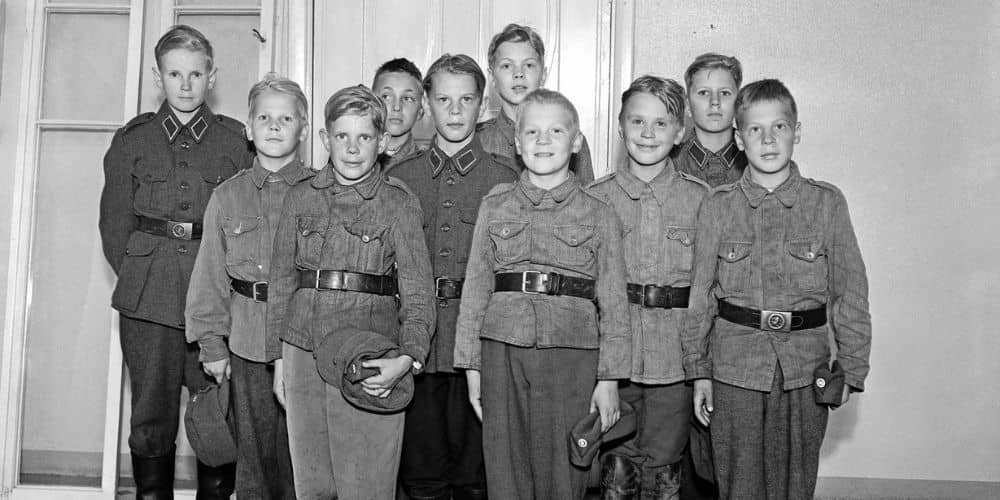
Sporting activities developed a military hue, with boys practising throwing dummy hand grenades and jolly military-themed board games heavily promoted.
Lauri ‘Tahko’ Pikhala, a journalist Suhonen dubs an «influencer» for his key role in encouraging a new culture of militarised sports for the young, declared: «Sporting boys who get used to exercising to the last drop of sweat for the blue and white flag will grow into men who want and can sacrifice their last drop of blood at a high price for their own nation when it is faced with peril.»
In 1934, Elias Simojoki, an ordained minister and member of parliament, urged that schoolchildren be given weapons training.
One of the key messages pushed to the young was, «You only need to believe, obey, and fight.»
A fervent anti-Bolshevik, Simojoki was also involved in the #fascist organisations that sprung up in Finland during the inter-war years. Simojoki had fought during Finland’s struggle for independence and had no compunction about returning to the front, albeit as a chaplain. He was killed while on active service against the Soviets in January 1940.
Although the director sticks with the archive material – much of it beautifully produced, reflecting Finnish technological expertise at a time when it remained an overwhelmingly rural society – and does not attempt to draw any parallels with today’s world, no one will miss the cues to current anxieties. A teenage girl writes in her diary in 1939 that war is coming – noting a game where storm clouds seen advancing from the east are a sure sign of conflict. In a Europe where it is still those closest to Russia, which have experience of Russian occupation and war – Finland, the Baltic states, Poland and others – that are the most strident in warning that we must prepare for war with #Moscow one day.
There may seem little current appetite in most European capitals for encouraging a more bellicose attitude among the young, but Suhonen’s warning from the past suggests that though at times quaint, the views of Finnish thinkers a century ago may bear examination today.
Elsa Enäjärvi-Havaio, a folklore scholar and media personality, declared after Finland’s ‘honourable’ defeat in February 1940—Moscow forced it to cede 11% of its territory to the USSR—that Finland’s population was too small to defend itself and that the country could support 15 million and double the size of its army.
A mother of five, she suggested six as an ideal number of children for each family.
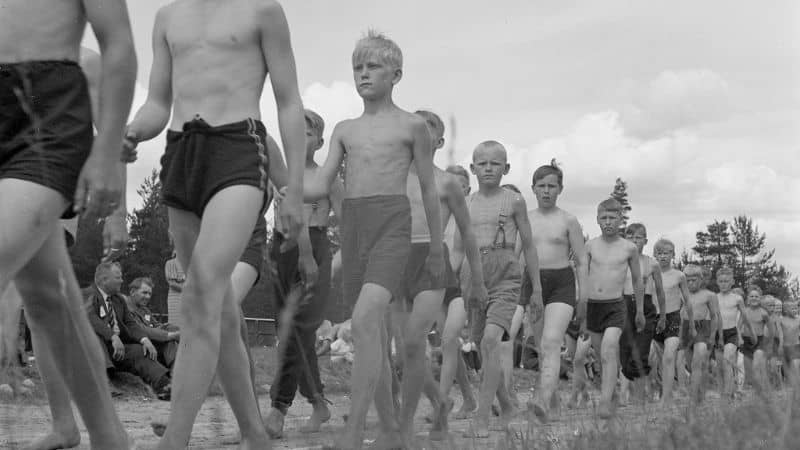
War approaching
As war with Russia approached, Finnish media became a ubiquitous tool of influence: scenes of young men skiing at a winter camp in Karelia were accompanied by statements such as – «plenty of young killers here.»
That the years of #propaganda have an effect seems unquestionable. Hugely outnumbered by the #Red Army#, superior tactics and better climate adaptation and equipment enabled Finland’s tiny army to hold the Russians at bay for three months, inflicting massive casualties on the invaders. (I’ve seen the evidence of this myself on a visit some years ago to a Russian military base in Karelia – territory that was once Finnish – where the remains of the massive fortifications of Finland’s old ‘Mannerheim Line’ can still be seen, along with piles of rusting helmets, weapons and other debris.)
As positive as Finland’s resolution was during the #Winter War#, Children of War and Peace reminds us that, as Allies of #Nazi Germany during the #Continuation War# of 1941-44 against the Soviets, Finland also provided thousands of Aryan recruits to the #SS – which took the healthiest young men 17-25 with the best shaped ‘Aryan heads’ and preferably from the Swedish speaking population (considered more Aryan) – for its nefarious service.
Whether nations under threat from aggressive neighbours really have any other choice but to turn to the young for their defence remains a valid question.
‘Children of War and Peace’ screens its Czech Premiere as part of the 2024 Ji.hlava IDFF Testimonies section