New Zealand’s Oscar-qualifying Doc Edge Festival returns for its 21st edition. Across 75 films, 12 immersive projects, an industry conference, and its awards ceremony, the festival moves between war zones, courtrooms, endangered ecosystems, AI intimacy, intergenerational memory, feminist revolt, and the unstable border between journalism and survival.
Running in Auckland from 24 June to 12 July, Wellington from 15 to 26 July, Christchurch from 31 July to 2 August, and nationwide online through its Virtual Cinema from 27 July to 10 August, Doc Edge 2026 continues to operate as one of the Asia-Pacific region’s major documentary platforms.
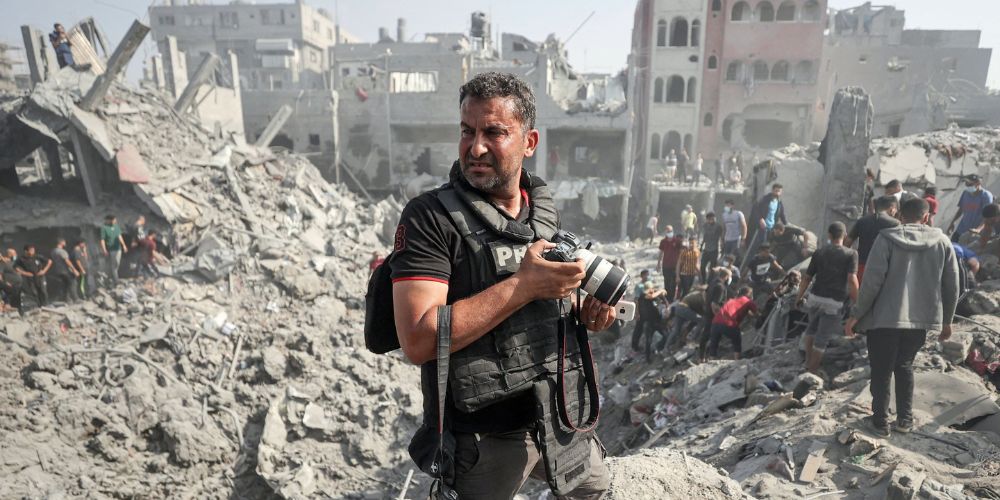
That tension between witnessing and access sits at the centre of this year’s selection. Hélène Lam Trong’s Inside Gaza follows AFP journalists documenting a war largely closed to the international press, bringing the act of field reporting into direct collision with the need to stay alive
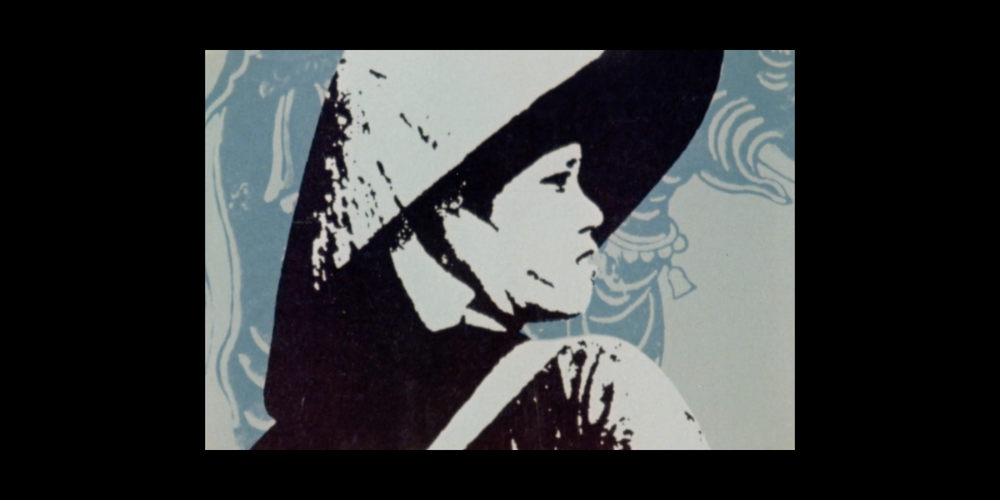
Raha Shirazi’s A War on Women extends that urgency through the history of Iranian feminist resistance. Framed around the aftermath of Mahsa Amini’s death in morality police custody, the film looks beyond the immediate shock of 2022 to trace a struggle shaped by imprisonment, exile, archival memory, and the refusal of women to disappear from public life.
Doc Edge 2026 also gives space to films in which political history is filtered through the intimate afterlife of family. Revolution’s Daughter, directed by Thaddeus D. Matula, follows Alina Fernández, who grew up in Havana without knowing that Fidel Castro was her father.
The New Zealand selections give the festival an especially grounded local force. Kim Webby and Michael Jonathan’s Unlikely Kin, a world premiere, follows elder Hori Parata and his son Te Kaurinui as they practise Māori-led conservation through whale harvesting, traditional medicine, kauri dieback treatment, and the protection of endangered species.
That attention to kinship beyond the human is one of the most compelling through-lines in the programme. It sits alongside films such as Let Our Mountains Live, which follows Sámi reindeer herders after a Supreme Court victory against Europe’s largest wind farm, and Ceremony, which begins from Nuxalk Radio in Bella Coola and moves toward the buried histories surrounding the disappearance of the ooligan run.
Elsewhere, the programme turns toward technology and the new emotional economies of artificial life. Chouwa Liang’s Replica follows young Chinese women turning to AI companions in search of connection, while the immersive project BrainRot Revolution transforms internet collapse into a large-screen, body-controlled game in which dancing accelerates the breakdown of the model.
The immersive strand, presented with the World Press Photo 2026 exhibition, is one of the places where Doc Edge most clearly expands the meaning of documentary. A Long Goodbye, by Kate Voet and Victor Maes, places the viewer in the body of Ida, a 72-year-old pianist living with dementia, reconstructing memory through objects, sound, and the fading architecture of an apartment. It is documentary less as explanation than as inhabitation, asking what happens when knowledge is spatial, sensory, and unstable.
The programme’s more public-facing titles carry their own gravitational pull. Rory Kennedy’s The Trial of Alec Baldwin revisits the fatal shooting on the set of *Rust* through questions of celebrity, accountability, and spectacle. Sharon Liese’s Seized examines the police raid on the Marion County Record in Kansas and the death of its 98-year-old co-owner, placing local journalism inside a wider crisis of state power and press freedom. Elon Musk Unveiled: The Tesla Experiment turns toward whistleblowers, former employees, and victims to interrogate the mythology around one of the most visible figures in contemporary capitalism.
Yet Doc Edge 2026 does not rely solely on crisis. Royd Tolkien, Drew Cullingham, and Robert Cavanah’s There’s a Hole in My Bucket, narrated by Benedict Cumberbatch, follows Tolkien after the death of his brother Mike from Motor Neurone Disease, using a 50-challenge bucket list as a structure for grief, mischief, and movement.
With its industry conference in Auckland from 29 June to 1 July, Doc Edge also frames documentary as an ecosystem. Filmmakers, distributors, and industry guests gather around a programme that insists on documentary’s many current forms: theatrical film, investigative journalism, Indigenous knowledge, immersive media, activist memory, and the contested public record.
Find more information and the complete Doc Edge 2026 programme – HERE