Inconvenient Films (Nepatogus kinas), Lithuania’s international human rights documentary festival, marks its twentieth edition this October under the theme «Moved By Cinema: 20 Years On». Running 5 to 25 October across cinemas in Vilnius, Kaunas, Panevėžys, Klaipėda and Alytus, alongside hundreds of libraries and an online programme, the anniversary edition was shaped by a question the festival put to its own audience, which films from two decades of screenings had stayed with them longest.
«Cinema has power» said festival director Gediminas Andriukaitis. «Sometimes films won’t let you sleep, they stay in your mind, they raise questions, they make you talk or even change». Programme director Eva Sinicaitė said the responses that came back were more personal than expected, with viewers tracing a shift in their own lives back to a single screening.
The resulting retrospective strand, 20 Years of Inconvenient Films, revisits titles that provoked the strongest reaction. A documentary on Tallinn’s contested Bronze Soldier monument runs alongside a film following a gender transition; a record of century-old trees uprooted for a private garden sits near an audio study of the Amazon rainforest. The festival is also returning two films it credits with reshaping documentary form, Joshua Oppenheimer’s The Act of Killing and Emad Burnat and Guy Davidi’s 5 Broken Cameras. Jennie Livingston’s Paris is Burning, a chronicle of 1980s New York ballroom culture, screens in a Lithuanian cinema for the first time ever
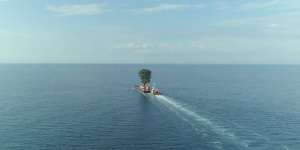
Staff shared their own picks ahead of the festival. Sinicaitė named Imago, Déni Oumar Pitsaev’s debut, praising its surreal camerawork and its handling of memory and trauma; the film won two prizes at Cannes. Impact programme coordinator Monika Guliakaitė-Danisevičienė recommended Confession’s of a Swedish Man, in which director Hampus Linder joins a conservative Swedish men’s camp and finds no settled answer to what masculinity is meant to be. Programmer Rugilė Pranculytė pointed to Heat, filmed in the sweltering Persian Gulf, and to Cuba and Alaska, which follows two war medics in Ukraine as they balance evacuations with conversations about fashion and art.
Eight Lithuanian films are featured this year, including a documentary on Ales Bialiatski, often described as the region’s Nelson Mandela. Also, in collaboration with Polish filmmakers, December, covers the migrant crisis on the Belarusian border. A new competitive strand for student short films joins the programme for the first time.
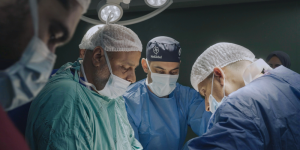
Elsewhere, the programme Blue Yellow tracks the war in Ukraine through medics fighting daily horror with humour, while Land of Palestine follows American doctors confronting the situation in Gaza.
The full programme is online at nepatoguskinas.lt.