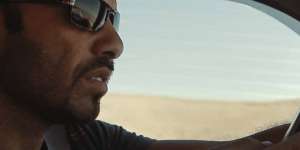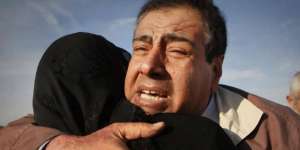
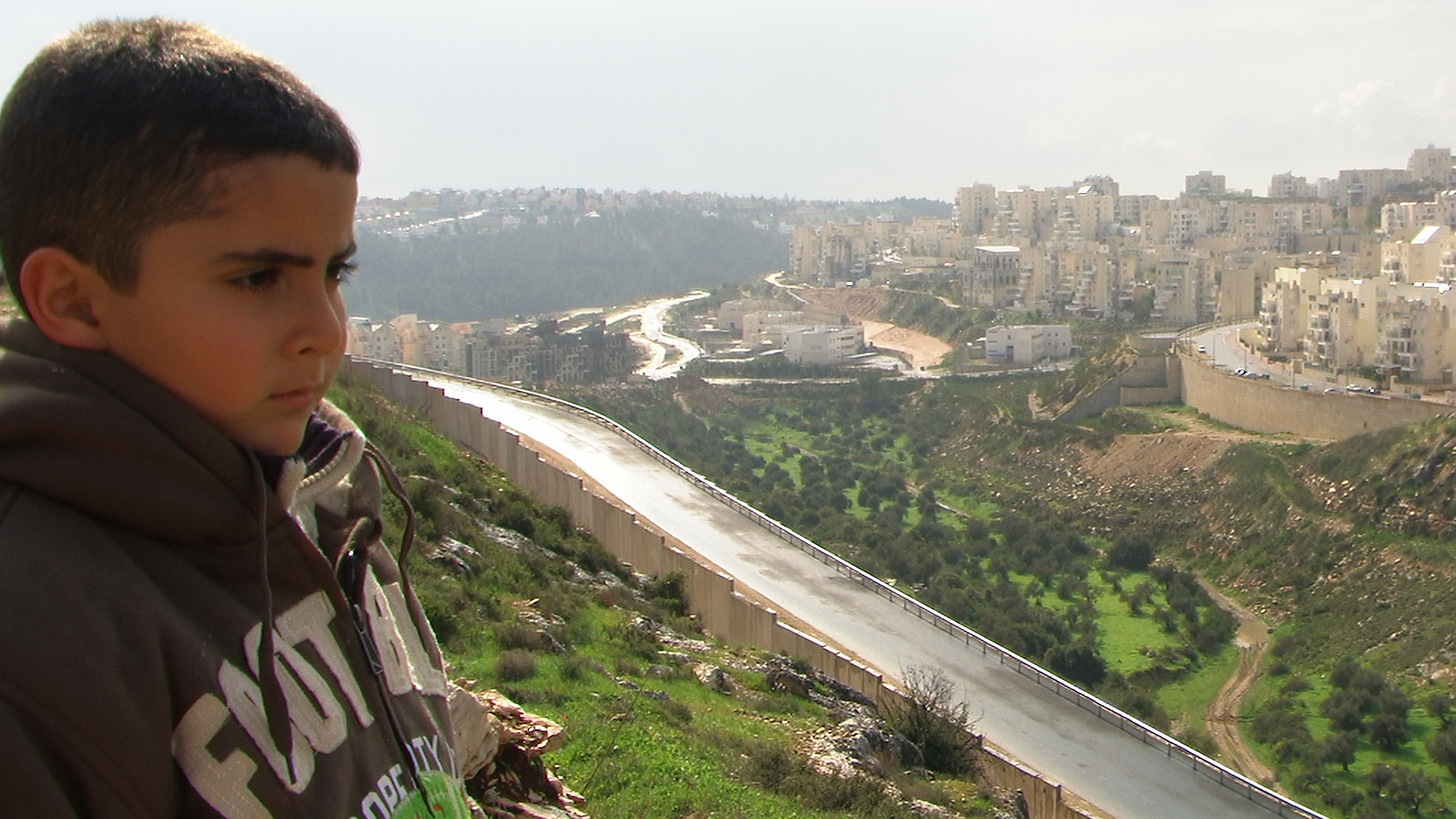
Five broken cameras—and each one has a powerful tale to tell. Embedded in the bullet-ridden remains of digital technology is the story of Emad Burnat, a farmer from the Palestinian village of Bil’in, which famously chose nonviolent resistance when the Israeli army encroached upon its land to make room for Jewish colonists. Emad buys his first camera in 2005 to document the birth of his fourth son, Gibreel. Over the course of the film, he becomes the peaceful archivist of an escalating struggle as olive trees are bulldozed, lives are lost, and a wall is built to segregate burgeoning Israeli settlements.
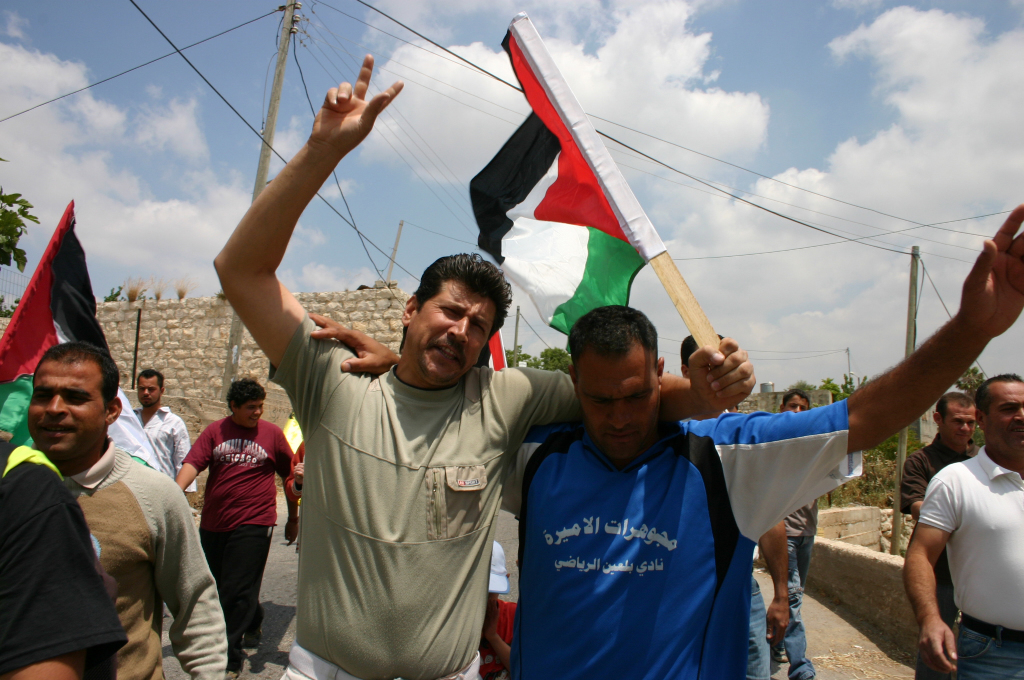
Here olive trees are removed from the Palestinian territories and replaced with Israeli concrete buildings. Here daily confrontations between stone-throwing Palestinians and heavily armed Israeli soldiers take place. And here is Emad with his camera which he stubbornly continues to leave on. That is until the camera is smashed by bullets. And it is often smashed. In fact, five times during the five years, the movie takes place. But Emad is tireless. He gets a new camera from a friend in town or he saves up by himself to be able to afford yet another camera. And all the time he lets the cameras capture life in the area. Even when Emad’s own brother gets arrested and dragged along by the Israeli soldiers Emad decides not to run after the soldiers and assist his brother. Instead he keeps on filming and captures an astonishing scene, and by doing so clearly illustrates that filming can also be an activist action that has an even greater impact than the act of interfering in the given situation.
At the same time Emad’s mother thinks of her son as a hero when he is risking his life to record footage. The fight will never stop. And the camera has several roles in this context. Five Broken Cameras is the camera as an observer. The camera as an activist. The camera as facilitator of more protest. And finally the camera as an almost divine protector; one of Emad’s cameras actually saves his life and takes the bullet, which would otherwise have ended up in Emad’s body. In a different situation, when Emad is knocked unconscious only to wake up again after 20 days, tragicomically he has to pay the hospital bill in Israel himself since the Palestinian Authority does not believe his injuries are related to the resistance struggle against Israel!
Five Broken Cameras is however not a film without problems. In long sequences I have difficulties with its sentimental tone. To illustrate this conflict will easily become a David and Goliath story about how the heroic and hard-working everyday Palestinian protests non-violently against a heavily armed, vicious and ‘trigger happy’ superior force. The banal dichotomy stands in the way of a more sophisticated approach that could have included a larger political context and thus created a better understanding of the conflict.