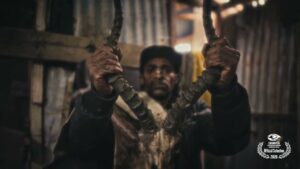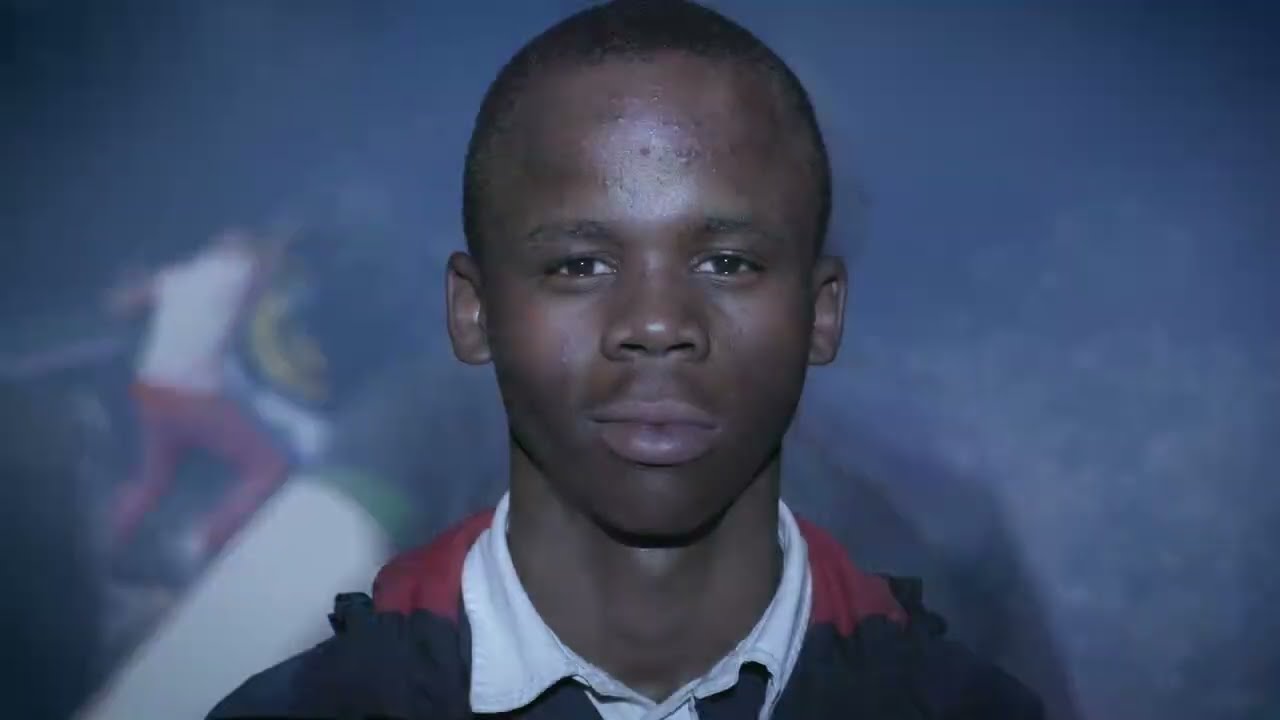
FOSTA stems from Southern African Slang to mean to force things to happen. Thulani Headman baptised himself with the moniker to reintegrate into his community after serving his prison sentence for gang-related activity. His name drives a fulfilling prophecy of change – a forceful process to change a mindset. From convict to reformed citizen, he is changing narratives in his community and defying the music industry by decentralising it from Johannesburg to his home in the Cape township of Langa.

The road to change
The road to change starts in prison, where he meets Marius Boaden, the head of Pollsmoor Prison Broadcasting Service. Boaden had set up a studio where he had begun training inmates in DJ skills. Working his way from being a cleaner, Thulani convinces Boaden to join the other volunteers after demonstrating his skills on the piano. Boaden’s initiative bears fruit through Thulani’s mission to disrupt the music industry in Cape Town. This proves to be an especially uphill task as the music scene is gatekept by promoters who stifle Black artists in favour of artists catering to a White audience. A continent away is a prominent club promoter in the world’s party capital, Ibiza. Valentino Barrioseta is trying to find meaning in music outside of the consumerist culture that has taken over the scene. These two meet when Valentino is introduced to him through a township guide, and from their connection, an initiative called Bridges for Music is born. The efforts of this initiative offer exposure to young rising talent and role models for the future of their industry. The crowning jewel of this is the Music school set up in the township.
What seems like a simple exploration of narrative change within a community on the surface exposes a layered conversation about masculinity. This is explored through role models. At first glance, there are hardly any women in sight, and one might argue that Brenda Fassie, a musical icon who hails from the very Langa township, is reduced to a footnote in this journey. However, if you squint, the mentorship crisis stares right back. Evidently, the documentary focuses on the young men who are likely to join gangs that are associated with the townships and benefit from meaningful mentorship.
Music as a universal anchor that engages our limbic brain serves as an excellent vehicle that helps narratives travel.
Life’s ironies
Thulani, as the key mentor, understands the value of collective effort in an attempt at narrative change. It is also the central conflict for Thulani, who, in an effort to disrupt the music scene, is weary of the kind of partnership Valentino offers. His inhibitions set up scenes of life’s ironies that director Eldon Van Eswegen portrays wonderfully. Valentino talks about consumerism while shopping, and my personal favourite, how Thulani and Valentino make a connection through slum tourism. Such contrast articulates the controversies around these tours, which often come off as a poverty spectacle. Likewise, Thulani’s background in Langa township makes him doubtful of such philanthropy. This bit in the storytelling shows us Thulani’s attachment to the project. His sober approach guides us through a realistic process in the growth of their partnership.
Through Valentino’s networks and Thulani’s connections with his community, their partnership offers exposure to its beneficiaries. Their wonder as they discover other parts of the world and the thrill of experiencing premier music events and megastars is a testament to this fact. On a grassroots level, such an experience can change mindsets, allowing the person to expand their imagination beyond their present realities.
FOSTA excels by showing its audience what the process of rehabilitating a person or a place’s image can be. Music as a universal anchor that engages our limbic brain serves as an excellent vehicle that helps narratives travel. Thulani transforms into a role model for his community, most notably through his mentee, Siphe Fassie. To answer the question posed in this review’s opening statement, rehabilitation is a form of narrative change achieved through second chances and meaningful partnerships. Rehabilitation also requires «fosta» – taking the initiative to make things happen.
Economic impact
While the impact story is about nurturing talent, we cannot ignore the economic impact such cultural initiatives have. The setting is in a township associated with poverty. It is this poverty that drives the youth into criminal activity as a means of survival. Poverty also creates stigma that locks out a lot of youth from opportunities, Boaden serving as an example of this idea when he snubs Thulani’s claims to a musical family. I would have liked to see an aspect of creative entrepreneurship brought out to round it out. How would this new talent make money from their music? And most importantly, how is the cultural IP protected?
Overall, FOSTA leaves you with a different perception of redemption. Thulani can gain trust with his community, and Valentino can find fulfilment once more in music. With the EDM scene gaining traction on the continent, I look forward to seeing a Bridges for Music graduate at the next EDM and AfroHouse lineup in my city.
This review emanates from the Talent Press programme, an initiative of Talents Durban in collaboration with the Durban FilmMart Institute and FIPRESCI. The opinions expressed in this article are those of the author (Michelle Abuti) and cannot be considered as constituting an official position of the organisers.