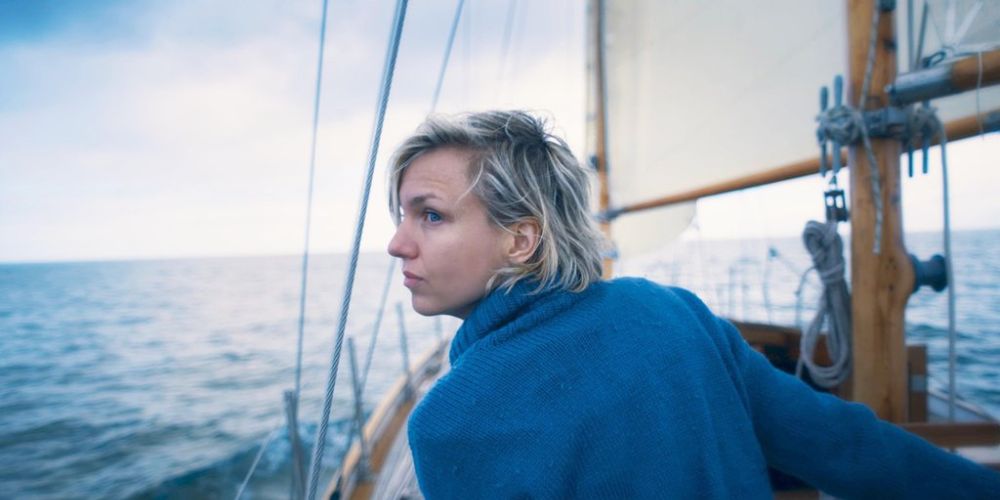
Virginia Tangvald’s haunting documentary Ghosts of the Sea is a deeply personal investigation, an elegy, and a reclamation of narrative. With poetic intensity and courageous honesty, Tangvald pieces together the myth and truth of her father and brother, both lost at sea, in pursuit of an uncompromising idea of freedom. What begins as a daughter’s search for answers becomes a reckoning with family, silence, and the price paid by those who followed one man’s dream.
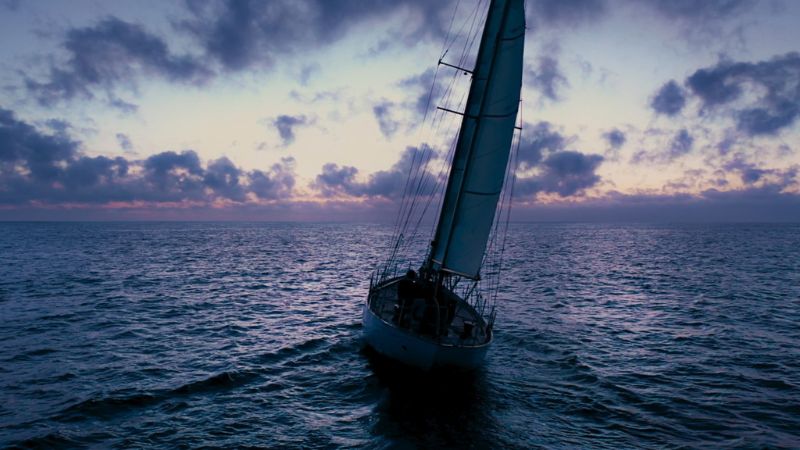
In pursuit of the adventurer
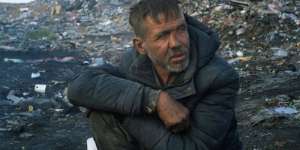
The film centres on Tangvald’s attempt to understand the fate of her half-brother, Thomas, who disappeared ten years earlier in bad weather. The tragedy mirrored that of their father, Peter (Per) Tangvald, a charismatic Norwegian adventurer who died in a shipwreck when Virginia was five. Peter raised Thomas aboard his sailboat after pirates presumably shot his young mother. Like his father, Thomas became a solitary sailor, crossing the #Atlantic alone at 19, with no engine, radio, or lifeboat. When he disappeared a decade later, the coast guard dismissed it: «We don’t look for those who chase death.»
As Virginia dives into her family’s history, the film shifts focus. It is no longer just about Peter or Thomas—it becomes a story of the women and children left behind, of voices suppressed, and of the illusions built around one man’s seductive myth of freedom.
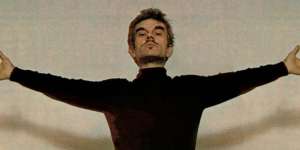
Peter Tangvald was a magnetic figure—a charismatic sailor who wrote adventure tales that captivated readers in the West, embodying a romantic fantasy of self-determined life at sea. A self-styled sea gipsy, he renounced modern life, sailing the world on his self-constructed sailboat without engines, radios, or lifeboats. In the 1980s, he was celebrated as a modern-day adventurer in #Norway, evoking figures like #Fridtjof Nansen# or #Thor Heyerdahl#. His letters and photos often graced the front pages and filled lifestyle magazines like Vi Menn. He seemed to embody the ultimate dream: escape from the rat race, complete self-reliance, and life in paradise. But as Virginia Tangvald shows, this image came at a devastating cost.
One story tells of Lidia, a 15-year-old girl and daughter of a missionary neighbour. She had been taken in temporarily by Peter’s then-wife, who returned to the boat one day to find her husband in bed with the girl. Peter sailed away with Lidia, leaving his wife on shore.
As Virginia puts it, «That’s how the story of Thomas begins.» And it’s this child, born on a dreamboat with no motor, no port, and soon, no mother, becomes the film’s quiet centre. Thomas grew up entirely at sea, stateless, rootless, and always under his father’s shadow. Soft-spoken and introspective, he never published tales or sought glory. He followed in Peter’s wake, but without the fanfare—until the sea took him too.
Virginia gives Thomas what he never had: a voice. She quietly brings his presence to life through interviews, tape recordings, and recovered images. Intelligent and tormented, Thomas is the film’s emotional centre—the child of a dream that turned into exile.
The stories Peter Tangvald left behind are fractured and shadowed by #trauma. Seven wives, two women who «fell overboard,” and a fatal shipwreck made Peter as notorious as he was admired. Was he a visionary or a narcissist? A free spirit or a predator? Ghosts of the Sea leaves room for all possibilities.
He seemed to embody the ultimate dream: escape from the rat race, complete self-reliance, and life in paradise.
Freedom and its consequences
The film’s core question revolves around freedom—what it means, who gets to claim it, and what it costs. Peter’s dream was of freedom unfettered by state, law, or responsibility. However, as Virginia’s film reveals, this «freedom» often meant power without accountability.
In Ghosts of the Sea, freedom is not just a goal but a mirage. «You can look for freedom,» one old navigator says, «but we will never find it in this life. It is like the horizon—you sail towards it, but it never gets closer.» The film beautifully deconstructs the myth of freedom as escape and replaces it with the painful truth: This dream of ultimate freedom, unchecked by responsibility, law, or justice, can easily turn into a nightmare, especially for those drawn in by the charisma of men who claim it for themselves.
Virginia’s voice, at first searching, becomes steadily more assured. Her archival discoveries hint at darker truths obscured by Peter’s carefully curated public image. The film shifts from investigating her father’s legacy to confronting the silence surrounding the women and children left behind.
What emerges is a critique of a romanticised masculinity that treats women as silent passengers. As one navigator remarks in the film, «At sea, men can feel all-powerful.» One can not help but wonder what happens when this power is unchecked and when women and children are taken on board and discarded at will. When is the cost of a man’s freedom everyone else’s silence?
Reclaiming the story
The film’s structure mirrors a road movie—only instead of highways, it travels across oceans and continents. Virginia visits those who knew her father and brother, piecing together lost histories from fragments of interviews, tape recordings, and old slides recovered from a shipwreck. With minimal talking heads and a hypnotic score reminiscent of classical Hollywood by Rémi Boubal and sound designed by Philippe Grivel, the film weaves memory and myth into a dreamlike tapestry.
Virginia’s journey is not only geographical but also emotional, psychological, and historical. It is about reclaiming narrative power, giving voice to those left behind, and reimagining a story that had long been told from one charismatic man’s perspective.
Ghosts of the Sea is more than a biography—it is a meditation on #myth, #masculinity, and #memory. It asks who gets to tell the story and what truths are left behind in the name of adventure. It is also a daughter’s reckoning, a brother’s requiem, and a profoundly moving reclamation of voice.
In giving space to the women and children erased from her father’s narrative, Virginia Tangvald does more than document the past—she reclaims it. With tenderness and clarity, Ghosts of the Sea reminds us that freedom, when untethered from care, can become a form of violence—and that true power lies in naming what was once left unsaid.