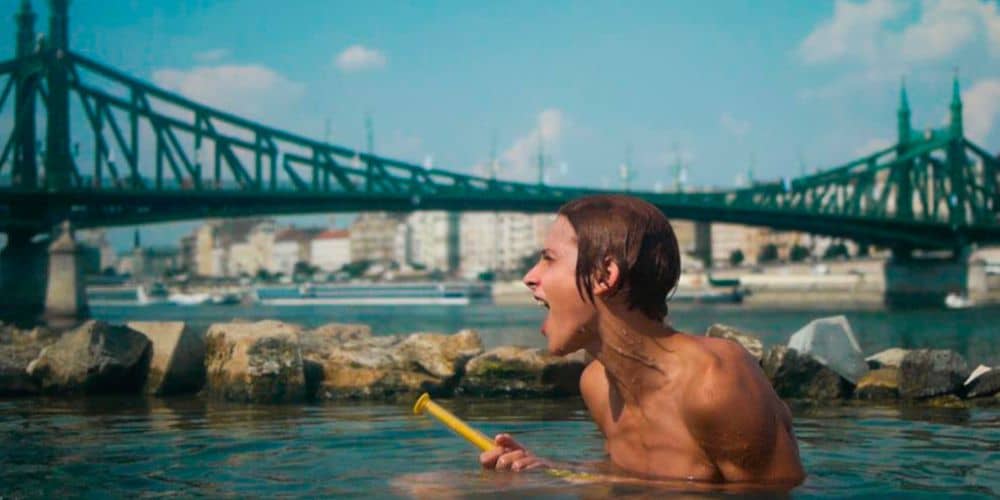
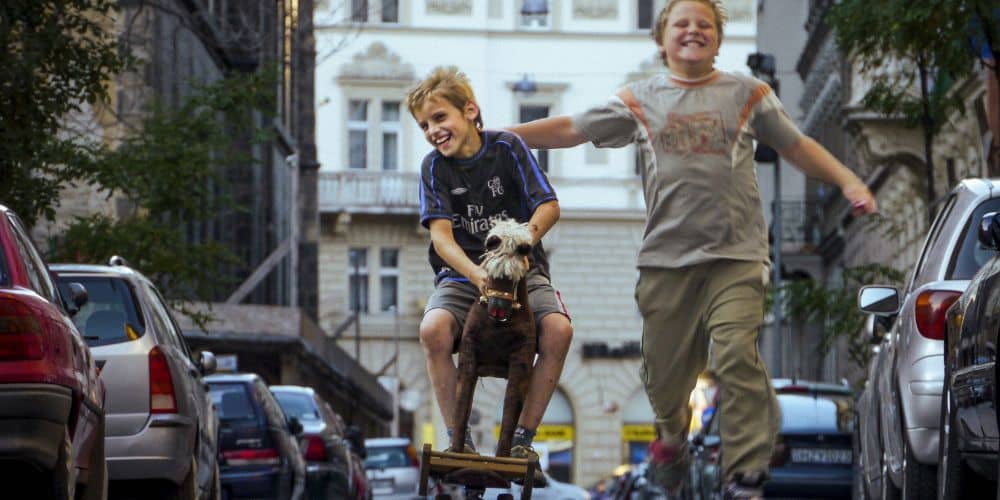
Producer/Director Bálint Révész and filmmaker and video artist Dávid Mikulán began shooting this gritty, immersive documentary when Mikulán was 21 and still at film school in #Budapest. A chance meeting with 8-year-old Sanyi and his older brother Victor led to 12 years of fly-on-the-wall filmmaking, as Mikulàn followed the young tearaways as they ran free across their urban environment, outwardly tough but hiding an inner vulnerability.
Part of the gang
Mikulàn’s genius is that he easily befriends the young tearaways and becomes part of their gang, allowing him to film them in their natural, aggressive and often destructive environment. Much of the bravado is a façade, one designed to protect the kids from the harshness of the world they are growing up in.
Kix is a kind of Hungarian Seven Up – the famous British documentary that began in 1964, tracing the lives of 14 children. And like that epochal film, you know at the beginning that for some of the characters, life won’t turn out well.
I confess that the style of the opening filmmaking, the dizzying sweeping camera shots and footage running sideways – did not appeal to me. And the subject matter – yet another film about a disadvantaged child, clearly bright but with no real understanding of what it would take to pull himself out of #poverty and hopelessness – has been done countless times before.
you know at the beginning that for some of the characters, life won’t turn out well.
Childhood poverty
Childhood poverty is a difficult subject – disturbing and intractable, films that pretend to offer a solution rarely do, and those like this that offer nothing other than observation arguably do little to take forward the conversation other than to remind us that the poor are always with us.
That said, the film has a way of finding its way into your heart and reminding you that this youngster deserves better.
Révész and Mikulán do their best to convey the tough circumstances Sanyi is determined to overcome.
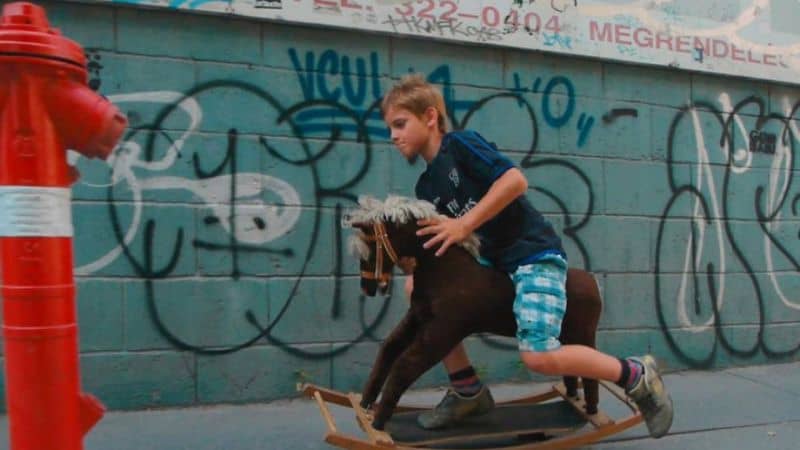
Sanyi delights in leaving his call sign, ‘Fax’ – meaning ‘dicks’ in Hungarian everywhere. His scrawls add to downtown Budapest’s general urban ugliness and reflect his life’s ugliness. The filmmakers’ fascination with their subjects comes through clearly, and the film’s aesthetic reflects the grim circumstances in which the kids exist.
«The playground is a nerve-wracking place,» Sanyi says as the camera swivels around him and his friends, tumbling roughly around swings and roundabouts. «There are a lot of arseholes around… we train for real life.»
Real life sometimes includes skateboarding into dog shit, leaving it smeared all over your jeans – something that is too much for the tough little lad, who breaks down into tears, reminding us that he is just a child after all, despite all the braggadocio.
But his armour is back on again soon: «I am tough. I don’t care if people think I am a hobo or a drunk,» he asserts. It is a brittle toughness, and even at eight, you know that life will grind down this damaged child.
The city’s marginal, ruined and dirty backlots are the playgrounds for the kids. Their companions, homeless guys and other waifs and strays. It is a grim vision of a world in which #Victor Orbán# has just taken power and is preaching his nihilistic message that only #Magyar #fascism can save the Hungarian nation.
«Fucking hell, people, everyone just wants power. People don’t care about those living in poverty and wealth,» Sanyi, mature beyond his years, mutters.
In another moment of insight, he says: «Actually, we are useless street kids, but our mother still loves and accepts us.»
Downward spiral
As the film progresses, the camerawork calms down, and we move into a period of more traditional narrative – scenes shot at Sanyi’s home, where we better understand the privations of his family, the mother who works three jobs and scolds him for not doing his homework, but then does it for him anyway.
The score switches between classical and punk, allowing a rhythm to be established in what is mostly a stream of activities and consciousness.
As he enters his teenage years, Sanyi grows into a handsome, cocksure young man, although evidence of self-harming in scars on his arms that he dismisses as «scratching» suggests deeper issues that are unaddressed.
The inevitability of the Sanyi’s downward spiral is a depressing theme throughout. When he sets fire to a mattress outside a student dormitory, leading to the death of a father of four, it is clear that growing up entirely untethered by any adult guidance (apart from the occasional companionship of the filmmakers) has doomed him.