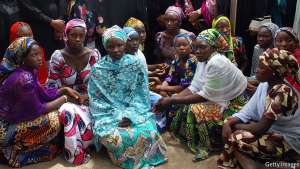
In Joel Kachi Benson’s Mothers of Chibok, what we see is not just a film—it is a wound made visible. It is the sound of a lullaby torn by screams and the trembling outline of a land where the sun beats down on the tired shoulders of mothers who no longer remember what rest means. Premiered at DOC NYC 2024, this American–Australian–Nigerian co-production is not just a documentary nor simply a tale of resilience. It is a requiem for the women of Nigeria—Muslim and Christian, young and old—who must survive the twin plagues of #patriarchy and terror.
Secrets and screams
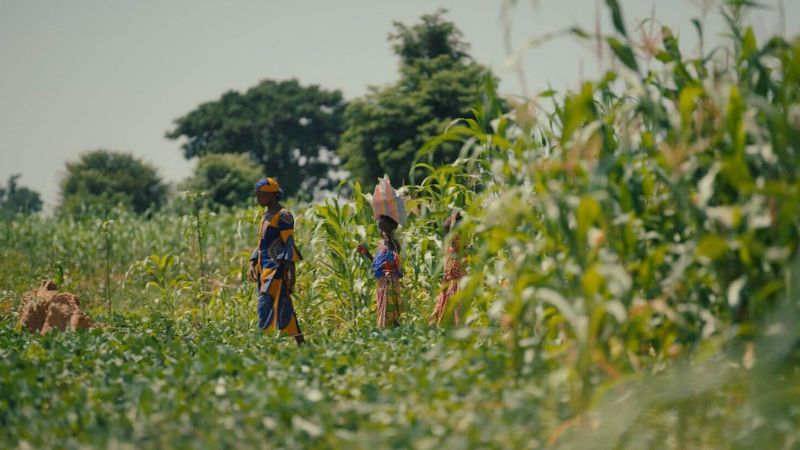
In the film, we see life in Nigeria unfold not in grand events but in the smallest, most mundane acts, a woman sowing seeds into the cracked earth, hoping something more than just millet will grow. Yet this same earth holds secrets and screams—memories of what #Boko Haram# took. The title, Mothers of Chibok, carries the pain of the 2014 abductions that still haunts the world, but this film reveals that it wasn’t one tragic night. It is a never-ending night. For as long as Boko Haram’s shadow falls upon the land, as long as girls are stolen from their schools and transformed into mothers not by nature but by #rape, then the story of Chibok repeats itself every single day until now but in a different narrative by the males – not only terrorist males but all males in Nigeria.
Education is forbidden (especially Western) — that’s what the name Boko Haram translates to from #Hausa. And for these women, the denial of education is the denial of existence and a future of their own. The film’s protagonist, a mother who refuses to surrender to silence, says it with piercing clarity: “If there is no education for our girls, then they have no future.” In those few words lies the soul of this powerful documentary. Through the film’s unsparing lens, Benson delivers not only an exposé of terror but also a reflection on the very architecture of Nigerian society — a pyramid built on the backs of its women and girls, who remain its lowest, most burdened tier. They harvest. They cook. They build. They bury. And they fight, not with guns, but with survival. Survival of themselves and the survival of a whole nation.
It is the sound of a lullaby torn by screams and the trembling outline of a land where the sun beats down on the tired shoulders of mothers who no longer remember what rest means.
Nigerian womanhood
There is one particularly haunting moment in Mothers of Chibok, a shot that echoes with the subtle cruelty of reality. The women are shown working the land, fetching water, washing, and weaving — doing everything. The camera then cuts to a group of men sitting under the shade of a tree, laughing and playing a traditional board game. The contrast is not accidental but prevailing. In a country bled dry by corruption despite its oil riches, the male-led political, religious and social structures have abandoned their duty, content to lounge while the women hold up the collapsing roof of a house set on fire by #war and greed.
The film takes a scalpel to sentimentality and lays bare the raw nerves of Nigerian womanhood. There is no room for the romanticism of resilience. Instead, Benson offers dignity—quiet, enduring dignity—that comes from continuing despite everything. Like all African women, including Egyptian rural women who bent over wheat fields in mid-July, or widows in Upper Egypt waiting for pensions that never come, the women of Chibok carry the same sadness. They are sisters in a geography of grief that stretches across the whole continent.
The flame that refuses to die
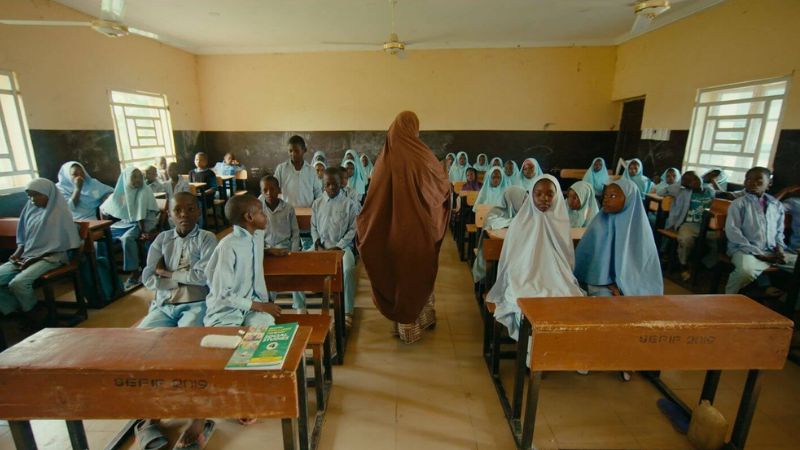
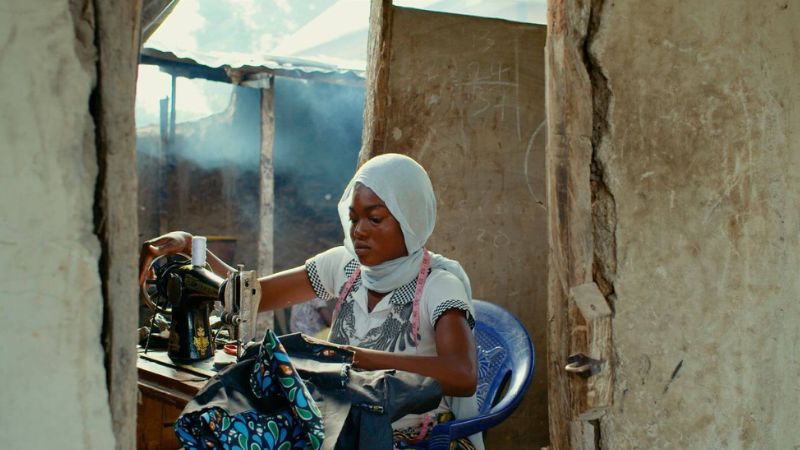
Yet what makes Mothers of Chibok extraordinary is that it doesn’t merely mourn; it testifies. These women are not mere statistics or victims of foreign headlines. They are voices. They are fire. They are the stubborn flame that refuses to die in the wind. As the film weaves through scorched villages, broken classrooms, and prayer circles held by candlelight, what lingers is not only what was lost but also what survives. A hymn of resistance in the guise of a lullaby. A school chalkboard scrawled with hope. A mother teaching her daughter the alphabet beneath the open sky. This documentary’s strength does not lie in its direct and forward style but in its way of revealing the truth and essence of the current situation of women in Nigeria. It brilliantly surpasses all news, articles and programs that were aired describing their catastrophe and resilience.
This is not just a documentary. It is a revolution whispered in the tongues of women long silenced. And in Benson’s hands, the story of Nigeria’s women is not flattened by pity but elevated by clarity. Mothers of Chibok is a mirror, held to our world, asking us how long we will let more than half of humanity bear the full weight of its failures.
This review emanates from the Talent Press programme, an initiative of Talents Durban in collaboration with the Durban FilmMart Institute and FIPRESCI. The opinions expressed in this article are those of the author, Mohamed Sayed Abdel Rehim and cannot be considered as constituting an official position of the organisers.