This year’s DocLisboa, which took place in the laid-back but rapidly gentrifying Portuguese capital from 17-27 October, had a slight, wistful but unmistakable valedictory air. After seven years at the helm, the widely-respected director of the non-fiction-oriented—but by no means documentary-only—festival, Cíntia Gil, was heading off to the challenging new pastures of Sheffield’s Doc/Fest. Her «number two,» Italian Davide Oberto, also stepped down to concentrate on his duties at the Torino Film Festival; the pair have been succeeded by a triumvirate of home-grown in-house talents. Gil, however, is renowned for her no-nonsense approach—unsentimental, and even confrontational where necessary. True to form, she personally downplayed any dewy-eyed «end of an era» talk. Better to concentrate on the films, the guests, and, most of all, the emerging talents showcased by a lively, politically engaged event well established on the Portuguese and European cultural scenes after 17 editions.
At recent DocLisboas the most fertile «patch» showcasing up-and-comers has been its «Green Years» (aka «Verdes Anos») section, dedicated to emerging names—many of them students or recent graduates of prominent film schools. 2019 was the first year in which the competitive element of this section was opened up to European productions, having previously been restricted to Portuguese projects only. Two of this year’s Green Years standouts — both world premieres — focused on politically engaged male residents of bustling European capitals. The scale and consequences of their engagement are – as so often the case – dictated and shaped by context, specifically by the relative freedom of the environment(s) in which they live.
Labyrinth
From France, Pauline Laplace’s A Tiny Country (Un tout petit pays) is a 58-minute character-study of Patricio Salcedo, a middle-aged chap radicalised by the «Évènements» of May 1968, and staunchly retaining his anarchistic beliefs despite plying a somewhat capitalistic trade as the operator of a Parisian news-stand. Oktay Namazov’s Labyrinth (Labirint) is a 21-minute co-production between Azerbaijan, Hungary, Belgium and Portugal, and also very much a collaborative (or perhaps «collusional») effort between Namazov and his subject, former political prisoner Rashadat Akhundov. Akhundov was jailed for three years for (as a title-card puts it) «organising mass disorder» in opposition to long-time president Ilham Aliyev—in office since 2003, re-elected in 2018 (for a seven-year term) with 86% of the vote after an election widely derided as far from free or fair.
At recent DocLisboas, the most fertile «patch» showcasing up-and-comers has been its «Green Years» (aka «Verdes Anos») section, dedicated to emerging names
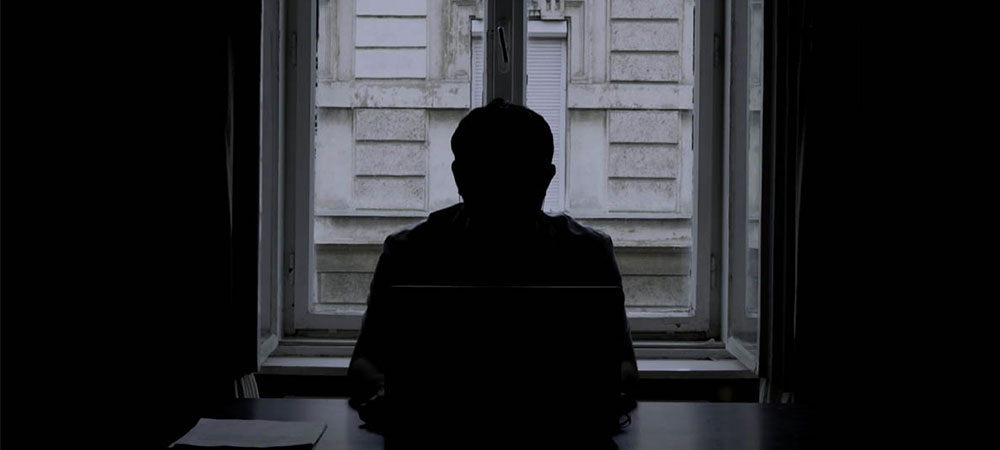
After his release, Akhundov—understandably fearing further repression—fled the country where his family still resides, seeking safe haven and employment in Budapest (he worked for more than a decade as a banking analyst for BP). Namazov’s film is an intimate portrait of Akhundov’s life in the Hungarian capital — a metropolis not exactly (currently) synonymous with freedom of speech, ironically enough — as he struggles to emerge psychologically from the consequences of incarceration («don’t lock the door» is his final request to the director as the latter departs his flat). Largely taking place in dingily underlit interiors, Labyrinth is, as its title suggests, a claustrophobic affair, its downbeat evocation of painful exile leavened by the easygoing relationship and knockabout humour between Akhundov, Namazov, and the fellow Azeris with whom they fraternise.
A Tiny Country
In A Tiny Country, Laplace deploys tight close-ups to emphasise the confinement of Salcedo’s heavily stocked kiosk, from which he seemingly never strays during his long working hours. All human life seems to pass by: the kiosk has dozens of regular customers («I sell bullshit to idiots but it allows me to meet nice people too») with whom the proprietor interacts in a genial, sometimes flinty manner. Political matters are a main topic of conversation (or perhaps this emphasis is an editorial choice; three editors are credited): the presidential election of 2017 is imminent, and Salcedo—who chooses not to vote—rarely holds back from excoriating supporters of such neo-liberal eminences as Macron and Fillon. Salcedo even scolds Laplace (heard but unseen) for her passivity, which he sees as emblematic of younger generations lacking memories of 1968 — the film was shot some months before the «Gilets Jaunes» demonstrations convulsed the City of Light.
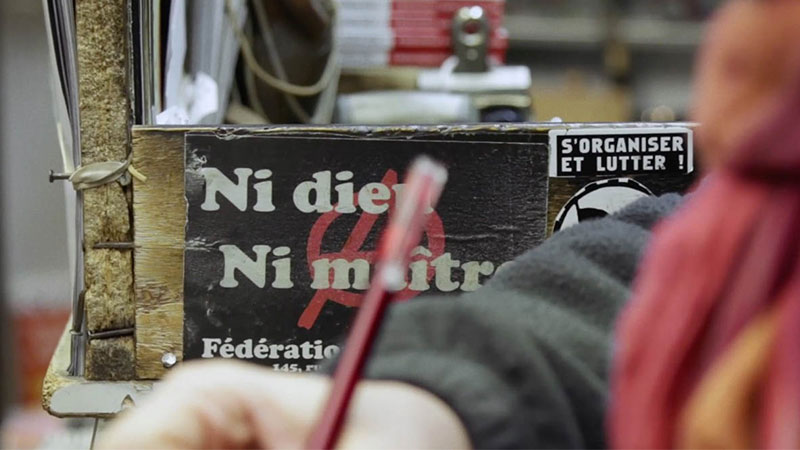
The contrast between the political scene in Baku and Paris, made evident via the juxtaposition of these two films, could scarcely be greater: the Laplace mid-lengther enticingly evokes a resilient, world-famous strain of fierce «engagement» which runs deep through the French national character. Most viewers of Labyrinth, however, might struggle to locate Azerbaijan on a map: the southern Asian former Soviet Republic hardly ever impinges on the global consciousness (beyond some dim awareness of recent oil-wealth). According to the most recent Amnesty International report: «Authorities intensified the crackdown on the right to freedom of expression, particularly following revelations of large-scale political corruption. Independent news outlets were blocked and their owners arrested. Critics of the government continued to face politically motivated prosecution and imprisonment following unfair trials…» Dozens of political prisoners continue to linger in Azeri jails; Akhundov is, relatively speaking, one of the lucky ones. And Salcedo? Luckier still.
Featured Image: Labyrinth, a film by Oktay Namazov