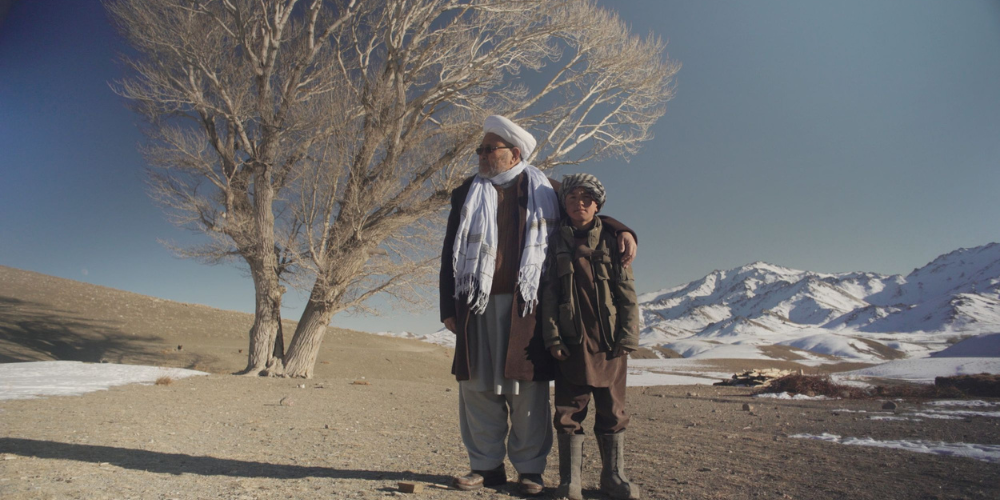
A tale that is both universal and culturally specific, Paikar, which means «warrior» in Persian, is a desperately emotional depiction of a family torn apart by political, economic and psychological circumstances. It becomes the task of the poetic filmmaker Dawood Hilmandi to undertake and document the gradual «humanisation» of his father, who was always cold and manipulative to him and the rest of his siblings, throughout their childhood.
«Baba»
To say the least, this isn’t an easy mission, and it’s made much more difficult because Dawood is living in the Netherlands while his «Baba» is in Iran. When the two meet, as they often do in the film, the relationship is fraught with anger and misgivings. Repairing emotional damage in the midst of global hostilities and a pandemic adds more layers of complexity to an already tough task—but Dawood is determined to do it, and his film documents his efforts.
Repairing emotional damage in the midst of global hostilities and a pandemic adds more layers of complexity to an already tough task
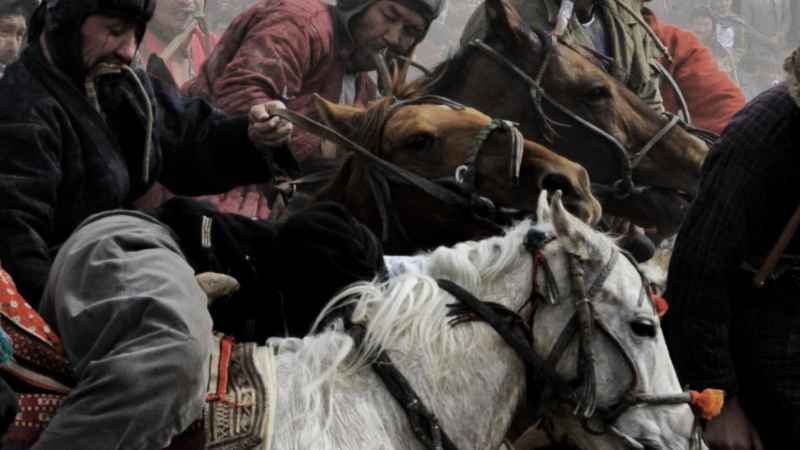
Paikar takes the form of a film diary, which works in its favour as a poetic account of a family living through grief and disorder. Oftentimes, we are thrust into moments of warfare or civil hostilities without warning or any context. Only gradually do we work out where we are and what’s happening in regions of high conflict in Afghanistan and Iran. That disjuncture works well in the film, mirroring the distress that Dawood and other members of his family feel as tensions—and sometimes bombs—rise, detonate, and then dissipate.
Slowly, we find out the story of Dawood’s «Baba.» A former fighter with the Mujaheddin in Afghanistan, he wanted to repel foreign invaders (Russians) but didn’t agree with the Taliban’s fundamentalist cause. That belief eventually forced the family into exile. Dawood and his siblings were raised in Iran, but the majority of them moved to Western Europe by the time they were adults. The diaspora the Hilmandi family experienced has had devastating effects on Dawood’s siblings. At least one dies during the course of the film, and it’s unclear how well other brothers and sisters are coping with life in exile.
Deep feelings
Hilmandi has made a film filled with deep feelings. Paikar follows Dawood as he shows—and contemplates–the terrifying circumstances in which people live on the border between Iran and Afghanistan. While violence continues throughout the film—and the area—the film focuses on «Baba», who finally confides to his son that much of his anger is merely bluster; he may be acting out of habit, not belief. The trust that develops between father and son is the film’s most moving element. Dawood’s love and respect for his mother are similarly intense.
Much happens in Paikar—mainly tragedies. But here’s the great surprise: Dawood Hilmandi has made a truly beautiful film. It’s wonderful to see that he has been acknowledged with the Emerging International Filmmaker Award at Hot Docs. The jury praised Paikar for «its poetic meditation on transgenerational trauma that evocatively navigates the entanglement of memory, war and exile from a deeply personal perspective.» Paikar is a film that should be seen. Don’t avoid it—embrace it.