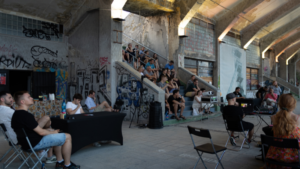
Celebrating its 40th anniversary, #DOK.fest München# returns from 7 to 18 May 2025 with an expansive program of 105 documentaries from 58 countries. The festival, rooted in a politically motivated inception, has evolved into Germany’s largest documentary film festival, now encompassing 26 venues and a hybrid format including in-person and online screenings.
This year’s edition introduces 16 thematic sections. Notably, the «African Encounters» section, curated by Barbara Off, focuses on climate justice, presenting films from Kenya and the Democratic Republic of Congo that explore the intersections of climate change, colonial legacies, and socio-political dynamics. Other standout sections include «Filmmaking in Exile,» created in collaboration with the Goethe-Institut, spotlighting filmmakers displaced by conflict, and «This Is America,» which offers a critical lens on the contemporary United States through stories of resistance, environmental collapse, and political rupture.
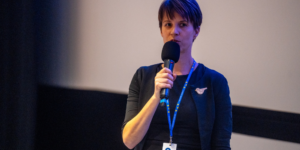
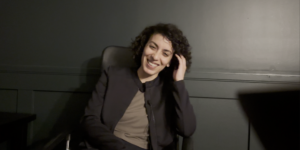
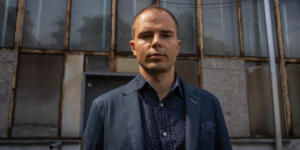
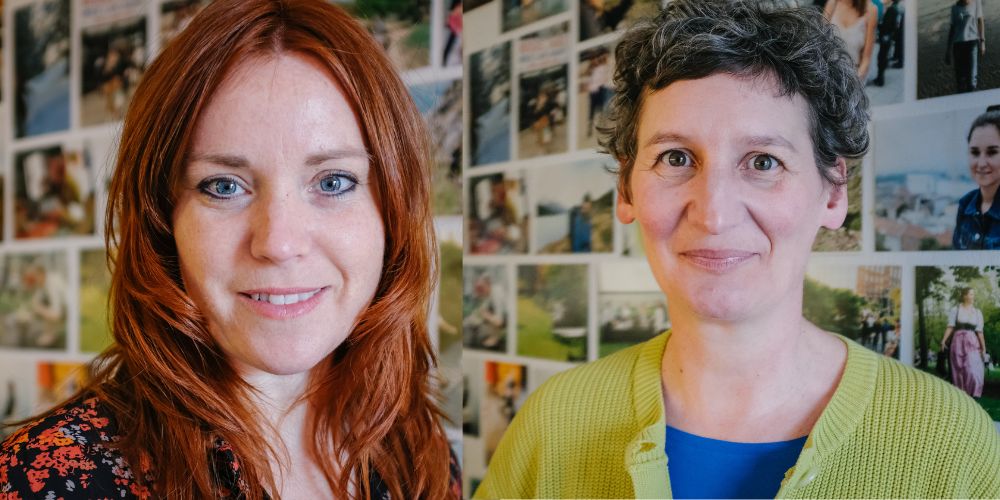
In our interview, Deputy Managing Director #Adele Kohout# and Head of DOK.network Africa #Barbara Off# discuss the festival’s evolution, role within the European documentary landscape, and the significance of its thematic programming.
DOK.fest was established in 1985 so documentary films could get a platform. It was a political movement and act.
You’ve been involved with the festival in some capacity since the 2000s. How have you seen the festival evolve during your tenure? To your knowledge, what did that first edition look like compared to now?
Adele Kohout: It was established in the ’80s as a response to Filmfest München, which covered fictional films and excluded documentary films. DOK.fest was established in 1985 so documentary films could get a platform. It was a political movement and act.
Coming from that heritage, the festival kicked off with just five days, one cinema, and 17 or 19 films. But it grew quickly—more venues joined, a larger selection of films, international directors, etc. If you look at the festival today, we have a whole industry section. We have a full educational section. We are now in 26 venues, not only cinemas but also museums, theatres, and cultural institutions. And we grew from those five days to 12 days.
Plus, we now have a hybrid festival, meaning we have an online platform where you can easily access the films at home. Next to the cinemas where they’re playing. We have two worlds. Plus, we’ve also since 2017 our VR Pop UP Cinema, which we’ve implemented as an extra element in the festival.
It naturally grew over all these years into Germany’s biggest documentary film festival today.
How do you see the festival situated within the continental landscape? Do you see it playing a specific role within the Europe-wide festival scene or something more regional?
AK: Considering the industry section created about 12 years ago, we can’t compete with IDFA or CPH:DOX. They’re coming from a different evolution. We’re more like a grassroots movement born from a political movement. Financially, those festivals also come from different backgrounds. So, we’ve had an evolution unique to us.
In the industry section, we try to be a platform for the German-speaking region. We didn’t create it to compete with other international markets because we can’t—at least not financially. So, we have unique selling points within the festival, elements geared explicitly toward attracting people.
I’d say we’re a gatekeeper for the German-speaking region. But we’re very open to all kinds of formats and storytelling styles for the festival as a whole, not just the industry. That’s something we pride ourselves on. We don’t want to show only the most «artificial» or stylised films. Rather, we want to invite people to join us, to talk, express an attitude, enter into dialogue, create perspectives, etc. That’s what we stand for
We don’t want to show only the most ‘artificial’ or stylized films. Rather, we want to invite people to join us, to talk, express an attitude, enter into dialogue, create perspectives.
Looking at the programme, it’s quite robust. One thing that stands out is the number of thematic sections. From a programming perspective, what are your conversations like as a team? Is there anything aesthetically or thematically that you could call a «DOK.fest film?»
AK: What you just pointed out is something we changed from previous years. We decided to make our curatorial line speak for itself and easier to navigate. In past editions, we had sections with titles like Panorama or International Competition, and you wouldn’t really know what was behind them. Now we’ve said, «Let’s share more of the ideas behind our curatorial vision and help the audience navigate the program more easily and accessibly.» But what we didn’t do was say: «These are the topics of the year, let’s find the films.»
We looked at the films we selected and asked what kind of sections they would naturally fit into. So, the sections we have this year won’t necessarily be the same ones next year.
We haven’t lost the competition, though. The entries span all of the sections, so they aren’t isolated under one category but arc across the entire programme structure.
Barbara Off: In these times, where the world has become so complex, there’s so much content, and attention is so limited, but the topics are so important, it’s actually a service for the audience to say: «Hey, look—there are sections about empowerment. There are films about reframing history.»
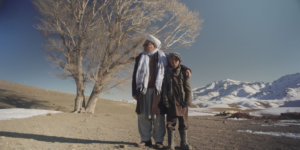
We also have partners we collaborate with. For example, in the «Filmmaking in Exile» section, we partnered with the Goethe-Institut and a project called «Goethe-Institut in Exile.» We were looking for films by filmmakers living in exile, making their films far from home. For example, we have films like Khartoum from Sudan and Writing Hawa from Afghanistan.
I’m particularly interested in exploring a few themes and sections a little further. The first one is the Retrospective. It’s not a traditional retrospective in the sense that you follow a single filmmaker through their filmography. Instead, it’s a retrospective of the festival in four films. How did you decide on the films in this section?
AK: That’s tricky and hard to say. Generally, every festival would pick different films, and each of us curators would probably choose different ones, too. But we wanted to show four decades somehow connected to DOK.fest München. All the films were screened at the festival at one time or another.
Some of them also represent fragments of film history, like Step Across the Border, which was such a unique film at the time that it was mandatory to include it. The filmmakers are from Germany, so that was one of the starting points. It’s a film that set a new milestone for what documentary filmmaking can be. It has quick cuts, vivid movement, and a great aesthetic.
We also have an Audience Award winner for our opening film, The Euphoria of Being. It was never screened because it premiered during the pandemic. We wanted to finally give that film a stage. A very personal journey is also featured with Agnès Varda. This is one of her greatest films. In it, you really go out and collect little things out of existential need and pure desire and explore the world a documentary, more or less, can give you. You can dive into a world and experience it in fragments you wouldn’t otherwise have access to.
Then there’s Citizenfour. That film is milestone-setting on a historical level, though in this case, it’s rather the topic that makes it so important.
Speaking of Citizenfour is interesting because it tells a globally relevant story that is also very specific to U.S. policy. I see there’s another section that’s U.S.-centric: This Is America. Having spent about 20 years in the U.S., I know there are an endless number of topics to cover in any given year, and that’s not even factoring in whether Trump is around or not. In selecting these five films, what did you see as the thematic bridge?
AK: It’s always difficult to say, «These are the five films,» especially when you might have 20 that would fit. I think the arc that goes through all of the films is what’s going on right now, and how is that reflected?
Take The Last Republican. In it, you can see how a system broke down a person who stood up against Trump. It’s a current topic, but it goes back to 2021. On the one hand, we have films that are still entirely relevant to the present moment and provide background knowledge. On the other hand, there are films that help you understand why politics functions the way it does today.
The White House Effect, for instance, tells the story of how the environmental movement has changed and why it is now practically nonexistent in the U.S. government
Let’s say a film came through in the This Is America section that was aesthetically strong, ethically solid from a documentary perspective, and interesting overall, but it presented a pro-Trump argument.
How open would you be to considering a film like that for DOK.fest München? Or even a film related to more conservative—or far-right—perspectives in Germany?
I ask because, inherently, documentary tends to skew liberal—in the filmmakers, in the subjects, in the festivals. But every so often, a conservative viewpoint does appear. Other programmers have told me, «Well, they just don’t submit those films to us, so we don’t even have to make a decision.» What is your perspective on this?
AK: I’d basically agree with that. We don’t receive many films that take a pro-Trump position.
So yes, we’re working within a bubble—one with a specific position that tends to fall within a particular political spectrum. We just don’t get films that lean toward the right-wing side, politically. I really can’t say we’ve had any.
We’re working within a bubble—one with a specific position that tends to fall within a particular political spectrum
One festival director told me they’re more likely to use short-form platforms like TikTok or Instagram. Conservative filmmakers don’t seem to use the festival route for whatever sociological reason. Maybe it’s the immediacy and how fast they want to get the content out there. A lot of it is based on immediate emotion, so they just post it through the quickest channel possible.
I’m always curious. When I look at all these festival lineups, I wonder if one day there will be a very artsy, well-made, and ethically sound film but about the worst politician in that country.
BO: It’s also always a question of how the film is made. In the sense of whether it is taking a side, Is it neutral or not? Is it depicting a person? Is it deconstructing them or just showing them how they are? Sometimes, there are films where some people say, «It’s too neutral.» And that can be a problem. But then again, it’s also interesting to have portraits of a party or a person to see how they operate. I’d be interested in a good documentary about Trump to understand how his brain works.
A decade or so after the Trump era is over, I have a feeling that some absolutely monumental documentaries will be made about this period.
It’s been 10 years that he’s been part of the public conversation—and for people like me who grew up in the New York area, it’s been 40 years. He’s always been there.
AK: If you look into The Last Republican, for example, the filmmaker is really trying to paint a picture of Kinzinger in a neutral way. And he’s the opposite. He’s a Democrat through and through. You can see in their encounters how they’re struggling with each other in the beginning. But he still wants to paint that picture. It created an interesting, very touching film that goes deep into the psychology of how to engage with someone you’re trying to be open-minded toward while knowing that, politically, you’ll never be on the same page.
I haven’t seen that film yet, but Kinzinger was an interesting personality during Trump’s first term. He was among the first—if not the first—Republicans to oppose Trump publicly and played that role for the entire first presidency.
AK: He has no career now. But he’s a civil Republican. You can sense it in every word he says. He still says he’s there, even though they kicked him out of the party. He’s still saying, «This is what I believe in.»
With DOK.fest, you have a specific thematic section for Africa. This year, it’s centred on climate change and its effects on the African continent. Why climate change for 2025?
What is the motivation behind this being a consistent section, year after year?
BO: We’ve been doing this for more than 10 years now. We started with Daniel Sponsel, who recognised a misrepresentation of African filmmakers at the festival. Until then, most of the African-themed films DOK.fest received were European or German productions about Africa. Voices and narratives from the continent were hardly represented—or even hard to find—because there was little connection to the film industry or filmmaker communities there.
Over the past years, we’ve built a network with filmmakers across the continent. We’ve partnered with different film festivals, starting in Nigeria with iREP. We’ve travelled several times to Zimbabwe and also to South Africa. We now partner with Encounters South African Documentary Film Festival in Cape Town and Durban FilmMart. We’ve also had a long-standing partnership with DocuBox, a documentary association in Kenya and the first film fund in Eastern Africa.
We felt it necessary to spotlight these films and filmmakers within the festival programme. Because there is a difference between films made by German or European filmmakers about Africa and those made by African filmmakers themselves. That’s why we created this section African Encounters.
It’s always been important to let different narratives speak to each other. It’s not about saying, «German films about Africa aren’t allowed anymore.» We want to have a conversation—to talk together about how filmmaking needs to change, about how you go into vulnerable local communities, and about how you make films—and maybe even make them together.
Last year, for example, we held a panel on co-creation and co-production with German, Kenyan, and Tanzanian filmmakers at our industry platform, DOK.forum.
I’m always looking for themes that travel between Europe and Africa. I don’t want to just look at Africa and talk about an African subject. It’s important that this dialogue exists and matters to both sides. And what topic could fit better than climate change?
It’s a global issue affecting everyone. However, there is also a clear relationship between the Global North and the Global South regarding justice and injustice. This goes back to colonialism, how we have developed since then, and how we deal with the consequences today. It might not be obvious to everyone, but it’s surely an issue that will shape the future relationship between Africa and Europe.
We want to have a conversation—to talk together about how filmmaking needs to change, about how you go into vulnerable communities, and about how you make films—and maybe even make them together.
And how do you work with African partners?
BO: We invite them to our festival. For example, we had Mandisa Zitha, the festival director of Encounters Documentary Film Festival, in Munich two years ago. She was part of the jury and did panels and moderating.
We’ve done many things. We’ve had interns from documentary film festivals and have been travelling all around the continent, picking up projects at the Durban FilmMart. German films have also been screened at Encounters.
We are trying to diversify our portfolio at the market and industry levels. We give away carte blanche at the Durban FilmMart, and that project can then come to Munich for our market. This year, we also had a joint award with Encounters: the Ladima Adiaha Award for an emerging female filmmaker. Last year, it went to Zippy Kimundu from Kenya. This year, she’s coming to the market with a new film and project and will be part of the Master’s pitch.
What about Filmmaking in Exile? Besides what’s in the title, what were you looking for when selecting films for this section?
BO: We had a common agenda since we’re doing this with the Goethe-Institut’s «Goethe-Institut in Exile» project. The Goethe Institute has branches all over the world, and in some conflict-affected countries, they had to close their institutes. That’s why they set up this Exile project.
We’re looking at countries such as Ukraine, Afghanistan, Iran, Sudan, and communities forced to leave their homelands. For example, in a large Lebanese community in New York—students and young professionals are still fighting for a better Lebanon and holding their politicians accountable. We want to show our audiences what it means to leave your country and live in exile—beyond the usual «migration» narrative, which can feel overused. Though all these stories involve migration, there are different shades and narratives worth exploring. It’s also about feelings, that experience of living and working in exile.
We also wanted to highlight the actual process of filmmaking in exile. What does it mean? It’s difficult for the filmmakers—they’re vulnerable—and as people working in the industry, we may not fully understand what that involves.
Though all these stories involve migration, there are different shades and narratives worth exploring.
Will their filmmakers represent all of these films at the festival?
BO: We will have Ibrahim Snoopy Ahmed, one of the directors of the film collective of Khartoum, and Talal Afifi, one of the producers, as guests. They live in Nairobi and Ireland, respectively, so they’re all over the world rather than in their home countries. We also have the filmmaker of Writing Hawa, Najiba Noori—the Afghan director now living in France—and Vitali Mansky presenting his film Time to the Target.
Filmmaking in exile prompts many dialogues—both around individual films and the section as a whole—just as with other sections. But today, we live under a double standard regarding dialogue and free speech: Who has the right to speak about what and how? How can you ensure guests, audiences, and filmmakers feel comfortable expressing themselves and engaging in dialogue—even if their views run counter to majority consensus or the state narrative?
AK: You’re touching on a very sensitive topic. Since we’re based in Germany, we have to be especially careful. You can find our Code of Conduct on the website. We explicitly state what we stand for and where our red lines are. We’ve created an awareness protocol and dedicated spaces so that, if something happens, there’s a clear way to navigate the incident. Of course, we want to be open, foster dialogue, and provide a platform, but it must be respectful so no one feels offended or harassed. Given Germany’s history, that’s particularly important here.
As festival administrators, how prepared are you for potential violations of the Code of Conduct? How concerned are you?
AK: So far, nothing has happened, so we’re in the clear, but you never know. We’re prepared. We have guidelines for what needs to be done, who to call, etc. In the worst case, someone may need to be removed from a room or the police called. After last year’s incidents at Berlinale, we formalised these protocols. We also inform incoming guests who may receive sensitive feedback about how we’ll support them. We try to create safe spaces so they’re never left alone in a difficult situation.