
This is one of the most terrifying films I have ever seen, and I don’t scare easily.
Plastic is everywhere. That’s not news.
Microplastics are everywhere. That’s not news.
But the degree to which #microplastics are inside our bodies, our organs, and our bloodstream – now, even beyond the blood-brain barrier and in our grey matter – is not something that is widely known.
And these microplastics are full of dangerous chemicals. Compounds that can alter our DNA cause cancer, inflammation, tumours, and dementia. Death.
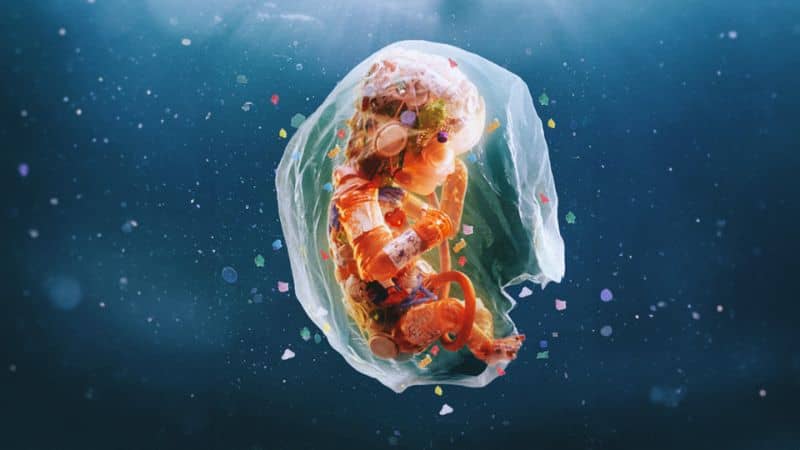
Microplastics
Microplastics are in our babies, foetuses, a mother’s placenta, and breast milk.
And the really scary thing about these microplastics that are everywhere in our environment – from Everest in the Himalayas, to the Mariana Trench in the north-western Pacific – is that there is almost nothing we can do to avoid ingesting them.
They are in the plastics that we buy our food in, the bottles from which we drink our water (and it takes huge dedication not to EVER drink water from a single-use bottle, even though the more aware among us try), the very food we eat, and the everyday items that without which we could no longer function in the 21st century.
Plastic People – Ben Addelman and Ziya Tong’s siren call for action to turn things around – dishes up the bad news first before giving a few glimmers of hope right at the end of this engaging and affecting documentary.
Presented by Ziya Tong, a Toronto-based science journalist, Plastic People keeps viewers engaged with her dogged determination to get to the bottom of the problem of microplastic pollution – literally when she has a sample of her own faeces analysed. «The shit I do for science,” she deadpans before learning that – yes – her poo is full of microplastics, as is her blood, when she later gives some to a special study in the UK.
From a Dutch mother worried about her unborn child, to experts giving comments such as, «microplastic is the most serious type of pollution our society has created» or «babies are born pre-polluted… we will only know in a generation what damage has been done… the system is designed to let the experiment play out on people,» the film is an emotional gut punch.
…there is almost nothing we can do to avoid ingesting them.
What happened?
So how did we get here?
There are some familiar culprits: war is a key one. After the development of early plastics such as cellulose and Bakelite (about which MTR had previously written), the demands of wartime military production, particularly in the USA, drove a massive increase of 300-400% in plastic production. Major oil companies also wanted to find a use for byproducts of petrol and gas production, and lab technicians were given free rein to experiment with substances for which no use or demand was known. About the only thing there was a demand was, was for nylon stockings. But nylon could also be used for other clothing – and the use of plastics in clothing today is a ubiquitous source of microplastic pollution.
In the 1950s, plastics exploded – they were used in cars, consumer goods and durables, furnishings – but soon, the big oil companies that now owned all the major plastics producers realised that there were limits to these markets. So, they came up with a wizard idea: single-use plastics. The throw-away society was a creation of the plastics industry – detailed in a 1956 industry paper cited in the film – and popularised in a Life magazine article, «Throw Away Living.»
At first, people had to be persuaded to throw the new single-use plastics away – those who grew up in the straitened times of the 1930s tended to take plastic cups from drinks dispensing machines home for reuse the next time. So, the plastics industry used advertising to change our thinking. By the 1970s, as visible plastic waste became a major environmental issue, the plastics industry invented the notion of #recycling plastic – even down to those little numbered recycling symbols we find on plastic bottles and other items. In fact, most plastics are not recyclable, and less than 10% is recycled today, and doing so at scale remains an elusive goal.
As global oil demand begins to drop, the plastics/oil industry plans to treble plastics production over the next 20 years.
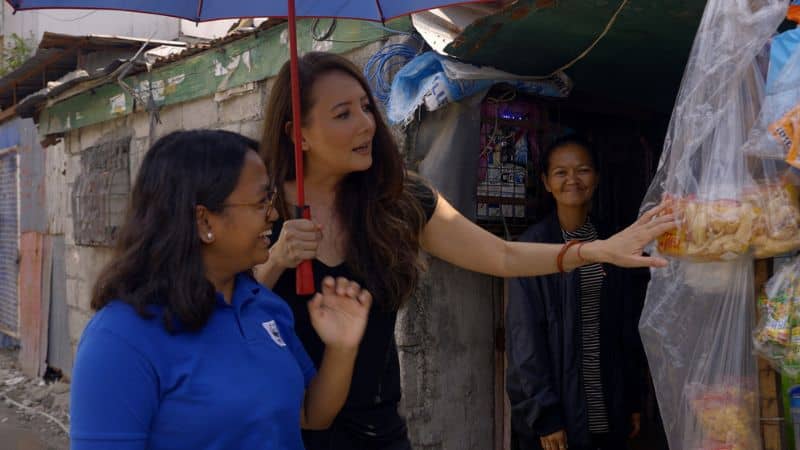
As Ziya travels the world, learning how plastic waste is exported to far away poor countries and how the petrochemical industry literally gets away with murder, pumping plastic waste residues into our water sources, it becomes increasingly clear that, essentially, microplastic pollution is inseparable from today’s late-stage #capitalism, and the immoral global corporations that lack any kind of conscience or responsibility.
The real villains
Plastic People does not say it, but capitalism and the unfettered greed of corporations are the real villains here. And the only real answer to tackling plastic pollution is the same answer to so many 21st ills – to redesign the system so that we run our lives to support and fulfil people, not a handful of vulgar billionaires.
As the film rounds the last corner of its global examination of the dangers of microplastic pollution, with a shocking examination of how tiny scraps of plastic colouring agents are being found in the human brain, inside the lesions of brain tumours, leading one Turkish researcher to dryly remark that we are no longer Homo Sapiens, but Homo Plasticus, a few straws of hope are offered: in Paris in 2023, a UN-backed global treaty to reduce plastic pollution, is introduced with 189 countries participating in a conference; countries such as the Philippines have managed to clean millions of tonnes of plastic waste from rivers; sawdust filters have been developed that can remove 99.9% of microplastic from water, with water treatment and home use devices to come; washing clothes on «gentle» machine cycles reduces microplastic shedding from fashion items by 70%; and hundreds of countries have introduced bans or partial bans on single-use plastics.
The film ends with a call to action.
Join the resistance via: Plasticpeopledoc.com and @plasticpeopledoc
Plastic People screens as part of the 2024 #Ji.hlava IDFF# Testimonies section.