In Recipe For Hate, Filip Čolović is on mission to make sense of the murder of his younger brother nearly a decade ago. Engaging and disturbing in equal degrees, the film is as much as plea for humanity to live life rather than project its pain through fear or anger at others.
As Filip delves into the reasons why his brother Fedor was beaten to death at the age of 29 – he plumbs the depths of Serbian society and its history as part of #Yugoslavia, and its role in a century of violence.

A century at war
Serbia began the 20th century at war – it lost a third of its population during the WW I – ended it with a bitter civil war and, later in 1999, the bombing of #Belgrade by #NATO, seeking to end Milosevic’s brutal war on Kosovo.
For those looking for a broader societal or psychological basis for man’s propensity to inflict harm on others, this is not the film for them. Čolović keeps his focus narrowly on Serbian society and history, employing plenty of archive footage of the former Yugoslavia and its descent into civil war with neighbours #Bosnia and #Croatia.
In a film that is essentially about the director’s quest to find some sense in his grief, he makes effective use of old photo slide shows, animated interludes that include a darkly humorous «How to avoid becoming a victim of violence: everyday instruction manual» and a mini mockumentary on how Serbian criminals game the legal system to avoid doing time for murder (it does not help that a statute of limitations on violent crimes sets a definite cut off date for pursuing perpetrators).
A repeated image – that of Fedor seen in a childhood photo as a plump baby boy with a round face being cared for by his older brother, six years his senior – maintains the thread of the story as Filip digresses on his search for answers.
Čolović also makes effective use of CC TV footage from the club, recorded at the time of his brother’s death, as well as extensive TV and amateur footage of the sort of casual violence that continues to grip Serbia to this day.
For those looking for a broader societal or psychological basis for man’s propensity to inflict harm on others, this is not the film for them.
Key characters
Fedor is not the only key character, though the film is dedicated to his memory. We learn about the casual beating to death of several other Serbians, including a man who got a little drunk in another club close to where Fedor died (and was also beaten to death by bouncers), a teenager who committed suicide after bullying at school, a famous actor taken for a Romany and beaten up by a gang of skinheads as he waited for a bus home, and even a dog, abandoned by some bins in a park, all four of its paws cut off by some psychopath.
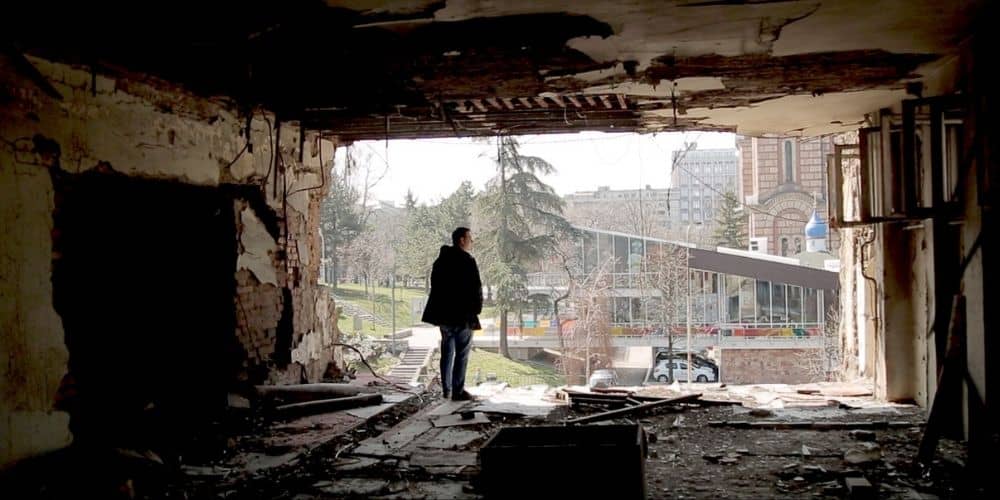
And there is also a wartime bridge over the river Sava, built by the Germans in 1942 after the bombing of an earlier bridge, which spans the area where Fedor was killed. It crops up throughout the film as a mute symbol for the icy shudder it causes in Filip every time he must cross it.
The director digs into Yugoslavia’s history and the more modern story of #Serbia in search of answers: «I thought Fedor was one in a million; we gathered at 40 days (cue shots of friends in T-shirts with the words ‘I am Fedor’ – Ja cam Fedor – in Serbian emblazoned on them) but then I found that was not so. Hate and violence now live all around us».

Welcoming war
The collapse of Yugoslavia from a well-ordered autocratic state where the police were respected into the chaos and brutality of civil war provides some answers; today the police no longer protect the public and are often part of the violence themselves. Filip tracks down former enemies – now peace activists – who fought on opposite sides during the war. Both agree that people wanted war, welcoming the violence in the early 1990s.
The violence sparked then has never quite gone away: today, «we live in a society of thugs; a society that has almost legalised violence», says a colleague of the murdered actor. «Politicians, lawyers, the police ignore it. Just note it. Move on».
A video montage of the years since the fall of Milosevic between the end of 2000 and early 2001, shows the violence rained down on a Belgrade Gay Pride march; the assassination of a prime minister, the burning of a mosque, arson at the US embassy, and protests over the arrests of Serbian war criminals #Radovan Karadžić# and #Ratko Mladic#.
Some relief from the litany of violence is found in tracing Fedor’s family line; a half-brother to Filip, he was descended from a White Russian who fled the Bolshevik Revolution with General Wrangel’s White Army. With Fedor’s death that family line came to an end.
Filip talks to one perpetrator of violence – a burglar doing time for grievous bodily harm – and more relatives of victims.
It is all heart-rending stuff and although, as a father of two young boys, Filip yearns for answers, all he can do in the end is read to his sons from The Little Prince in the hope that a sense of wonder and joy in life’s gifts will rub off.