Carnations in gun barrels
On April 25, 1974, the Salazar’s dictatorship in Portugal ended. It was established with the coup d’état of 28 May 1926 as a military dictatorship and, in 1933, transformed into the New State by António de Oliveira Salazar, who ruled from 1932 until, due to his illness, was replaced by Marcello Caetano in 1968. It was the longest fascist regime of the 20th Century. Salazar insisted on perpetuating a centuries-old colonial empire, as other former colonial powers long acceded to calls for independence of their overseas colonies, and in his strident defence against anticolonial movements in #Angola, #Mozambique, and #Guinea-Bissau, bled Portugal dry. Thus, the regime, known for its’ ruthless political police, the #PIDE (Polícia Internacional e de Defesa do Estado) that persecuted opponents of the regime, who were often tortured, imprisoned, or killed, was itself overthrown by a military coup.

Carnation Revolution
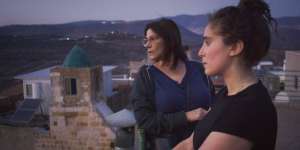
The coup, known as the #Carnation Revolution#, is at the centre of Sempre, the feature documentary by Italian visual artist Luciana Fina. Invited by the Portuguese Cinematheque, Pina conceived an installation to celebrate fifty years of the Carnation Revolution. Her research for the installation led to the documentary, which, as the name indicates, was not an ordinary coup. A few people were killed, and almost no shots were fired. A restaurant worker offered carnations to soldiers when the population took to the streets to celebrate the end of the #dictatorship. Other demonstrators followed suit and placed carnations in the gun barrels and on soldiers’ uniforms.
The carnations also describe the particular alliance between military officers and the worker’s movement at the heart of the Portuguese revolution of 1974. It began as a coup organised by the Armed Forces Movement (MFA), composed of military officers who opposed the regime, but was soon coupled with a popular civil resistance campaign. The archival footage of the events reveals the omnipresence of the images of #Lenin and symbols such as the hammer and sickle, which all very well align with the symbolic meaning of the red carnations that traditionally decorated Sunday jackets of the politically active workers.
Sempre, also, is not an ordinary documentary. Its narration reaches far beyond 25 April, it touches on the asphyxiation of #Salazarism and the PIDE, the student occupations of 1969, the Armed Forces Movement of 1974, the dreams, programs, and prospects of the PREC (Processo Revolucionário em Curso), the decolonisation and the uncertainties that followed the enthusiasm of the first hours; from the ambiguous reactions to #feminism to the power of global corporations. From the housing problem to the environmental emergency. With extraordinary careful and smart editing, Pina merges archival with recent footage, showing how the unresolved issues from the past resurrected in contemporary concerns. But it is its’ pacifist message that makes it truly, outstandingly timely and relevant. And not less fascinating is the way she delivers it.
But it is its’ pacifist message that makes it truly, outstandingly timely and relevant.
Peace and love
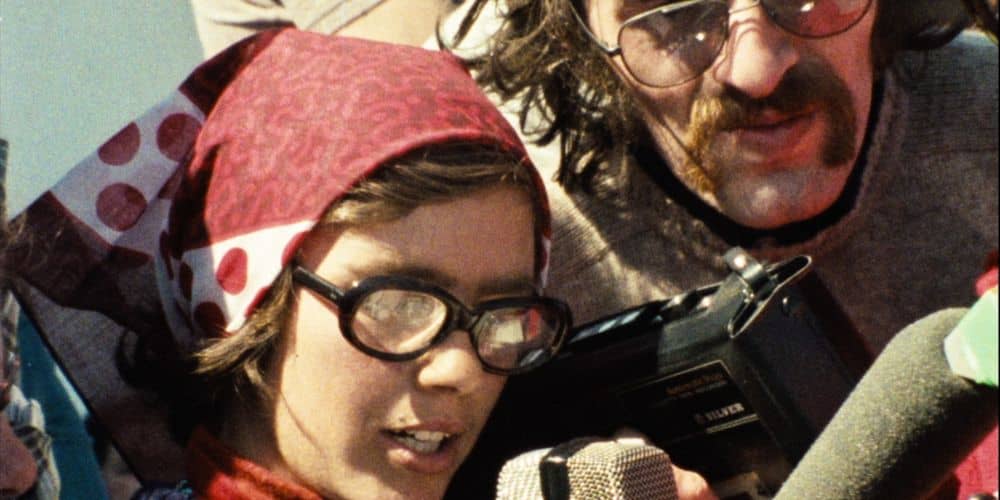
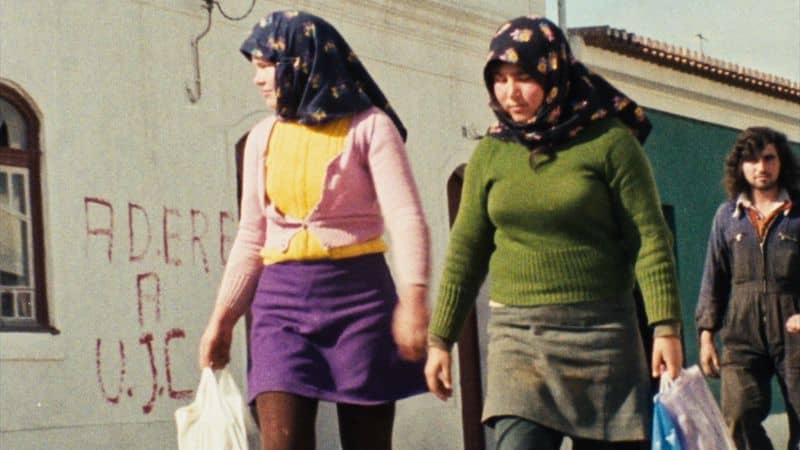
Today, with the Russo-Ukrainian War threatening with the nuclear disaster, and the unspeakable horrors carried out in the context of the genocide in Gaza, the image of red carnations in gun barrels has a particular meaning. The festive and playful vibe it radiates permeates the whole film. This is due to Fina’s outstandingly bold editing approach. She brought together, into one unique narration, clips from numerous feature and documentary films, including the short masterpiece The Invention of Love (António Campos, 1965), a dystopian sci-fi story about a totalitarian regime prohibiting any expression of affection, pursuing a couple for the crime of being in love. There is footage of a thorough and witty analysis of European fascism from the celebrated Italian documentary To Arms, We Are Fascists (Lino Del Fra, 1962). Sempre also features significant parts of a TV documentary in favour of press freedom about a local newspaper, «O setubalense» by Amilcar Lyra, produced but forbidden in 1976, two years after the end of Fascism in Portugal. And, of course, the documentary about the Portuguese revolution by the celebrated documentarian Robert Kramer Scenes from the Class Struggle in Portugal (1977).
The unity
Fina’s skilful handling of archival material is not limited to film footage. Equally creative is her choice of songs that narrate the events before, during, and after 24 April, along with the visual material. The sounds and images creatively complement each other; for example, in the scene where the chanting «our struggle for a better life continues» is accompanied by the portraits of people’s faces showing a vivid image of their grand expectations. This illustrates the more general atmosphere of unity that, at the time, took hold of the people in Portugal, including the filmmakers who joined artists, songwriters, composers, and radio directors in supporting the revolution, chanting: «The struggle goes on – in culture and on the streets. The struggle goes on – in cinema and on the streets» and so on.
Even if dedicated to 24 April, the key event in Sempre is 10 June 1974, when the Solidarity Day of artists with soldiers took place in the National Modern Art Gallery in Belém, Lisbon, and the artists gathered to paint a gigantic canvas covering the entire wall of the museum. The documentary has no voice-over, but the details of this action continuously repeat throughout the film, contributing to coherence and continuity. Radiating the hope that the creative, playful part of humanity will, eventually, prevail.