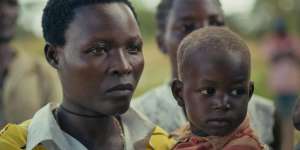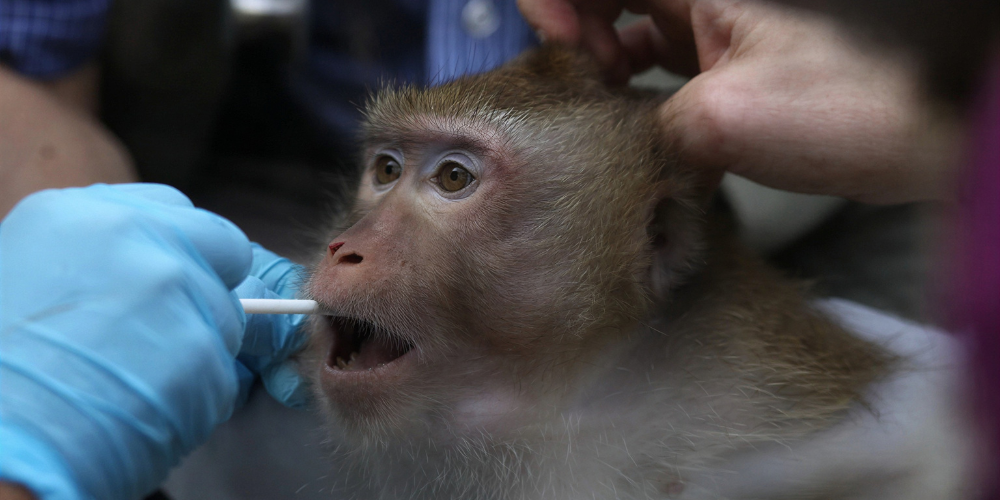
Perhaps one of the most contentious subjects that effortlessly provokes heated debate is animal testing in medicine. Today, the label «cruelty-free» has become a mark of prestige in the cosmetics industry, and when the internet is increasingly flooded with horrifying footage of animals being abused in laboratories. Both reflect the long and persistent work of activists, whose efforts have evolved alongside modern science, as well as of documentary cinema, which has assumed the role of unsettling public enlightenment on the issue. In his debut feature, Sentient, veteran Australian journalist Tony Jones pressed on the most painful nerves of this provocative subject. The film offers a glimpse into the contentious issue of animal testing in medicine—predominantly on primates—through the people whose work binds care to violence. This rawly emotional film, though at times burdened by its own ambition, offers fewer shocking revelations than questions for the viewer to reflect on.
The Love Against the Necessity
Framed in the conventional style of a mainstream documentary, Sentient weaves together archival footage from different decades with contemporary talking-head interviews with scientists from a range of disciplines who have worked with apes. Opening with a montage over the introductory credits, the film swiftly recaps familiar facts about the kinship between primates and humans, with humans occupying the more privileged position.
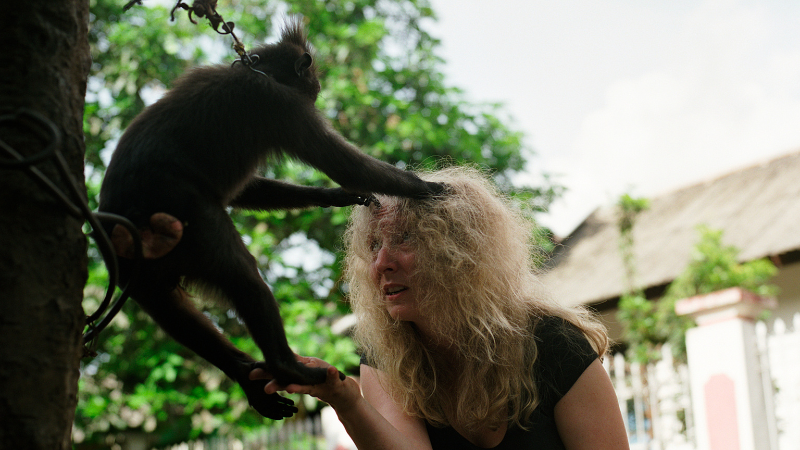
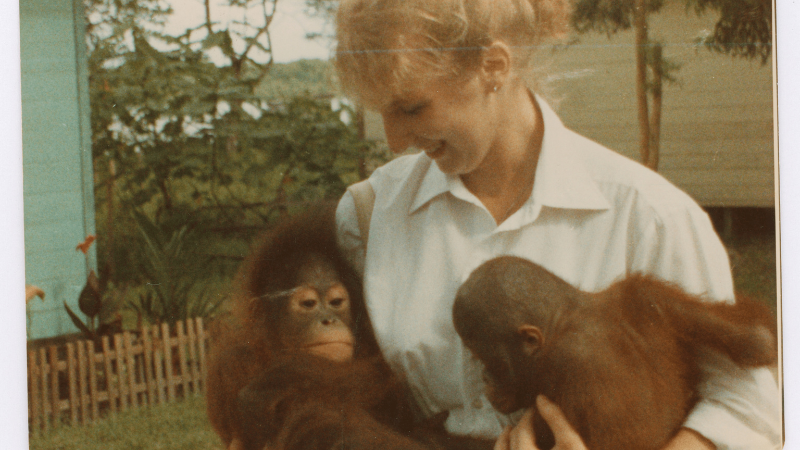
The documentary centres on Dr Lisa Jones-Engel, who comes to embody both deep affection for those animals and unwavering scientific devotion. An expert in primate studies, Jones-Engel began working with animals in her teenage years and has since moved between scientific laboratories and the more humane approach of field research. Positioned as the film’s central axis, she binds together its currents of information and sentiment, often appearing in intercut scenes alone in a dark cinema, revisiting her own archival footage with visible unease. She now looks back on that chapter of her work with visible shame, believing that humanity must finally bring such experiments to an end. Alongside her, the film introduces a range of specialists whose experiences and convictions often push the discussion in more radical directions. One scientist, for example, argues passionately that while much is said about the unethical nature of using primates in the advancement of human healthcare, the more urgent question may be: «But is it ethical not to?» Cancer therapies and vaccines alike, after all, owe an undeniable debt to them.
What unites all the scientists in the film, however, is their genuine love for animals, and here Sentient does a commendable job of presenting that bond from the most sensitive note. The scientists break down in tears as they recall the deaths of the creatures in their care, whom they sometimes describe as their children, or the terminal procedures they were required to perform on those subjected to the highest doses of injections. At times, their emotional reactions prove the film’s clearest expression, making Sentient seem less a documentary that offers a radically new perspective on the system from within than a portrait of the lasting psychological toll it takes on the doctors themselves. Yet within these extended confessions to the camera, moments of reflection do emerge — unanswered, but no less productive for it. One scientist, for example, passionately draws attention to the fact that we are testing generations of apes forced to spend their lives in cages. What, then, does such captivity do to their brains, and can this still truly be called science?
Consequently, the film unfolds in a register of raw, almost ruptured hopelessness, where this bipolar coexistence of love and cruelty exerts an equally draining effect on the experience of watching it. At the same time, this proves to be the film’s most potent rhetorical mode, which may explain why, until its closing moments, Sentient never fully commits to a clear position, choosing instead to dwell on the surface of familiar facts and graphic imagery. The documentary also includes brief informational segments on breeding farms in Asia that hold up to 80,000 monkeys, as well as testimony from a toxicology laboratory that yields some of the film’s most disturbing material. Ultimately, the film relies on the terrified gaze of its animal subjects and a voice-over that insistently draws out their resemblance to humans, punctuated by close-ups of ape faces, hands, and bodies — as if dictating emotion too directly rather than allowing the argument to deepen.
Is AI really a response?
After all this emotional exhaustion, steeped in the mutual helplessness of both human and animal, the film’s final twenty minutes take a decidedly strange turn. Right after toxicology labs, Sentient abruptly turns toward consolation, placing its faith in the promise of Artificial Intelligence.
Dr Lisa Jones-Engel, who has since left formal scientific work for activism, comments on the questionable actions of the new U.S. Health Secretary, Robert F. Kennedy Jr., whose widely criticised anti-vaccination stance the film presents through an ominous montage of news headlines. This, in turn, also means that funding for animal testing is being reduced and that better times may at last be arriving. To maintain the optimistic spirit of its speakers, the film returns to I as an almost magical solution. One scientist who earlier claimed that 95% of animal testing ends in failure is now particularly excited for the potential change. Undoubtedly, the role of AI in the future of science should not be underestimated. Yet its implementation here feels quite peculiar. After devoting so much of its running time to the scientific and emotional complexity of the issue, Sentient turns to AI as a convenient solution and closes on an optimistic note that feels premature at best and, at worst, insufficiently earned.