There is something deeply chilling about Oleksiy Radynski’s Special Operation. As Russian troops occupy the #Chernobyl Nuclear Power plant on 24 February 2022, they are silently observed by CCTV cameras. They stay just five weeks before pulling out in a convoy. With virtually no dialogue, and terrible crimes committed off camera, the disturbing undertow to this portrait of war leaves a lasting impact.
Less is more
Special Operation is fundamentally a film where less is definitely more.
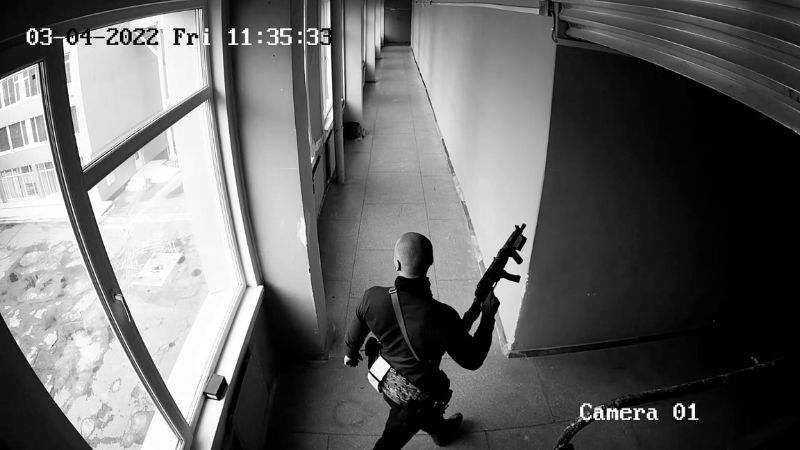
Working with footage filmed by remote-controlled CCTV cameras at the Chernobyl Nuclear Power plant, Oleksiy Radnyski weaves together a story of Russia’s early invasion of Ukraine, when #Kyiv was at risk of falling, with a deft eye for detail.
Tanks, armoured cars and troops simply turn up on the morning of 24 February 2022, accompanied by the percussion of far-off explosions. Putin’s invasion of Ukraine had begun that morning with a two-pronged attack from the Russian border in the east and #Belarus to the north. The Russian units that arrived at Chernobyl had driven a short distance from the Belarusian border, where they had previously been on «manoeuvres.»
News of the occupation of Chernobyl sent shockwaves around the world. In April 1986, it had been the scene of a nuclear meltdown that sent a cloud of radiation over Ukraine, Belarus and the rest of Europe westwards. The highly radioactive core had been sealed – at great human cost – but any disturbance to the plant’s operation, or damage to the sarcophagus, risked another nuclear disaster.
Special Operation is fundamentally a film where less is definitely more.
mundane horrors of occupation
None of that is made explicit in the mute recordings we see in Special Operation. Instead, the mundane horror of occupation as the Russians attack Kyiv 100 miles to the south unfolds before our eyes.
Dialogue is heard only «off-stage» with snatches of conversations taken from telephone calls and TV broadcast soundtracks heard sketching in the background as Ukrainians reel in horror at the invasion.
Outside, on a wide stretch of tarmac dotted with mosaics of flowers and the Ukrainian trident, Russian tanks plough up the roads as troops mill around. Workers taken hostage come and go, keeping the plant operating safely. A Ukrainian flag is taken down. The troops never get around to replacing it with a Russian flag.
Inside, armed men and auxiliaries, identifiable by their police-style uniforms, check rooms and walk up and down under the watchful eye of small CCTV cameras. It is a week before they realise their every move is monitored, and they cover up the cameras with tape and paper. No one seems to realise the external camera, recording in colour and with phenomenal zoom abilities, is still working.
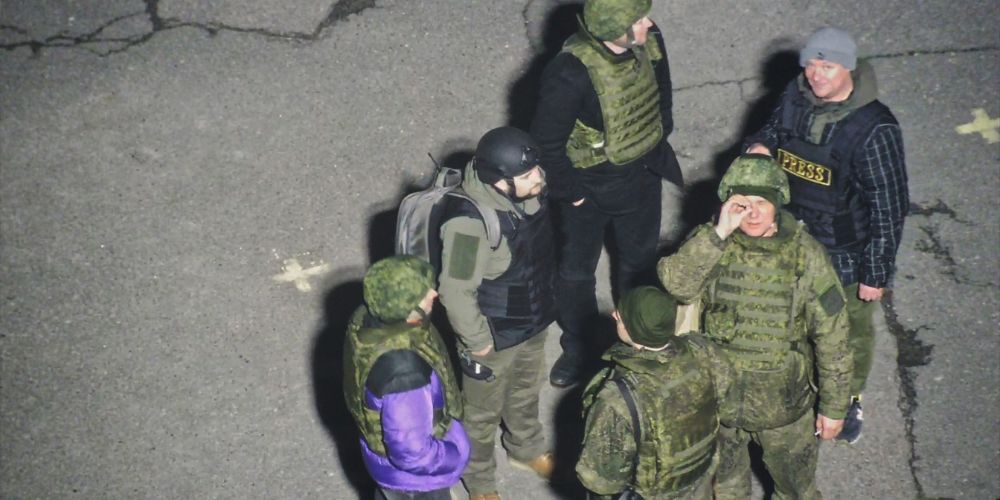
As the battle for Kyiv continues – and swiftly fails – #Moscow sends its TV crews to the plant to record what passes for a victory. The Russian troops, silent green men wearing helmets and balaclavas, deliver parcels and bread—some kind of propaganda show for the huddle of photographers and cameramen.
The weather changes—snow one day, torrential rain the next. The distant boom of guns and nocturnal flashes of explosions continue. Snatches of Ukrainian tell us the Russians have stashed military equipment behind a kindergarten. The men and their drab, armoured cars and trucks, marked with a V, continue to mill around.
Some still photos from inside the plant show the domestic side of the occupation. Russian soldiers come to and from the showers, their tattoos and faces useful for later identification by the #SBU – the Ukrainian secret service. Or perhaps for the identification of corpses later in the war.
More workers are bussed in under armed guard.
Another gaggle of press turn up. Nothing much seems to be happening before one dull day at the end of March, the Russians form up in a column and leave.
Only in the closing credits do we learn that the unit that occupied Chernobyl had also been involved in the mass killings of civilians in Kyiv province.
Further hell
It is a chilling vision of how the war started and how it continues. And for this writer, who visited Chernobyl a quarter of a century ago to report on its opening up to tourists for Britain’s Sunday Telegraph, a strange experience of witnessing a Godforsaken place plunging even further into hell.