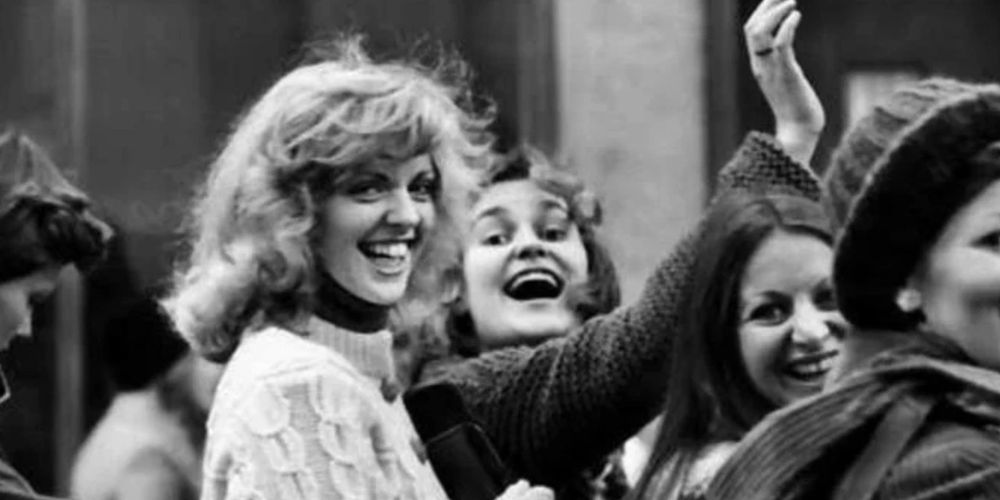
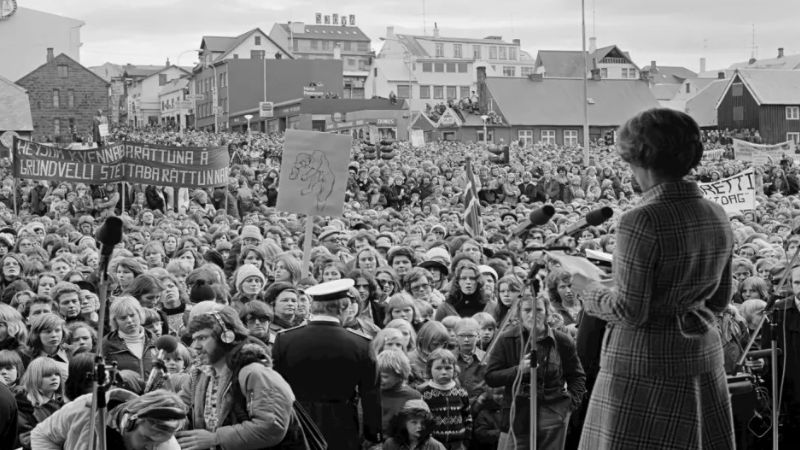
Today, Iceland is known as the country with the highest level of gender equality in the world. A few are aware, however, that it was not always like this. Just the opposite. This is the result of the efforts of many smart and courageous women, diverse groups and movements, but, above all, it is the merit of 90% of Iceland’s women, who, to demand gender equality, did the same thing at the same time. On October 24, 1975, they took a «day off». And so, as NBC reported in their Nightly News, all over Iceland «the beds were not made, dishes not washed, the telephone system went dead, newspapers did not publish, theatres did not open, the national airlines cancelled flights, and most of the schools were closed». Women proved their point: if we don’t work, everything collapses.
A Story Demanding to be Told
This is her first film for the cinema, but director Pamela Hogan already has an impressive record of award-winning projects advocating for #human rights# and #social change# from the women’s point of view. She discovered the historic Icelandic Women’s Day Off on a family trip and immediately knew that the story about «this unprecedented act of civil disobedience that transformed Icelandic society into an inspiration for us all» had to be told. The film’s producer, Hrafnhildur Gunnarsdóttir, has previously produced several films on the Icelandic women’s movement, including Women in Red Stockings about the 1970s feminist wave. The testimonies of the Red Stockings activists are at the core of The Day Iceland Stood Still, but the focus of this documentary is much broader. It pursues the question of what motivated women from all classes, all ages, and all political parties to act as one.
It pursues the question of what motivated women from all classes, all ages, and all political parties to act as one.
A Female Perspective
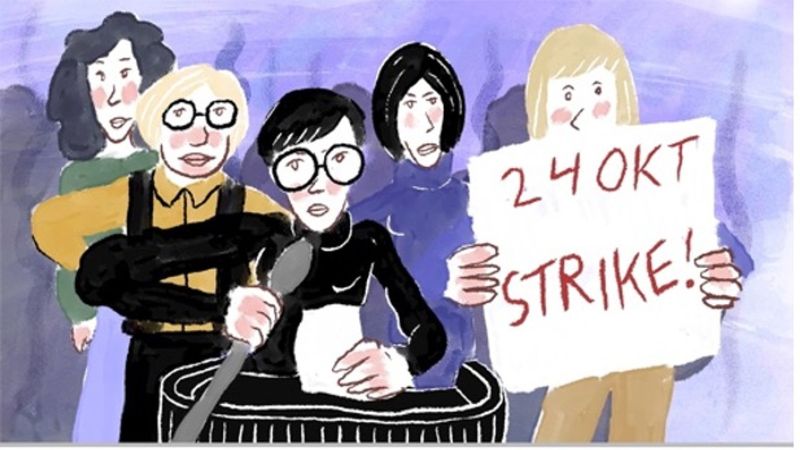
The question of what connects women beyond our differences somehow logically leads to what we all have in common. Hogan made this particular female perspective a distinct feature of her documentary. This makes it different from historical documentaries and more similar to films by contemporary feature filmmakers such as #Céline Sciamma# or #Eva Victor#. She cleverly intertwines various sources: archival material and contemporary testimonies, talking heads, old photos of the protagonists, and colourful animations, representing salient historical moments as well as their dreams and events that did not take place. The narration reveals a movement for women’s rights that has been based on empathy, solidarity, a search for a compromise, and a specific female sensibility and a sense of humour.
Like Livestock
«We loved our male chauvinist pigs… We just wanted to change them a little!» one of the pioneer feminists laughingly replied to the reproach that they hated men. The film leaves no doubt that society reacted with particular brutality to the early feminists’ demands, but it remains concentrated on the women who responded with intelligence and wit. They had to repeatedly stress that their aim is not to overpower men, but to be treated equally. The feminists in the seventies also demanded control over their bodies and to decide for themselves on how they would look. Contemporary audiences have apparently accepted that society demands that women look «good» and even compete in it, so this might sound strange. But it is also priceless to learn that women are not only repressed in the realm of the economy. The «happy housewife» ideal, for instance, implied that women themselves had no education and no money, but Hogan’s documentary also points out that in the 1970s, the ideal housewife had to wake up early in the morning to put on her make-up, because her husband was not supposed to see her unkempt. Women from the Red Stockings movement reacted to this with different public actions. One of them was a hilarious journey to Akranes, a town around 100 km from Reykjavík, where the beauty pageant was taking place. They hired a bus, took a cow with them, and even checked it into Akranes’ hotel to show that the beauty pageant is like a livestock display.
The narration reveals a movement for women’s rights that has been based on empathy, solidarity, a search for a compromise, and a specific female sensibility and a sense of humour.
Common Good
They were accused of being jealous. «They said that we did this because we were so ugly that no man would ever look at us,» remembers one of the protagonists. It is common knowledge that early feminists openly refused society’s control over their bodies and the demand to be «good looking”, but later, disagreements about this became the fil rouge of the history of feminist movements. The Icelandic women managed to overcome this, as well as other conflicts. Hogan, obviously curious about how they succeeded, does not give a univocal answer. But the ability to compromise was obviously the key. And, in the background of this, the value of the common good. The women behind the Day Off were aware that what they were doing was positive for everyone, society, individuals, and the world. And for future generations, as we are gently reminded by the beautiful «Future Forever” song, written by Björk especially for this film.
Once Again
The Day Off happened 50 years ago. The Icelandic women who demanded equal family, social, labour, and pay rights almost reached their goal. Today, Iceland is the only country in the world that has closed over 90% of its gender gap. The protagonist, Guðrún Erlendsdóttir, who in the film recalls dreaming of becoming a lawyer as a young girl, was the first woman to be appointed to Iceland’s Supreme Court and later served as its chief justice. Vigdís Finnbogadóttir, who aspired to be a ship captain, served as Iceland’s prime minister for 16 years. However, wherever one looks today, from the proliferation of beauty products and advice on social media to the #MAGA movement against women’s rights, one sees that the struggle for gender equality is not over yet. What I find painfully striking is that The Day Iceland Stood Still, a documentary about early feminist activists, also serves as a reminder that, beyond Iceland’s borders, it is high time to start again.