Abbie Hoffman understood in 1968 that the #Chicago 7# trial (originally the Chicago 8 before Bobby Seale was literally gagged, bound, and sentenced separately) was not prosecuting actions but rather the thoughts behind them. «It was a state-of-mind trial,» he said at the time. The US was criminalising what activists believed before they acted. That precedent haunts The Encampments, a documentary chronicling the 2024 pro-Palestinian campus protests that erupted at #Columbia University# and spread globally. The same pre-emptive criminalisation of dissent persists, now turbocharged with algorithmic #surveillance and executive fiat.
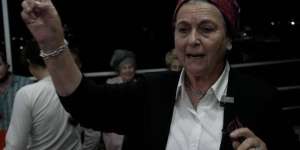
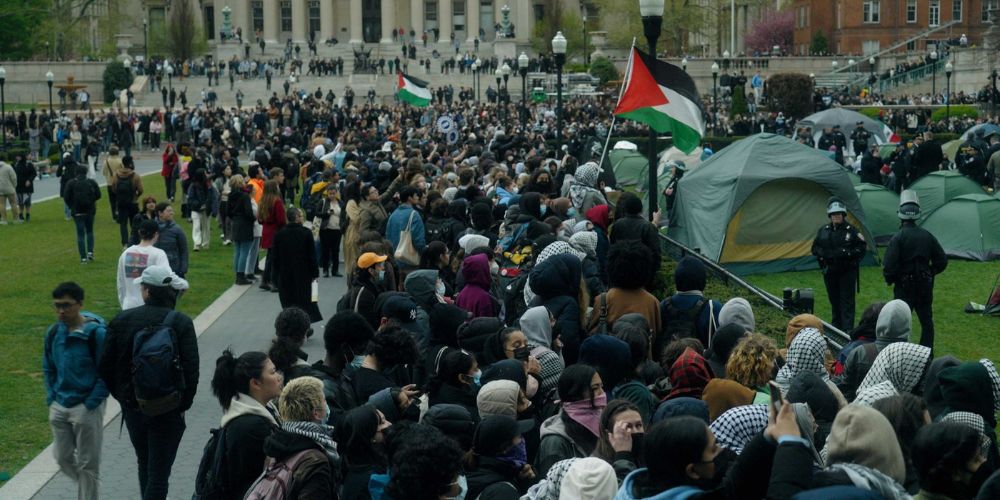
The film deliberately echoes the visual rhetoric of 1960s campus activism—students gathering on commons that once hosted #Vietnam War# protests, resistance to #Reagan and #Thatcher, the Paris and Berlin uprisings. But a central question emerges: Can protest language from that era address 2025’s realities when the state has perfected Hoffman’s warning? And this time, the carnage isn’t distant or deniable—it streams live from #Gaza while students face arrest for objecting to #genocide by a nation that knows its holocaustal nature better than anyone.
Dual Realities, Single Narrative
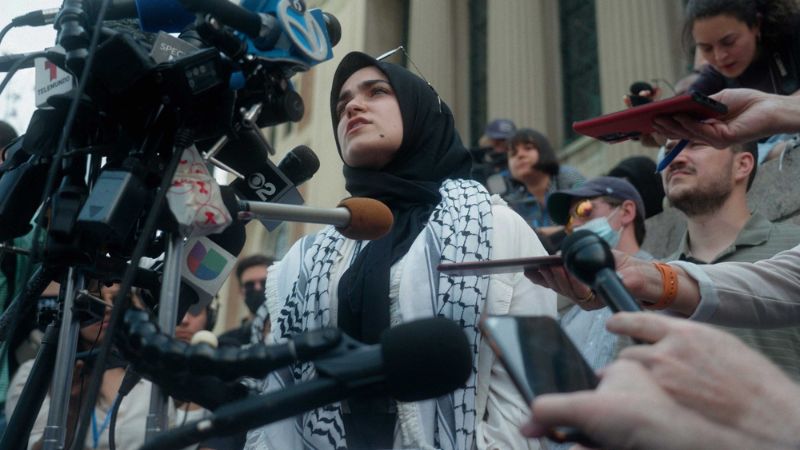
The Encampments oscillates structurally between speeches at Columbia and other #Ivy League# campuses and ground footage from Gaza. The juxtaposition is the film’s moral architecture: privilege meets catastrophe. We catalogue visceral images, including children being dug from rubble, bandaged heads that have been brutally injured, and a car from which a young child called for help after being riddled with over 300 bullets fired by the #IDF. But this dual reality exists only within the documentary itself. CNN, ABC, and the full MSM apparatus responded to the encampments with lockstep pro-Israeli framing. The protests were depicted not as #First Amendment# expression but as terrorist provocation. The repeated slander: Palestinian terrorists, pro-Hamas agitators leading campus activism. This narrative echoed from newsrooms directly to the executive branch, with Trump adopting identical language while crafting a «peace plan» guaranteeing continued Palestinian statelessness post-war.
What The Encampments captures that mainstream media systematically erased was the smartphone as a counter-weapon. Professional cameras failed or refused to document what mobile phones recorded: the reality circumventing media gatekeepers. Students became witnesses to what network news wouldn’t show. The film’s oscillation between protest and atrocity reveals precisely what is suppressed in official channels—what it means when genocide documentation must bypass mainstream media entirely to reach public consciousness. Those old enough will remember the chill that ran through the counterculture when a young #Seymour Hersh# reported on the #My Lai# massacre that featured naked children running down a dirt path toward the camera, screaming.
The film deliberately echoes the visual rhetoric of 1960s campus activism
Semantic Warfare and Liberal Collapse
Columbia’s president emerges as an emblematic figure: a faculty party veteran, presumably progressive, and clearly more comfortable at receptions than confronting actual political crises. The film exposes the gap between liberal institutional rhetoric and the fascist response to dissent. The university appears as a relic, its founding purposes now nostalgic artefacts from a bygone era. The protests force a fundamental question: What is the university for in 2025?
The answer arrives through violence and semantic warfare. «Terrorist» becomes the all-purpose slur hurled by #Netanyahu, Israeli counter-protesters, and American #Zionists at students in encampments. It’s paired with «anti-Semite»—terms designed to silence, to criminalise thought itself. Israeli historian #Shlomo Sand# highlights a profound historical irony: Palestinians are the world’s oldest Semites. Israel’s campaign against Palestinians thus becomes, by etymological and historical fact, the region’s largest anti-Semitic operation. This inversion—calling those defending Semitic Palestinians «anti-Semitic»—represents Orwellian language perfected.
The violent enforcement follows predictably. Zionist counter-protesters attack encampments with sticks and fists, wielding these linguistic weapons alongside physical ones. «Terrorists» get screamed at students exercising First Amendment rights in designated peaceful protest zones. The bitter irony: The guarantee of being born into freedom is violated by those weaponising victimhood claims. The state mobilises—mass arrests, police violence—against expression deemed too free. Liberal education’s promise collapses under the weight of its cowardice.
The Journalism School’s War
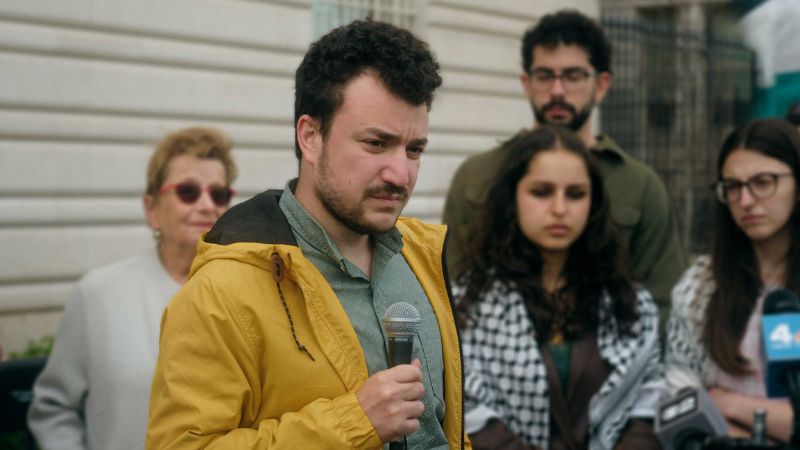
Columbia Journalism Review’s internal fracture becomes a microcosm of institutional capture. The executive editor resists «strident» pro-Palestinian positions at a publication literally dedicated to examining media bias. The contested term «pro-Palestinian» itself carries unwelcome connotations, erasing Palestinian Americans’ own voices in the process. The editor’s firing and replacement by someone «more amenable» to Gaza truth-telling reveals everything about the acceptable boundaries of discourse. CJR’s mandate to critique bias produced its own bias crisis. What does it mean when journalism schools can’t maintain journalistic principles? When those training journalists cannot agree on whether documenting genocide constitutes legitimate reporting or dangerous advocacy, it calls into question the press’s role.
The contested term «pro-Palestinian» itself carries unwelcome connotations, erasing Palestinian Americans’ own voices in the process.
The Money That Explains Everything
The Trump administration’s leverage revealed what many didn’t realise: the subsidy structure undergirding elite education. Columbia receives over $300 million in taxpayer money. Harvard and other Ivies depend similarly on federal largesse. These «private» institutions survive on public funding. The timeline clarifies the cause-and-effect relationship: when funds are frozen or threatened, the administrative crackdown intensifies. Follow the money to understand the fascist response.
Students demanded divestment from Israeli military aid, echoing the massive South African apartheid-era campaign. The bitter irony cuts multiple ways: South Africa, having survived one #apartheid system, became the first nation to bring Israel before the International Criminal Court for perpetrating another. The victor recognises the crime while former anti-apartheid allies now fund it. Divestment worked once against #Pretoria. The state ensures it won’t work again against #Tel Aviv#. Raising the obvious question: Why not?
Yesterday’s news confirms this: The latest defence authorisation bill guarantees Israel continued support. America promises to compensate for any European or Asian divestment. The encampments protest not just genocide but the financial architecture enabling it. The message is clear: Your speech is free until it threatens capital flows to the occupation.
From Goodwill to Permanent Expansion
The documentary illuminates a historical arc most prefer to obscure. In 1948, global goodwill accompanied Israel’s founding—end the diaspora, ensure the Holocaust could never recur. That goodwill lasted until approximately 1967, the turning point when expansion began, after the #Six-Day War#. Since then, there has been relentless territorial acquisition, with American complicity being essential rather than incidental. The US and Israeli agendas merged, with expansion as a shared political project. Israel’s trajectory has been toward increasingly repressive fascism.
The architecture of impunity operates on multiple levels. The UN is rendered toothless, unable to enforce the agreed-upon rules of engagement with the Palestinians. The ICC issues warrants, Netanyahu evades—his summer 2024 US visit was carefully routed over nations that won’t force the plane down for arrest. He understood that America guarantees immunity, while travelling elsewhere poses a risk of arrest. International law exists only for those without imperial protection. While Netanyahu addressed Congress in August 2024, Representative #Rashida Tlaib# held up a sign calling Netanyahu a war criminal, while he called protesters to his visit outside ‘tools of terrorists’ and got standing ovations.
But the surveillance infrastructure represents the most chilling dimension. Israel, #Saudi Arabia#, and the #UAE deploy Pegasus-style technology against their own citizens. NSO Group’s tools differ little from what Snowden warned about with XKEYSCORE—the capacity to hack any phone or any PC, harvesting entire data drives invisibly. This technology, perfected on captive Palestinian populations, now turns against dissent everywhere. The students in the encampment have become the new enemy. When smartphones documenting genocide become evidence of terrorism, the empire has eaten its stated values entirely.
What Remains
The Encampments achieves something rare: It chronicles contemporary student activism while revealing the machinery designed to crush it. The film shows who does the activism (largely Jewish students from the beginning, rejecting the trajectory their community’s institutions have taken), how such activism spreads globally, and how the state mobilises when expression threatens actual interests rather than performing symbolic dissent. Where 1960s protest rhetoric meets algorithmic-era atrocity documentation, the university stands revealed as a node in the military-industrial-academic complex sustaining permanent occupation. When students calling for divestment face state violence while their government promises perpetual Israeli armament, liberal education’s founding myth doesn’t just crack—it dies. The encampments document an empire protecting its actual interests by any means necessary, including criminalising the thought that occupation might end.