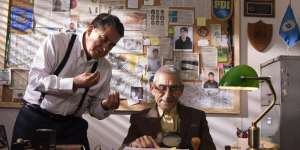
It is hardly a coincidence, but rather due to the pressure of the moment in a Germany tending towards right-wing extremism, that three documentaries at the Berlinale deal with the topic of permanent open and institutional racism.
In addition to Marcin Wierzchowski’s The German People, which was shown in the #Berlinale Special and deals with the deadly attacks in #Hanau in 2020, and Daniel Asadi Faezi’s and Mila Zhluktenko’s In Retrospect (org. Rückblickend betrachtet), which was shown in the Berlinale Shorts and which recalls the murders in the #Munich shopping centre in 2016, Martina Priessner returns in The Moelln Letters to the #arson attacks of 1992, whose history and consequences that extend to the present are presented primarily from the perspective of the surviving victims, who are still actively fighting against a culture of concealment and repression today.
The archives
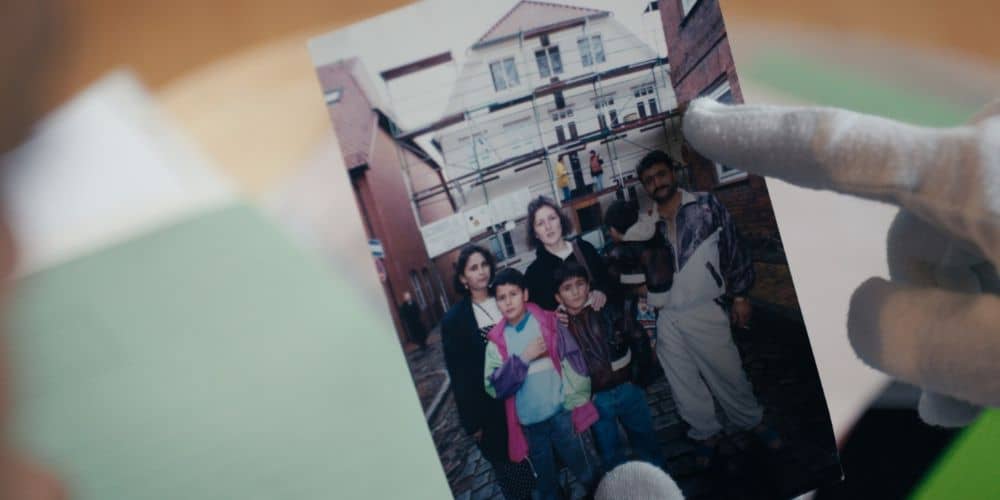
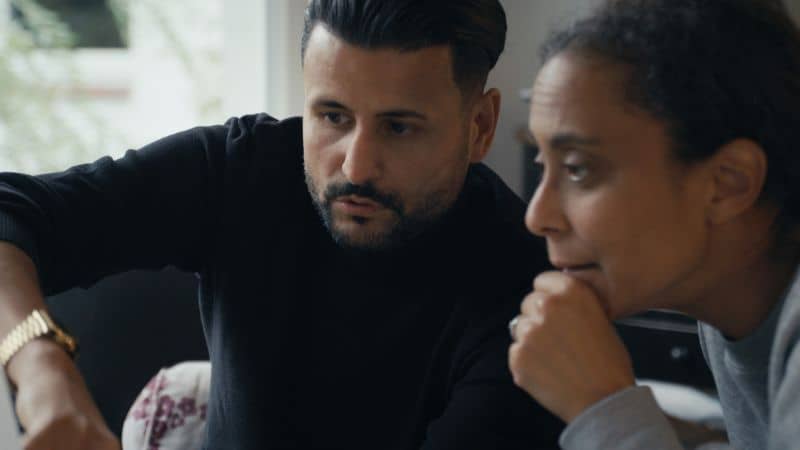
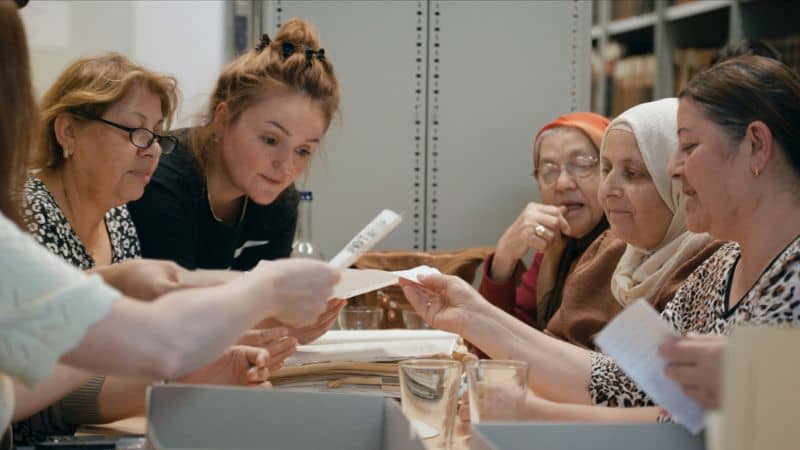
Three members of the Aslam family lost their lives. Ibrahim Aslam survived, saved by his grandmother, who herself died in the flames. Decades later, it was only by chance that he found out about hundreds of letters that had been addressed to the surviving victims in the days after the attack through a student working in the Mölln City archives. These letters, some written by children, testify to compassion and solidarity, but at the same time also to the emotional shock and contempt of those Germans who are capable of such murderous acts.
Some were without an address, some were addressed to the «Tea Room,» a well-known collection point in the city, and some were addressed to the mayor’s office; none of these letters were delivered to those affected. On the other hand, on the instructions of the mayor at the time, they were housed in the city archives. Those requesting donations from accounts were answered with form letters; others, especially the children’s letters, were sometimes answered directly by the mayor with compassion.
However, the emotional significance these letters would have had for the actual recipients, who were in hospitals or had become #homeless, seems—not coincidentally—never to have been an argument for the mayor (CDU member). Under the pretext that the letters were not clearly addressed (the houses had burned down)! The post office disregarded not only its obligation to deliver but also the confidentiality of letters by handing over the letter bags to the mayor’s office. There, the letters were opened and read. By then, it should have been clear that the mayor himself was the addressee in only a few cases. Of course, it would have been possible to give the letters to the families of the two houses that burned down. The former mayor declined to comment on why this didn’t happen, and it never occurred to the current official to launch an investigation.
These letters, some written by children, testify to compassion and solidarity, but at the same time also to the emotional shock and contempt of those Germans who are capable of such murderous acts.
Omnipresence
Martina Priessner uses the term omnipresent «structural, institutional racism» to explain the seeming incapacity to recognise the possible meaning of the letters for the victims, but more than that, a strategic counteract against the formation of a culture of solidarity. It could also be conceivable, one might add, that there is a #control function intended to detect «radical tendencies» in some letters. Bringing transparency into the mechanisms of prevented deliveries would mean taking responsibility. Institutional #racism prefers silence and repression. As Martina Priessner sums it up, «a solidarity could never develop a social force.»
After a year of renovation, the families had to move back into their burnt-down apartments, an act that was also hardly emphatic. When, decades later, Ibrahim Arslan, who had finally been informed, requested access to the letters from the mayor’s office, he was told that this access would have been available to him at any time. But now it was too late to contact the mail senders. Many of them were no longer alive.Finally, it was decided to send all letters and related materials to the «Documentation Center and Museum about Migration in Germany» for indexing, archiving, and complete digitisation (DOMiD) in Cologne.
The untold stories
It can be assumed that similar cover-up operations were also carried out at other assassination sites. Ibrahim Arslan has become an activist in this educational work. In the meantime, an increasing number of initiatives have been developed that strive for transparency. But Martina Priessner reminds us that many of the racist acts were never known: «We are world champions in remembrance while at the same time defending against the perspectives of those affected…There are countless untold stories, not heard, not seen, and we must finally start telling them.» This can only be an appeal for social responsibility, but as in Mölln, not taking action is also well-known on TV stations. The lack of support from public funding agencies completes the clarification of political failings. For her current film, Priessner didn’t have a single TV channel on board. She notes a lack of interest and empathy. To create empathy, however, you have to listen to people’s stories. The fatal circle closes.
The hope remains that her current film will motivate further research. However, Priessner was never able to realise her four-part series on the extreme #right-wing# extremist #NSU. The main lever of institutional racism is, in a nutshell: «You can afford not to be interested.»