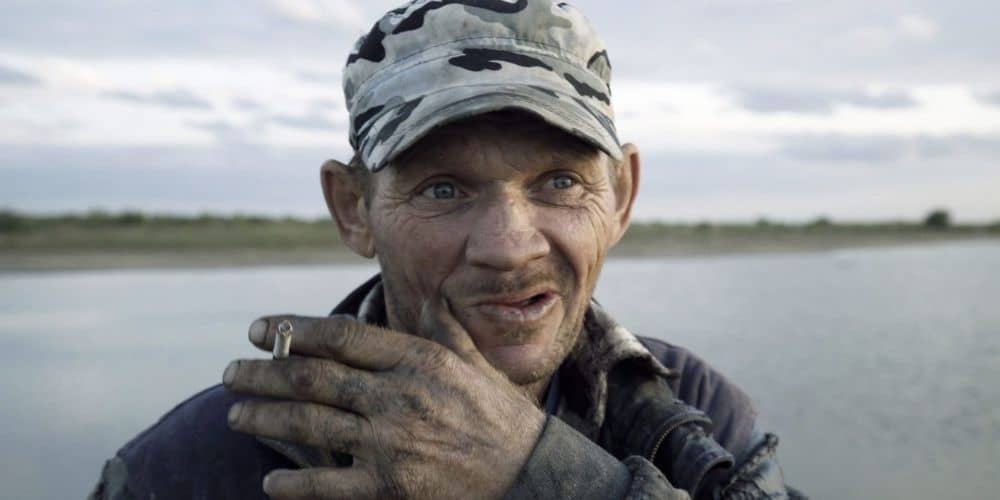
«Dear Vladimir Vladimirovich #Putin, I believe only in you. That’s why I am addressing you. Please help us.» Ivan, a fisherman from the island of Ostrov in the #Caspian Sea#, dictates this to his literate daughter while signing off a letter to the Russian president. Ivan is requesting direct assistance for the plight of his family who live «in ruins» with no support from the local authorities. This from Ostrov – Lost Island, directed by Svetlana Rodina and Laurent Stoop, which world premiered at the 52nd Visions du réel.
Since the tsars
The question of how to rule and maintain power over a vast territorial expanse has occupied Russian leaders since tsarist times. The film emphasises that the sheer inability of Putin to be personally aware of everything happening in all corners of the federation, requiring the #Kremlin to delegate duties of governance, has been cynically manipulated to leverage his cult-like popularity. He’s able to offload blame on regional leaders for the reality that basic services are often neglected and on the brink of collapse as soon as one travels outside Moscow, from villages with no running water to sources of livelihood dried up since the chaotic transition to capitalism.
Propaganda, beamed into distant homes — including Ivan’s — via state-run television, pedals the illusion of a compassionate president regretful that time does not allow him to handle every task serving ordinary citizens himself, with brisk efficiency. Slick public-relations segments show him connecting via video-link to desperate villagers in godforsaken spots to lend an ear and nudge sluggish mayors into action. Putin’s moment of greatest shame? Entrusting a document to an assistant, who then lost it, he recalls, in a deftly scripted talk show moment. It’s a polished drama of a benevolent and tireless father-figure that pushes democratic institutions, their safeguards and processes, firmly to the side, and harks back to more strongman, despotic times.
The question of how to rule and maintain power over a vast territorial expanse has occupied Russian leaders since tsarist times.
Ancestral bones
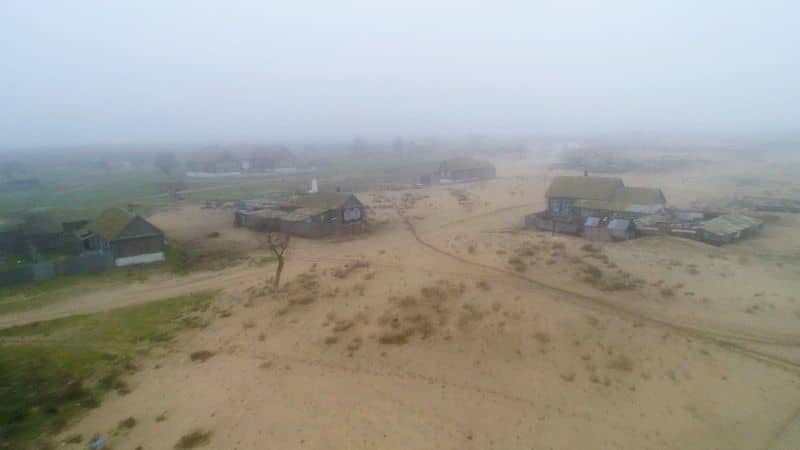
Ivan and his family subsist on the barren island of Ostrov through fishing, an ancestral practice that is now illegal, the collective fishery that operated in Soviet times having been dismantled in the ‘90s. Taking the boats out, as the Coast Guard patrols regularly, and even one caught sturgeon can result in a criminal penalty, is a cat-and-mouse game that means the inhabitants live in perpetual fear and stress. Arrests, ripped nets, and even late-night visits from masked secret service agents punctuate everyday life, yet they are powerless to live within the law when there are no salaried jobs and the sea is their only survival resource. A lack of perceived prospects elsewhere in #Russia, especially with a criminal record, and the bonds of belonging to a place where the bones of ancestors are buried, means leaving holds little attraction. This is despite the lack of a medical doctor, electricity, or fundamental sense of security on Ostrov.
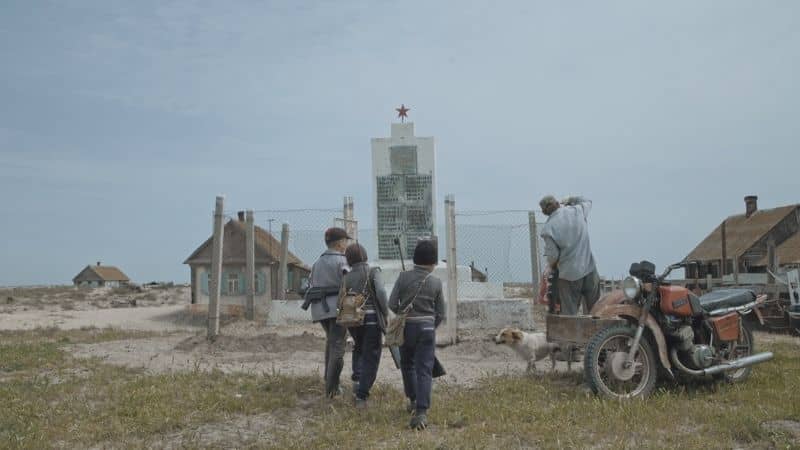
«It’s the government for itself, and me for myself,» declares one of the island’s younger generation, who have also started to take trips out to fish. The bulk of inhabitants’ ire is directed at the administrative officials in their close vicinity and an ingrained #corruption that sees money allocated to the region disappear into private pockets. This split in thinking, whereby rotten local systems are not seen to reflect back on the president, seems to be a way to ease the cognitive dissonance between Putin’s relentless utopian media propaganda and the squalor of lived reality. The Great Patriotic War, as Russia terms World War II, and its gargantuan exertion against #fascist expansion, is still taught in schools and touted on television as the great defining sacrifice of the nation, and Ivan waxes lyrical about Putin’s success in rebuilding a strong army. A lauded propensity of the Russian people for tough stoicism, indoctrinated as a value along with the nation’s war stories, may also contribute to their capacity to love a leader that has not so far relieved their hardship. «We are an invincible people,» says Ivan. «It doesn’t matter who’s attacking us, we’ll hang in there.» The Coast Guard may have their work cut out for them.
Stuck in the post
As for Putin’s work? The illusion of a direct line to his solicitous attention, if only the obstructive bureaucrats could be cleared away, is a future-faking manipulation that keeps citizens suspended in an eternal false hope. The act of writing a letter, perhaps cathartic in and of itself, staves off more dangerous dissent if it is always waiting to be delivered. The advice of Ivan’s relatives, when he receives, after weeks of posting his missive, still no reply? Write a second letter. Then a third letter. A better future is simply stuck in the post.