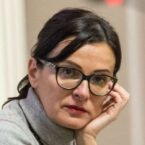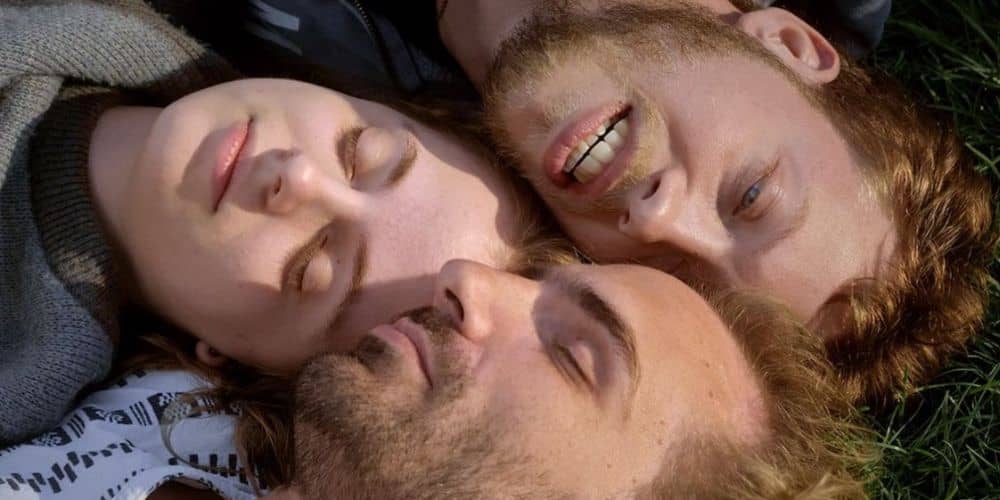
Some documentaries are powerful because they give voice to those not heard before. The Tender Revolution is such a film. With her and other protagonists’ testimonies, Annelie Boroș sparked earnest reflections on human nature, who we are, and how we want to live.
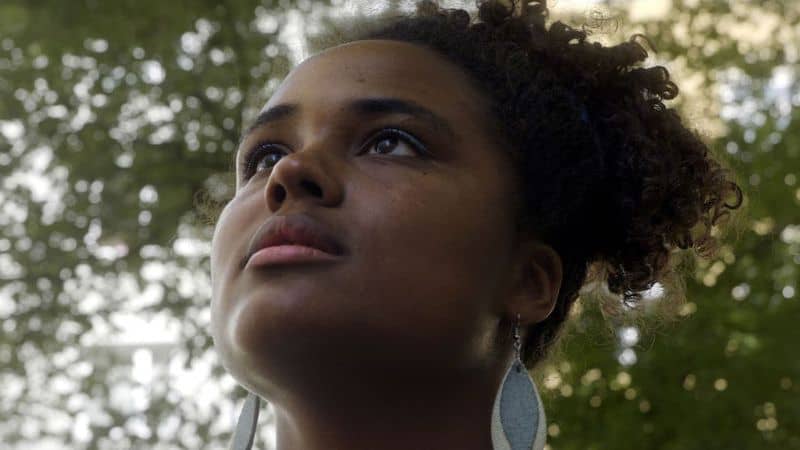
Disabling society
The director inventively built her personal involvement into the structure of the film. Boroș is also one of the narrators, and her imaginary relationship with her #bipolar friend and roommate who committed #suicide forms part of the web of the human ties we see gradually woven throughout the film. Her position is novel too, as she is «looking for answers to the question of how the world should’ve been» for her late friend «that disappearing from it wouldn’t have been» her only way out. This perfectly resonates with Samuel Flach, a wheelchair user and disability activist whose body has been paralysed from the neck down after the accident he had when he was 20. The accident has made him «disabled,» but he claims, «It’s the society that disables me, by the lack of accessibility, prejudices, and standards that are not made for my body.»
«It’s the society that disables me, by the lack of accessibility, prejudices, and standards that are not made for my body.»
Outstanding personalities
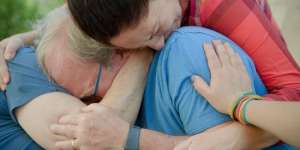
In her call to envision «a world, in which we have time and space to really care about the needs of others,» Boroș introduced four people «who have made caring for others the centre of their life.» Arnold Schnittger from Hamburg left his job to take care of his severely disabled son, Nico. Despite the precarious situation they both live in, Arnold remains a tireless activist, ready to organise the most unusual actions to «draw politicians’ attention to the unspeakable care situation”. He also continues bringing a smile to the faces of his son and other kids with disabilities and their families.
Bożena Domańska has been working as a live-in carer in Germany for decades; her experience shows in her tender guidance of the elderly lady she is caring for and in her testimony about her workload that often exceeds her responsibilities. «We clean windows, maintain gardens,… serve the patient’s family and children, although caring for a person is hard physical work on its own.» Bożena is poorly paid and often taken for granted by her employers, and she misses her own family in Poland. Still, she advocates for the carers’ rights and is always ready to help her colleagues in trouble.
Samuel Flack has a vision of a different life: a self-managed solidarity-based community project where the marginalised and the privileged live together like a family. «A little utopia» that will probably be realised in a shared housing project in the heart of Munich.
The fourth protagonist is Leida Amanda Luna Tacunan, a climate activist from Peru, who is convinced that «care is not just looking after each other on an individual level but also how we treat our living spaces and nature, which form the basis for a good life.»
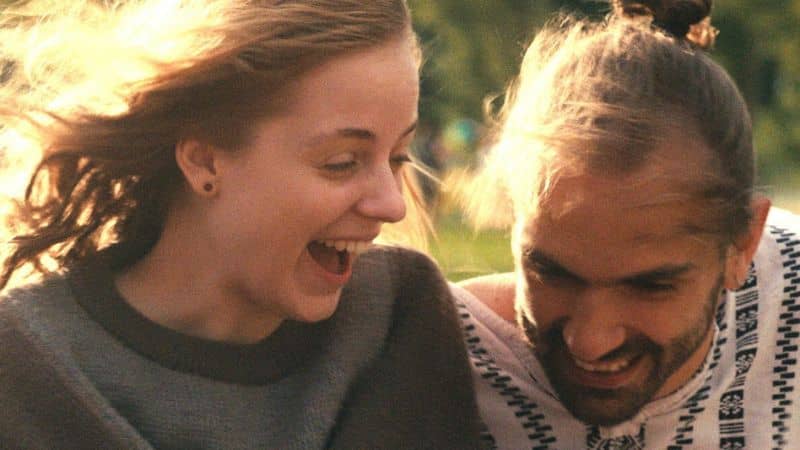
Beyond free labour
Each of these testimonies is unique, yet they are related. Their common concern, the value of care as work, is one of the key issues in contemporary societies. Some scholars argue that we live in a sort of «emotional capitalism» (Eva Illouz) in which emotional life «follows the logic of economic relations and exchange.» Others highlight the proliferation of jobs that demand the commercial use of feeling (Arlie Hochschild), from online dating companies to party animators and even paid graveside visitors. These approaches revealed that several economic activities are based on unpaid #labour. For example, contemporary #social media# platforms are based on the free labour (and data) of social media users, and the capitalist economy was initially made possible by the free labour of women who were taking care of their husbands and children for free, even if their work was necessary for the reproduction of labour.
the capitalist economy was initially made possible by the free labour of women…
For empathy
In her documentary, Annelie Boroș revealed the shortcomings of such approaches. Based on the political economy, the claim would be that, instead of free labour, care should become paid labour. However, while Arnold’s problem is that his care as a father is not acknowledged as work and is not paid, Bożena’s problem is that her work is underpaid. If we try to define the underpaid, we reach the limit. Is it at all possible to measure the value of caring and gentleness that this activity requires? Can tenderness be measured and paid? Or should we rather listen to Samuel Flach, «Only those who are efficient, who work, are precious. Only what’s useful is precious. – No! We are all precious.» If we are all precious, nobody should be denied the means to live. In other words, it is high time we decouple the means people need to live and what people do. This is the goal of the Universal Basic Income.
In the last few years, the arguments for the #UBI have been multiplying. The free labour of social media users that makes the richness of contemporary media oligarchs possible is just one such argument. The rise of the so-called #artificial intelligence# and the prospect that ever more jobs will be performed by machines will result in ever more people becoming jobless. The rising gap between the poor and the rich income also shows that what people earn is ever more separated from what they do. Why not separate it altogether? People who don’t need to worry about the means to survive are less susceptible to false news and polarisation, less ready to hate, and perhaps also more caring and capable of empathy.
This, we can learn from the protagonists of The Tender Revolution, is the most important. «Human life is fragile,” says Arnold Schnittger. Fragility is a normal state of human life. We are born; we get ill. We are all relatives and have relatives. We are all in this together. The vocal defenders of the idea to abandon empathy altogether would certainly not agree. Therefore, it is that more precious that the protagonists of The Tender Revolution are heard too.