Popular fiction makes us believe that heroes are ordinary individuals who mind their own business until an extraordinary event makes them start caring for others, too. The Winning Generation introduces a more traditional view of heroes, weak and flawed from the modern perspective, yet posing a challenge to humanity at large. What are you willing to do for others?
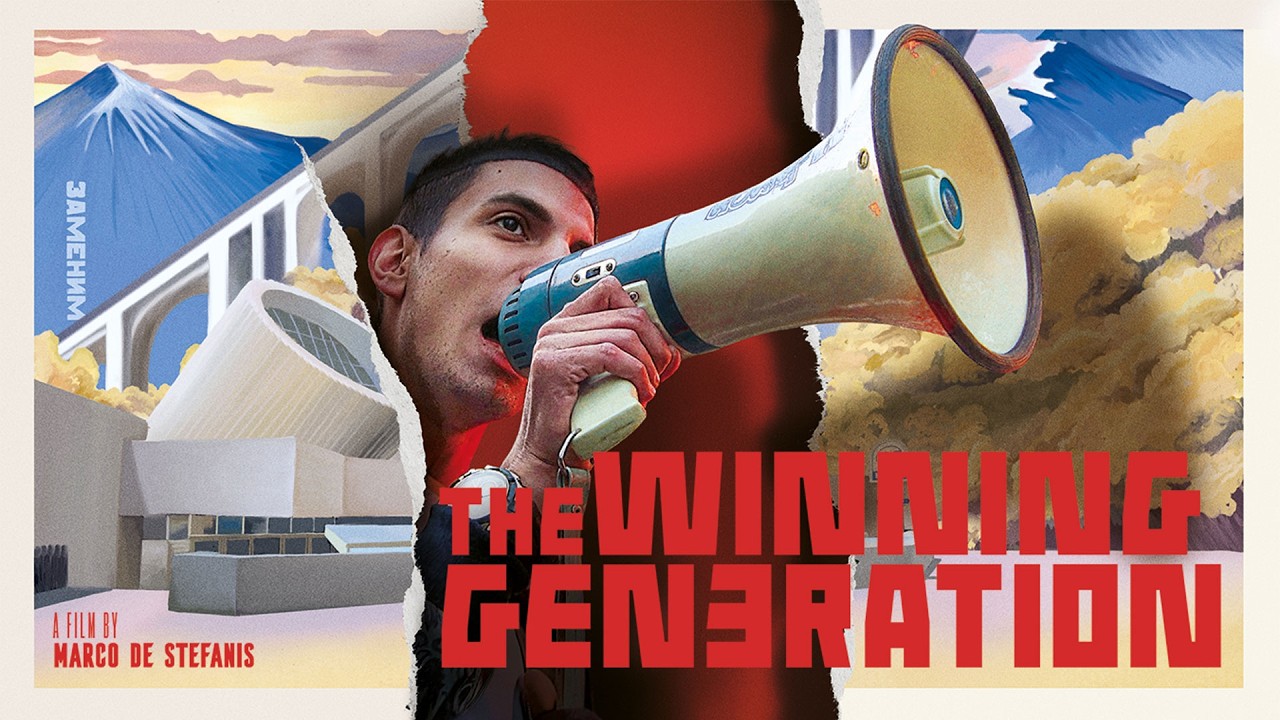
Shahen Harutyunya, like the heroes of ancient Greek mythology, is fulfilling the mission entrusted to him by his ancestors, leaving little room for his personal goals. For example, he dreamt of being a football player, but became known as the boy who interrupted the football match between Armenia and Portugal in Yerevan during the 2016 World Cup qualifiers. He ran over the playing field to protest against his father’s imprisonment. The director Marco De Stefanis learned about him when the Armenian human rights lawyer Ofelya Zalyan told him about Shant Harutyunya, a prominent Armenian activist and dissident who had been under arrest since 2013. Shahen, his son, was a teenager at that time. After his father’s arrest, he founded a movement named The Winning Generation. De Stefanis and his crew followed him ever since, for 12 years, documenting the evolution of a young Armenian activist into a smart politician, fighting for the sovereignty of his country, which remains under constant threat from Russia, and a coming of age story of a young boy, striving to carve his personal identity out of, and against the overbearing legacy of the familial and national ones.

Family of heroes and patriots
The recordings from the father’s trial, which we see early in the film, are unique and one of a kind, an emotionally charged oscillation between heroism from some long-gone times and abuse. With admirable wit and perseverance, Shahen transforms this traumatic experience into a positive vision of the Winning Generation. A worthy heir of his father, who fought against the pro-Russian Armenian government after the country reached independence during the 1991 breakup of the Soviet Union, and of his grandfather, who, during the 1960s, when Armenia was part of the Soviet Union, initiated the independence movement and, with a couple of friends, founded the National United Party. Stefanis accurately documents Shahen’s respectful behaviour towards his father, as well as his courteous visits to monuments in Armenia in memory of his grandfather, who emigrated to the United States and died there.
There is a disaster at the origin of every nation
The Armenian genocide
The key aspect of the historical background of this outstanding documentary portrait is the memory of the nation’s sufferings under the Ottoman Empire and the genocide in which, during the First World War, possibly over 1,5 millions Armenians were systematically exterminated. There is a disaster at the origin of every nation, said Fredrik Jameson. But the Armenian genocide is a disaster of a particular kind, since it has never been properly acknowledged, and the Armenians all over the world have a permanent duty to keep alive the memory of it. The pervasiveness of this legacy is visible even through the product placement in the film, for example, when Shahen is visiting a national monument dressed in a jacket of a fashion brand of one of the most successful descendants from the Armenians who escaped the genocide.
Shahen
De Stefanis’ documentary carefully highlights injustice and political abuse the Armenians are subjected to even nowadays. Yet the focus is on the slippery terrain between the collective and the individual, the political and the personal. For Shahen, personal has always also been political. Torn between the ancient collectivism and modern individualism, he is inescapably a hero with a flaw. Collectively, he is a political party leader, yet has no role in national politics (yet). Individually, he is struggling to form his personal identity. In the background of masculinist ideology and macho pose, we see him trying to establish some kind of deeper contact with his father, to find in him a trace of love beyond the duty towards the nation and family tradition. Remarkably, the most intimate conversations between the son and his father take place over the phone, with that distinct, barely audible rustling signifying the physical distance, and the moments of silence that give space for imagination but, in reality, remain empty. Early in the film, for instance, Shahen is asking his father Shant about the most important lesson from his father, and Shant says it is never to cross the street at red lights – because if he would do it, KGB car will run him over, while it is unlikely they would do this at green lights, since they would need to run over several people for just one. A reply that leaves an aftertaste of disappointment. Practical, but without emotions. Notwithstanding such intimate disappointments, Shahen doesn’t abandon his duties towards the collective. Actually, it is this that makes him a hero, and De Stefanis’ documentary the right film for today, when all excuses have expired and every one of us, as members of humanity, should accept our share of the responsibility.