Artificial intelligence (AI) and biotechnology will change what it means to be human – regarding our freedom and values. Shall we believe Yuval Noah Harari (Sapiens), the change will be greater in our century than in the entire history of mankind.
My theme here is this new decade from 2020. For example, someones #Tesla can be controlled via a keystroke from #Musk & Co in Palo Alto – for example, they can decide how far the battery will reach. When Tesla has such control capability, do they really own the car or do they only have a license? And what about #Fiat Chrysler#, which recalled 1,4 million cars when it turned out that an external hacker managed to remotely control one – stereo system, wiper, motor, brakes, and steering?
And how long do you really own your #smartphone, when it is not guaranteed updatable for more than two years (Android) or five (iPhone)? The consumption of new things is so frenetic, that in this decade we must get used to the fact that we only own a license.
In this new decade, your home will be equipped with smart TVs, smart lighting and connected speakers (Google Home). How about a more «vibrant» everyday life where the horror film is combined with the living room lamps that flicker and change colour, sounds heard from other rooms, and you feel vibrations that you don’t know where came from?
You will still get camera-monitored refrigerators in your everyday life that help you with your purchase. Remote controlled heating provides a warm homely welcome. Your doorbell with a camera and auto-lock can lock in the ones you want, even when you’re away from home. Today – at least in Italy – #surveillance cameras are automatically included when you install the Internet.
With the surveillance mentality comes sanctioning – especially for deviant behavior.
But what about this connected world’s hackers? Do you have one of those hospital-controlled #pacemaker#s or insulin pumps? Then one day you might be exposed to a new killing method if someone wants to stop you.
We will probably also see an increase in criminality, hackers who infects your computer with so-called ransomware; or threat to disseminate publicly what you have stored privately there; or trough #Internet of Things# (iOT) let the light in the living room flicker? Or what about threats against your mentioned connected pacemaker – until you have transferred an amount to a crypto account? And do you run one of Starbucks coffee shops with internet-controlled coffee machines – what do you do when a hacker causes them all to continuously vaporize steam?
The algorithms
In this coming decade, newer technology will take away control from many. But also the control over yourself: Artificial Intelligence which processes collected big data, whether through Facebook, Google or other monitoring of what you do on the internet. We then talk not only about customized ads or recommended book purchases on Amazon, but also where you move with your car, your smartphone and who you talk to – if not also what you say and write via US NSA’s XKEYSCORE.
In this coming decade, some will probably think that the #algorithm#s will know you better than you do yourself. Perhaps it is helped by your smart mattress that measures your heartbeat while you sleep, or your #Apple Watch# that records your daily rhythm and body movements. And it’s all stored in a data cloud. After all, your insurance company would like to earn more by offering «individually tailored» car and life insurance based on what they get from such big data.
Surveillance
Let me change my perspective. Who helps politocal powers with surveillance? As Google was close to in China …
Well, for example, there are companies with like NSO Group, #Gamma Group# (their FinSpy) or #Memento Labs#. The former is currently being sued for licensing #Pegasus, spyware that supposedly monitored Jamal #Khashoggi, the journalist who was killed in the Saudi Arabian embassy in Istanbul. Well, in October this Israeli company was, according to The Economist, also sued by #WhatsApp for using the software to hack the account of 1400 WhatsApp users. And in November, some of NGO Group’s employees again sued Facebook for blocking their #Facebook profiles.
Said companies also sell data or software to powerful authorities who want to monitor their citizens. Memento Labs, for example, has the FBI and a Saudi spy company as customers.
On the other hand, the arguments for doing surveillance points to combating crime such as the ubiquitous «terrorism» or narcotics smuggling.
One example of state surveillance was where, according to The Economist, in 2011, the United States procured around 327 hours of surveillance material from its around 37 #drone#s. The US Department of Defense has now stated that artificial intelligence is «poised to change the character of the future battlefield». That means a huge commitment to warfare in today’s connected cyberspace.
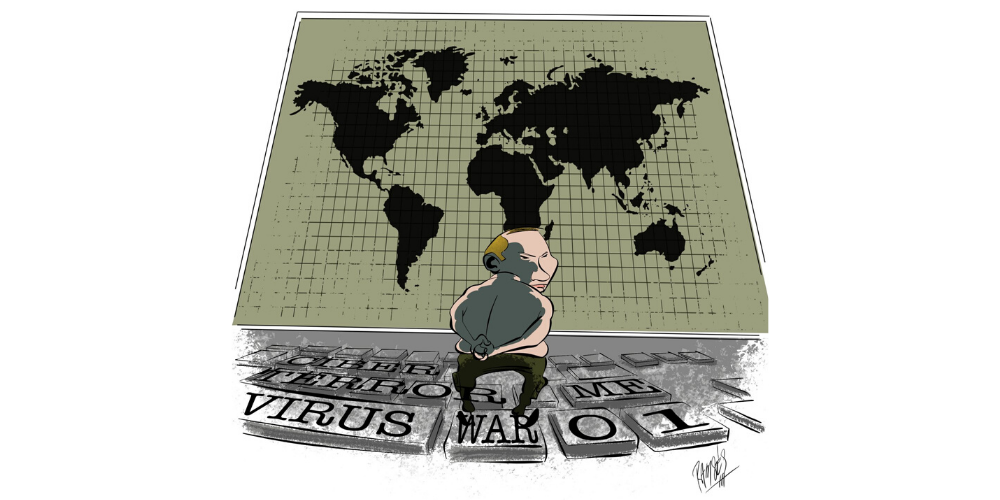
China has also set itself the goal of becoming a leader in artificial intelligence by the end of the decade – their state monitoring of citizens’ behaviour when, as it is known, has reached new heights with punishment and awards. And #Putin states that «whoever becomes a leader in this area will become the ruler of the world».
Where battles were fought physically in the past, this decade will see «acts of war» intensified in more indirect areas. These include switching off the power in cities (like 14 locations in Venezuela last summer?). Or the use of drones and «break-ins» of other countries’ computer systems.
The question becomes, whether increased control or monitoring will eventually be left to algorithms that carry out actions based on so-called actionable intelligence.
And with the surveillance mentality comes sanctioning – especially for deviant behavior. If you move beyond what is normal, you are exposed.
Freedom
In the decade we now have entered, we will also see a greater distinction between the «minority», who use and master technology optimally, and the «majority», who are affected by increased automation in today’s job market and must cope with more low-paying professions – or get state aid as long as it lasts.
In one way, expanding assistive technology, artificial intelligence, biotechnology, and various technical aspects of the human sphere gives freedom to some.
The question is whether such a «minority» of independent resourceful humans do have social liberal or eco-anarchist values, thinking of both individual freedom and international
solidarity – unlike the «majority» of neoliberals, nationalists, and populists, who selfishly think mostly of themselves.
Welcome to the 20s!