As #CPH:DOX prepares for its 19–30 March 2025 run, the festival is set to, once again, push the boundaries of documentary cinema, blending urgent political discourse, artistic experimentation, and bold storytelling. This year’s edition features 71 competition films, including an impressive 56 world premieres. Beyond the screen, CPH:DOX expands its reach through its SOCIETY:CINEMA, SCIENCE:CINEMA, and ART:CINEMA initiatives, fostering urgent conversations at the intersection of film and contemporary global issues. The festival also introduces Right Here, Right Now, a new thematic section addressing human rights and global geopolitical changes. Key topics include the Russian invasion of Ukraine, the rise of far-right movements, identity politics, and activism.
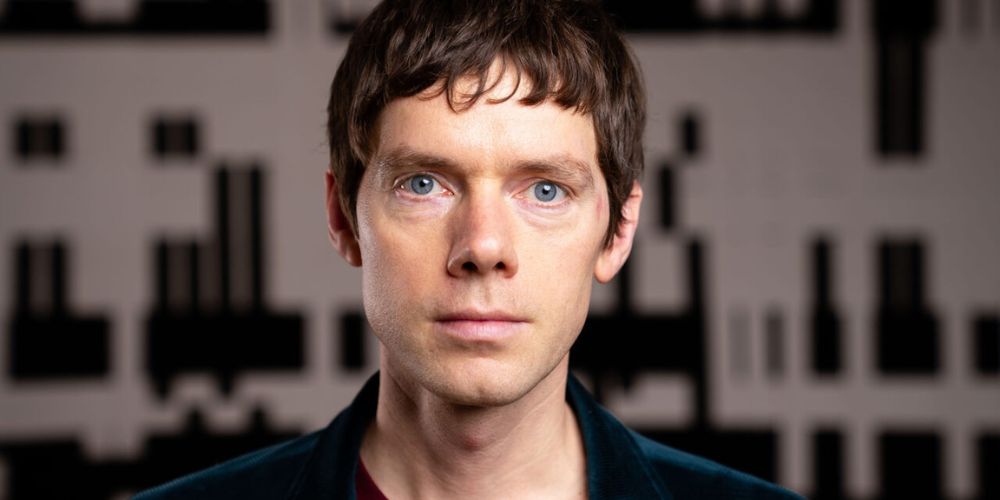
In our interview, #Mads Mikkelsen#, Head of Programme, talks curating a festival that balances artistic vision with social relevance, the challenges of navigating a polarised world, what makes a film truly belong at CPH:DOX, and more.

I always like to start by asking how you define your role within CPH:DOX? How does the back-and-forth work within the programming team, and how do you facilitate those conversations?
I believe a good festival serves both the filmmakers and the audience. It’s about bringing the right films and the right filmmakers together with the right audience.
One of the key things I consider when watching films, shortlisting, and selecting is: Are we the proper festival for this film? Can we provide the right kind of home for it based on our program structure and the identity of the festival? I also frequently discuss this with my programming team.
Practically speaking, I oversee and supervise the entire process, starting with research—looking at films that have already been screened at other festivals and projects in development. Research also involves maintaining relationships with sales agents, film institutes, film schools, and other industry players. From there, we move to submissions, organizing films for preview, and, ultimately, the selection process.
Of course, I have a team that helps with this. Some members are deeply involved in previewing and discussions leading up to selections within different sections. Then, we have a wider group of contributors who may not watch as many films but provide valuable insights based on their experience and interests.
A festival program should be curated with both the artists and the audience in mind. So, while it’s great to have hardcore cinephiles on the team, we also need people who approach films from a broader perspective. Not everyone in our audience watches multiple documentaries a day—some might only see a few a year. That said, it is essential to trust the audience – maybe more important than anything else.
Some films are primarily defined by their subject matter, while others define their space through cinematic language and form. Over the years, we’ve developed a programming structure that accommodates a wide range of styles and genres. That reflects the core identity of the festival: we aim to be a place that can showcase anything.
We screen films that are deeply political and engage with urgent contemporary issues. We also have room for highly experimental, artist-driven works—even those that originate outside the traditional cinema circuit. At the same time, we feature popular films that engage with pop culture.
The magic of CPH:DOX is that we manage to combine all these different approaches into a cohesive festival. I think that reflects not just the complexity of filmmaking but also the world we live in—the contradictions and nuances of it all.
It’s about bringing the right films and the right filmmakers together with the right audience.
You mentioned that you’re looking for films that fit within the CPH:DOX space—its philosophy and approach. But the festival isn’t niche, like a human rights or environmental documentary festival.
Is there a thematic or artistic thread that ties these films together? Whether it’s a pop culture biography, an experimental art film, or a documentary about a human rights issue in a specific region—what’s the common denominator that makes a film right for CPH:DOX?
With 200 films in the program, I like to think that everyone can craft their own festival within the festival.
There isn’t one thing all these films have in common—aside from moving images on a screen. However, when you look at the festival’s different sections, each operates with its own set of criteria.
For example, our F:ACT Award competition focuses on urgent, journalistic, and political films, while our human rights competition—launched last year—has become an integral part of the festival. Other sections are more artistically driven, emphasizing a spirit of creative exploration.
So, we carefully select films within each section that fit the intended context. When we have a competition with 10 or 12 films nominated for the same award, they must complement rather than compete with one another. The goal is to create a space where these films can collectively amplify their impact—spreading their message and making a difference in the world.
What about the sheer number of films? Roughly how many submissions does the festival receive each year?
Our submissions have increased significantly in recent years. Now that we’re firmly on the other side of the pandemic, the disruption from that period has settled, and we’ve seen a massive uptick.
We receive thousands of films—navigating that volume is a huge task. I’m not entirely sure why the numbers have increased so dramatically. Perhaps more films are simply being produced. But finding the right films that truly belong at CPH:DOX is always a challenge.
It’s not just about selecting great films—it’s about making sure they fit within the festival’s structure.
One challenge that often gets overlooked in festival programming is the issue of premieres. We have six international competitions, and all the films in them are premieres—whether world, international, or European premieres.
Programming premieres requires a delicate balance. You can’t decide too early but can’t wait too long. If you wait, you risk missing out on a great film. But at the same time, you need to ensure that films addressing similar topics or themes don’t end up competing with each other.
Ultimately, within each section, the selected films must stand independently while contributing to the overall program. That’s what makes for a strong, cohesive festival lineup.

With this increase in submissions, the program itself has expanded as well. I believe there are over 200 films in the program this year. Do you foresee a ceiling to this? Obviously, you can’t program 500 films at this festival—at some point, cohesion might be lost. Do you have conversations about setting a limit?
Yes, we do. For several years now, we’ve maintained a program of around 200 films. The exact number fluctuates depending on how many short films we include, which can affect the total count. But numbers can be deceptive.
I believe the festival is currently at the right size for CPH:DOX, both in terms of programming and our ability to be good hosts. To me, festival organizing is about hospitality—being a good host means making your guests feel at home, and that’s essential. So, I’m not looking to increase the number of films. Instead, we’re focusing on expanding in other ways.
For instance, our nationwide screenings have grown exponentially—in just three years, they’ve increased seven—or eightfold. We’ve also expanded our high school screening program, which now extends beyond Copenhagen to the rest of the country. After the pandemic, we embraced an online presence, allowing us to reach audiences who don’t necessarily live in major cities.
So, yes, there’s room for growth, and we actively discuss how to do that in the right way. But in terms of the number of films, I think we’re in a good place.
the festival is currently at the right size for CPH:DOX, both in terms of programming and our ability to be good hosts.
What about the program’s balance in terms of themes and focus? Has the approach to curating a thematically well-balanced festival changed from before the pandemic to now?
I ask because, more than ever, there’s contention and controversy surrounding many topics. Perspectives on issues like Israel/Gaza, Ukraine/Russia, migration, etc. have become increasingly polarized. How do you ensure the program remains balanced when you receive so many submissions covering a wide range of issues? What kinds of discussions occur within your team to ensure one perspective isn’t overrepresented at the expense of another?
That’s a major consideration for us. We’re living in troubled times, and as a documentary festival, it’s not just a question of whether we want to address these issues—we have to. Our job is to reflect and engage with the contemporary moment, no matter how complex or challenging that might be from a programming perspective.
Each year, we identify key subjects that need to be covered based on what’s happening in the world. Sometimes, that means taking a focused approach. For example, with Ukraine, we spent several days mapping out what was out there, and this year, we have several films from and about Ukraine.
Beyond including those films, we also ensure enough variation in how topics are presented. If multiple films cover the same subject, we want them to complement, rather than duplicate, one another.
At the same time, when global attention is focused on specific crises—Ukraine and Gaza, for example—we also make an effort to highlight other, sometimes overlooked, crises. One example is the film Little Syria premiering this year in the Human Rights competition. Syria has been a recurring subject at CPH:DOX for years, but with the fall of Assad, we felt it was crucial to include a film that addressed this new chapter. Thankfully, we found Little Syria, which does just that.
But we don’t just want films that mirror the headlines. We also seek out films that bring new perspectives—stories that aren’t already at the forefront of the news cycle. For example, this year, we have a film from Kazakhstan in the main competition. That was a regular submission—it wasn’t on my radar or any lists—but it arrived, and it completely blew us away.
That’s what makes programming such an adventure. Discovering unexpected gems like that keeps the process exciting.
Beyond selecting films, how does CPH:DOX facilitate conversations between audiences, filmmakers, and industry professionals?
Festival environments have changed post-COVID. Some spaces feel more open than others to discussion. When I attended CPH:DOX last year, I felt it successfully created an atmosphere where people could engage in meaningful dialogue. That’s not always the case at other festivals.
So, while this may not be strictly within your job description, how does CPH:DOX work to create an environment where people feel comfortable expressing their views without fear of backlash?
The short answer to your question is that our code of conduct explains our position and is available on our website. But there’s much more to say about it.
On a broader scale, Denmark has a strong culture of openness and democratic dialogue, even when people strongly disagree. That’s deeply embedded in Danish society, and as a festival, we benefit from that tradition. Of course, nothing is perfect, but there is a relatively strong sense of creating open spaces where people can engage in discussions.
As a festival, we take this very seriously. We have long conversations about it and are consciously working to support and protect that space. One way we do this is by organizing a large number of debates around films—not just Q&As, which are a separate thing, but actual debates where the topics of the films are discussed by panels, external participants, and, of course, the audience.
By arranging these discussions, we’re actively signalling that this is what we stand for. We want to be a space where people can come together and engage in meaningful dialogue. That’s a core part of our identity.
Another point to acknowledge is that we live in a world filled with territorial, ideological, and cultural conflict. Some of these conflicts have left deep marks on the cultural landscape, and many festivals have had difficult moments navigating them. Thankfully, we’ve upheld our curatorial independence and maintained our identity as a festival that values public space, where different and even competing viewpoints can coexist in dialogue.

You mentioned Denmark’s general culture of open debate and discussion. I recognize that from the Netherlands as well—I lived there for many years, and it has a similar approach. But that’s not necessarily the case in the U.S., where I’m partly from. This shift in discourse isn’t just a Trump-era phenomenon, though it’s certainly intensified now.
I’ve always felt that CPH: DOX has the closest relationship with American documentary filmmakers among European festivals. I know it may be too early to say—since it’s only been about six weeks since Trump reassumed office—but given the major changes happening, particularly funding cuts and a rapid ideological shift, have you seen any impact on the American films submitted to the festival or the conversations those filmmakers have with you? Are they facing new challenges in getting their work produced or screened?
It’s true that we’ve always had a strong relationship with the American film scene, and we’re very happy about that. Part of it has to do with our festival dates in March, which follow closely after a series of major U.S. festivals—DOC NYC, Sundance, SXSW, True/False—creating a natural bridge for filmmakers to take their first international steps at CPH:DOX.
That connection has meant a lot to us, not just in terms of programming but also through our industry platforms, which attract a significant number of players from the American film scene. There are various reasons for this, including audience relatability—many American documentaries resonate widely. And beyond that, American filmmakers have played a major role in pushing the boundaries of contemporary documentary cinema.
Of course, groundbreaking filmmakers can be found all over the world, but the evolution of documentary as an art form—arguably one of the most exciting movements in cinema over the past decade—owes a lot to American creators.
Now, regarding the second Trump term, it’s still in the early days. There’s a lot of noise, and it’s making headlines globally. When I wake up in the morning, I take a deep breath before checking the news because who knows what’s happened overnight.
But I do believe in the resilience of American filmmakers. The ones we’ve worked with over the years have always found ways to navigate challenges and push back against ignorance, which the Trump administration represents, at least to me and many Europeans.
That said, it’s too soon to see the cultural effects of this new term. Filmmaking takes time—years, in some cases. So, while we can speculate, I prefer to remain optimistic rather than pessimistic by way of speculation…
When I wake up in the morning, I take a deep breath before checking the news because who knows what’s happened overnight.
Of the thousands of submissions you receive, do you ever get an American documentary that’s fully aligned with Trump’s ideology? A film straight out of MAGA-land, so to speak? Do filmmakers even submit work like that to CPH:DOX?
I must say, I can’t think of a single one. That says something about the nature of feature-length documentary filmmaking. Historically, the form has leaned toward humanist and, broadly speaking, center-left perspectives.
Right-wing ideology, particularly the brand associated with Trump’s base, has largely moved into shorter formats—platforms like X and other social media—where that discourse has found a home.
Of course, this is still part of visual culture and has an impact. But it doesn’t tend to emerge in feature-length documentary in the same way. Just look at Elon Musk and what he’s turned his platform into or how most U.S.-based social media companies have shifted in a new direction following Trump’s second election.
And what about in Denmark? What topics are they engaging with? Whether on a micro or macro level or anything in between, what themes are emerging from the local filmmaking community?
Well, I think you tend to find what you’re looking for. And one thing I’ve consciously been looking for are outward-facing films that want to engage with the world, whether that world is a small, local environment or the larger international landscape. I’ve been looking for films that go beyond themselves.
That’s something I’ve discussed a lot with my programming team and spent a great deal of time searching for. Of course, there will always be films—both in Denmark and beyond—where filmmakers explore deeply personal or existential issues. Some engage with their own families, crafting incredibly compelling work from their immediate surroundings—what you might call reflexive filmmaking.
But I’ve also been keen on welcoming films that step beyond that—films that tackle broader societal themes and global movements, artistically expanding their scope and putting us in conversation with the world.
Cinema is an extraordinary medium for this—it allows us to be in the world and participate in it, even from a distance. That’s something fundamental to the experience of watching films. It expands our understanding, making the world feel larger. So, when curating, I look for films that have that quality.
If you look at this year’s CPH:DOX selection, you’ll see a common thread: these films are deeply engaged with the world. They’re looking beyond themselves.
Do you see that same outward focus with the Danish filmmakers?
Yes, absolutely. If you look at the Danish films in this year’s program, many of them address global issues. Some have already premiered at other festivals—Mr. Nobody Against Putin is about Russia; Only on Earth deals with forest fires in Southern Europe; Here Tomorrow, which premiered at South by Southwest, explores loneliness in Japan. These are Danish films, yet they extend far beyond Denmark’s borders.
You’ll see this tendency even among the Danish films premiering at CPH:DOX. While they may be rooted in local settings, they often use individualized narratives to explore broader themes—whether that’s gender roles, family trauma, or personal identity. These films are not just introspective; they’re expansive.
And they do this with creativity—sometimes even humor—while tackling important subjects in ways that truly engage audiences.
Something that’s sometimes overlooked is the work of emerging filmmakers, particularly those presenting short films. Some come from the art academy rather than the traditional film school, but both groups bring a fresh perspective.
There’s a real sense of adventure and urgency in these films—a drive to engage with political issues and pressing global topics. And they do so with striking, bold cinematic techniques.