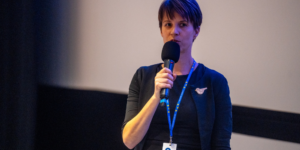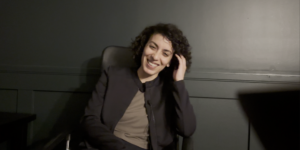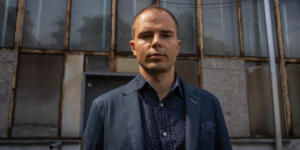
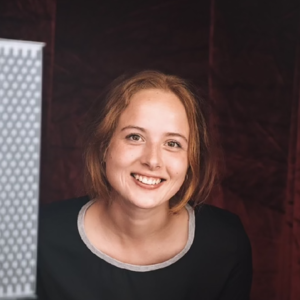
Juliana Moska took over the KineDok Czech programme with Walter Nagy this March, inheriting a structure that had been five years in the making from Ivana Formanová and Eliška Hoskovcová. One recent booking says a great deal about how she has chosen to run it since. A documentary about aphasia was screened before a room full of speech and language therapists at a festival and became one of the season’s more inspiring screenings.
Moska spoke to Modern Times Review ahead of Ji.hlava’s thirtieth edition, where KineDok holds its annual partner meeting and VR selection, and a Brussels discussion on community-based audience engagement. The conversation covers what decentralisation actually requires on the ground in Central and Eastern Europe, and a working philosophy in which a screening for ten people in a small town can outweigh one for a thousand.
When the 2026/2027 catalog was announced this spring, you framed the moment primarily around growth, more venues, more screenings, and a strong inherited program to build on. Now that the season is in full swing, does growth in that raw sense still feel like the right measure of whether this version of KineDok is working, or has a different measure taken over?
I would say there are several ways to measure it. Expansion is definitely one of them, but once you are really at the core of KineDok, you realise how crucial it is to maintain good communication and strong relationships with all venue managers. So while we are expanding KineDok and reaching new venues, we also have to take care of the existing ones and nurture the community we have already built. For me, growth is therefore not only about numbers or reaching more venues, but also about strengthening and maintaining the existing community. Every screening matters to us, no matter how many people come. Every person who attends, every discussion that happens afterward, and every relationship we build with a venue are important. We really try to take care of these connections and of the community around KineDok.
«This autumn, we will bring VR films outdoors for the first time, taking them onto the grass»
You and Walter Nagy took over a completely new Czech team this March, following Ivana Formanová and Eliška Hoskovcová’s long run leading the programme. Five months of screenings and festival appearances later, how would you describe what the two of you have actually built together, as distinct from what you inherited?
At the beginning, we were very much focused on ensuring a smooth transition from the previous team. We wanted to build on what was already working well and maintain the existing structure and continuity. An important part of this was maintaining KineDok’s curatorial approach by bringing thematically engaging and socially relevant documentaries into public spaces, including films by filmmakers whose work has been recognised by major international festivals.
We also want the programme to offer different and nuanced perspectives on the world around us. The films deal with a very broad range of subjects, from personal and intimate stories to social, environmental, and political issues. They approach these subjects from different perspectives and through distinctive artistic voices. What connects them is a strong respect for human rights, democratic principles, freedom and tolerance.
While maintaining this continuity, we also started thinking about how to develop the programme further, particularly in terms of accessibility, working with schools, supporting emerging filmmakers, and helping producers and films that might otherwise struggle to reach audiences through traditional distribution. We are reaching out to film students and young filmmakers directly, giving them opportunities to present their work through KineDok and reach new audiences. For example, we are currently working with a recent FAMU documentary graduate who will present his student film as part of KineDok. But instead of organising a traditional screening at the venue, we are turning the evening into a documentary workshop. The audience will get a chance to look into his creative process through excerpts from the film and a discussion about the role of the documentary filmmaker.
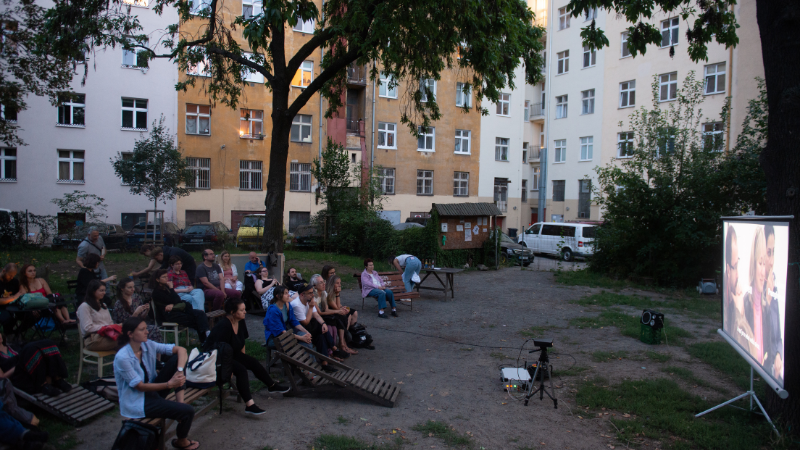
FEINKOŠT’s Prague opening is billed as a special premiere at Bio Oko, a fixed single-screen cinema, rather than the community spaces and outdoor sites the rest of this year’s programme worked through. What makes a premiere moment like that call for an actual cinema room when so much of what KineDok does this year deliberately avoids one?
I wouldn’t say that KineDok deliberately avoids cinemas. We bring documentary films to places where communities already exist – cultural centres, libraries, cafés, outdoor venues and other alternative spaces – but that doesn’t mean that cinemas cannot be part of KineDok as well. It has also become a tradition for the Czech and German premieres of FEINKOŠT to take place in a cinema. FEINKOŠT presents films by emerging filmmakers, and we want to give them the opportunity to show their work on a cinema screen and reach a larger audience. A premiere is also a special moment. It brings the filmmakers, audiences, and the wider community together and gives the event a more celebratory atmosphere. So in this case, having an actual cinema room gives these emerging filmmakers and their films a special space and a proper premiere moment!
«A screening for ten people in a small town can have a very strong impact»
At the Brussels discussion on community-based audience engagement, you’ll meet people running similar programmes in very different funding and cultural settings across Europe. Is there something about how this model works in Central and Eastern Europe that you feel the wider Creative Europe conversation still misses?
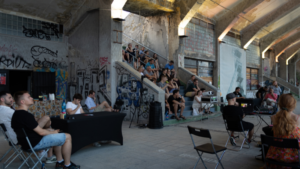
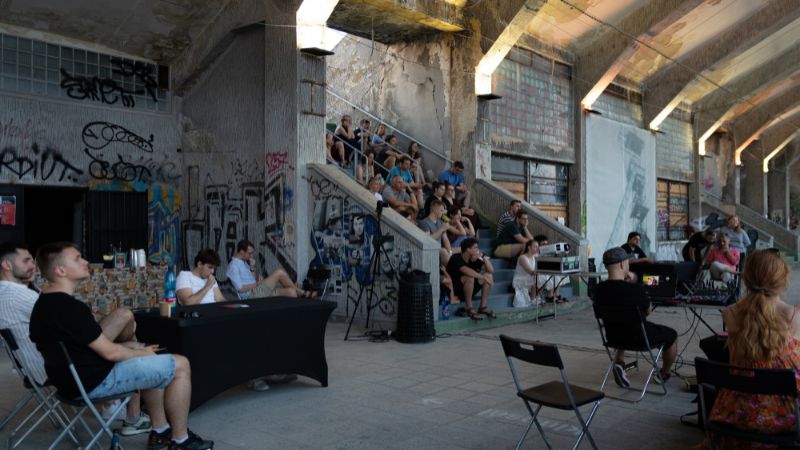
I think one thing that can sometimes be missed is how local and decentralised audience engagement can be in Central and Eastern Europe. At KineDok, we work not only in capital cities and established cultural institutions but also in smaller towns and places where access to documentary films and cultural events is often more limited.
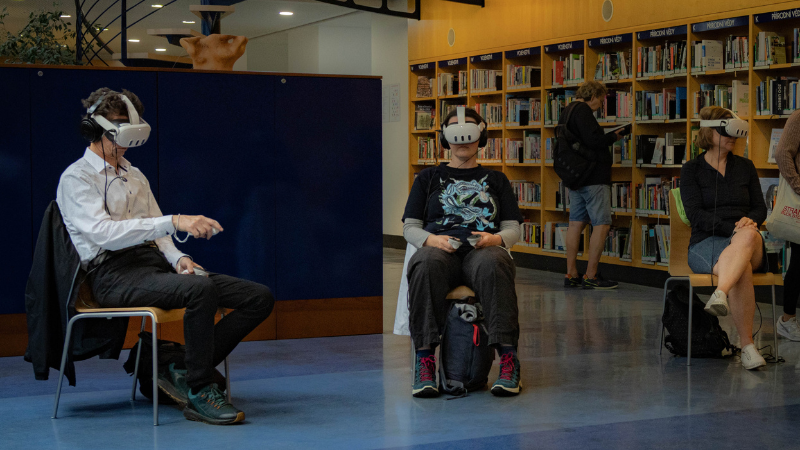
Showing VR documentary work to a group of speech and language therapists is a pretty unusual booking. Is KineDok giving them something they could use as a clinical tool, or is it mainly about introducing the platform to a new audience?
We always try to connect a specific film with a specific community. When we screened a film focusing on aphasia from an artistic perspective, we wanted to experiment with finding the right audience for this particular work. We therefore decided to discuss the topic, the film itself, and its artistic approach with people who work with people with aphasia and have direct experience with the subject. It turned out to be a great idea, and the whole experience was very inspiring for all of us.
This year’s Ji.hlava is the festival’s 30th edition, and it’s also where KineDok holds its annual partner meeting and VR selection for the whole network. Does hitting this milestone change how you approach the meeting, or is it still mostly a working session with the anniversary in the background?
It is still mostly a working session, with the anniversary in the background. We have plenty of work to do while we are all together. We need to select the new VR films for the upcoming catalogue and discuss KineDok’s strategies and plans for the coming year. But it is also one of the few moments when the whole KineDok network is together in one place, so of course it is not only about work. It is also a chance to spend time together, catch up, and enjoy the festival.
«The job is incredibly colourful and constantly changing its shape and direction»
Between now and November, you’ll be at a policy discussion in Brussels, a milestone festival, and more than two cross-border premieres. Does all of this feel like one continuous job to you, or more like a few different jobs that happen to share a title?
Thank you for this question. To be honest, this is exactly what I really like about the project. There are people, places, education, discussions, an international dimension, people from different cultures and countries, established professionals, but also emerging filmmakers. There can be an important panel discussion one day, and then a small screening for two senior audience members at 10 a.m. the next.
The job is incredibly colourful and constantly changing its shape and direction. It is a very dynamic environment, and that is something I really enjoy.
Sometimes it does feel like being a little bit of everything at once. Like having several different jobs that happen to share the same title. But for me, that is also what makes the job meaningful. All these different activities are connected by the same idea: bringing documentary films to people, creating spaces for discussion, and building communities around them.