Released over a year ago, Christopher Quinn’s powerful documentary Eating Animals – based on the book of the same name by Jonathan Safran Foer – is a damning indictment of the cost to both animals and humans of the global #factory farming# system.
Made before the current global #Coronavirus pandemic, the film is an exploration of the insanity and inhumanity of a system designed to produce cheap meat with little or no regard for either animal husbandry or the environment.
Narrated by Hollywood actress Natalie Portman – who became a #vegetarian at the age of eight, but turned #vegan after reading Safran Foer’s book – Quinn’s account of the threat of factory farming is told through the lens of American farmers and agro-industry whistleblowers who have seen the light and are now working to promote healthier alternatives – whether those are plant-based proteins designed to look and taste like meat, or kinder, free-range farming that ensures animals do not suffer as they are reared to feed humans.
Currently featured as the focus of episode 10 of the Factual America podcast – a series which looks further into the issues raised in contemporary cutting edge documentary films – the film’s relevance has only increased since it emerged from #Sundance Selects.
Conditions
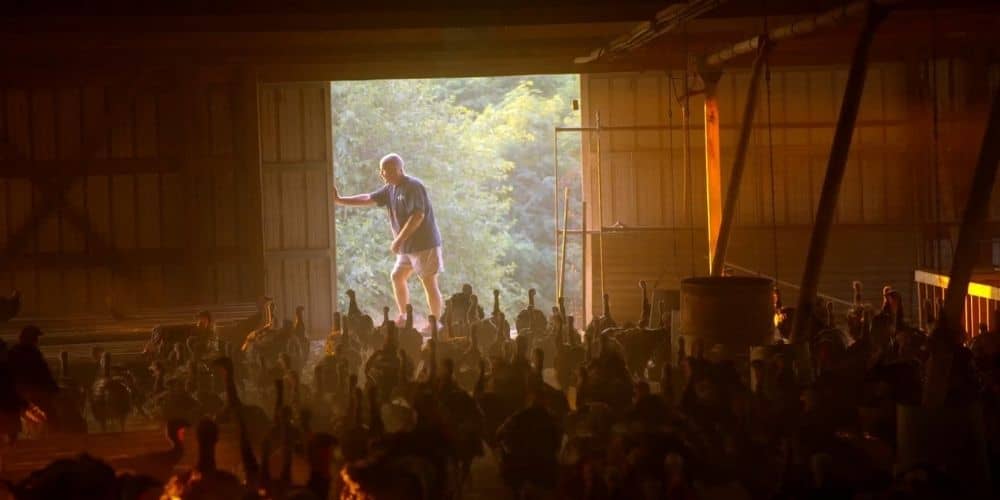
Opening with idyllic and bucolic views of rural America at its most picturesque, Quinn introduces a #Kansas turkey farmer raising birds the old fashioned way, on pastures under the sunshine, before guiding viewers through a potted history of the development of factory farming from its roots in 1920s efficiency schemes and the rise of the fast-food industry through a brief case study of Col. Harland Sanders and his Kentucky Fried Chicken, now known globally as KFC.
the film’s relevance has only increased since it emerged from Sundance Selects.
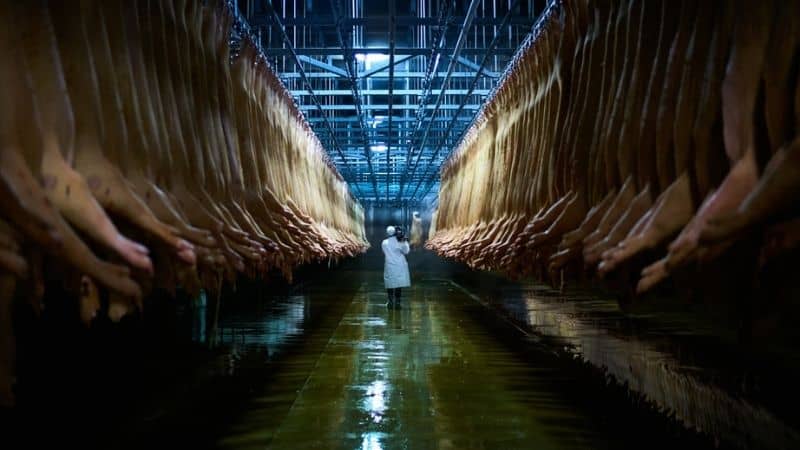
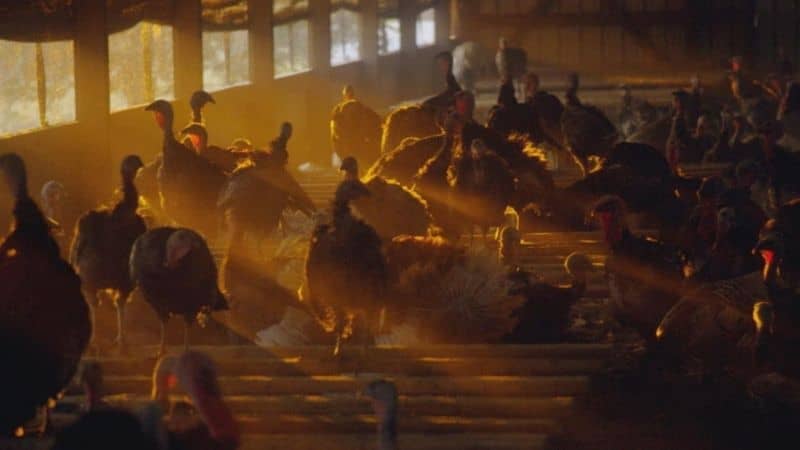
Soon the film gets to grips with the headline ills of factory farming – the overcrowded, filthy, and cruel conditions under which genetically-altered animals bred to grow fast and fat are reared; the endemic use of antibiotics (80% of global antibiotic drugs are produced for agricultural needs) – which would be unnecessary were the animals healthy to start with and kept in decent conditions; and the link between pig slurry and watershed pollution.
Climate & disease
In a prescient section, the still less well-understood connection between mass-produced animals and viral infections is sketched out with reference to both the #bird flu# epidemic of a few years ago and the flu pandemic of 1918 (known then as the Spanish Flu) – which infected a third of the world’s population and killed 25 million. At one point a freshwater activist from North Carolina who has documented evidence of how pig slurry kills aquatic life, remarks that a pandemic linked to intensive rearing of animals is not a question of if, but when.
Although fairly light on images of cruelly treated, diseased animals in factory farms – though enough to turn the stomach of any viewer, vegetarian, vegan, or the 98% of people that are meat eaters – Eating Animals relies on logic rather than emotion to persuade.
«The meat industry has done a really good job of disconnecting eating meat from killing animals and it really makes it possible not to fully appreciate that an animal had to be murdered in order that you can eat them,» Bill Niman, a free-range cattle rancher remarks.
a pandemic linked to intensive rearing of animals is not a question of if, but when.
Later he justifies free-range animal farming by noting that by ensuring the animals live healthy lives free of suffering, their keepers may decide when to end those lives so that their bodies can be cut up to feed people. It is a logic that may satisfy the majority who continue the desire to eat meat, although vegetarians, vegans, and climate change activists know that the single most effective measure one can take to both reduce animal suffering and combat climate change is to give it up. Indeed, Eating Animals notes that between 14% and 50% of all climate change can be traced back to the impact of factory farming on the environment.
Meatless meat
In a world where billions are moving into the middle class, more western ways of living and eating – in #China and #India, for example – meat-eating is not likely to decline soon. Developing alternatives to the «taste, price and convenience» of eating meat are briefly explored in a glimpse into a couple of plant-protein based meatless meat start-ups. The investment of Tyson, one of America’s giant factory farming concerns, in one of the companies is noted in the closing credits.
In the final analysis, as much as activists battle to lift the lid on the iniquity of factory farming, it is likely to be sheer economics that eventually changes the system. Meatless meat alternatives will become cheaper and better and – just as Edison’s electric light was once called «an alternative to the gas light» eating meat may one day be as dim and distant memory as the foggy haze of a Victorian gas lantern.