The «talking head» mode of documentary filmmaking has been out of fashion for years, perhaps even decades, but it can still work — provided the heads in question are able to discourse in a sufficiently engaging and illuminating manner. Two such examples are the main reason to see Diana Neille and Richard Poplak’s Influence, which tries, across 105 minutes, to chronicle how, since the 1970s, democracies around the world have been manipulated — or even controlled and subverted — by techniques previously associated with the advertising world.
Most notorious
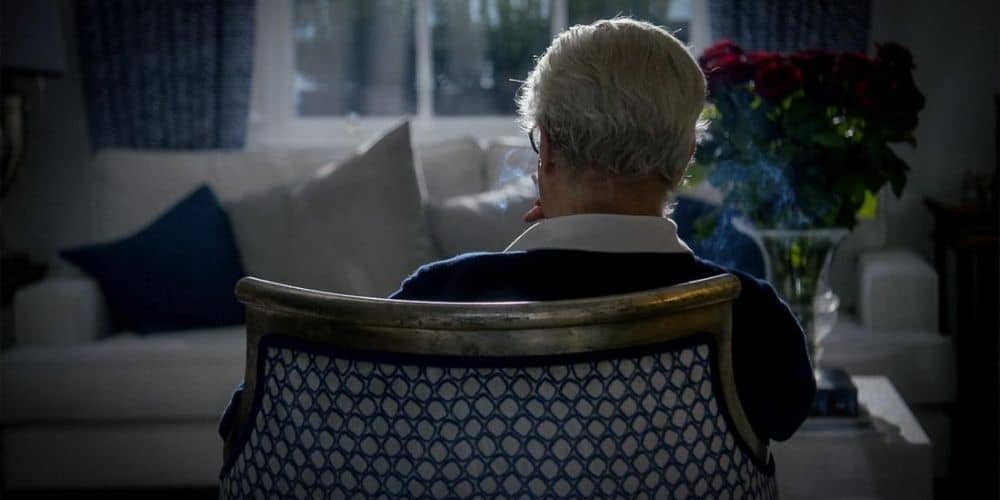
The chief manipulator here is #Tim Bell#, key member of the Saatchi & Saatchi ad-agency which was to have such an impact on British politics via their role in the Conservatives’ epochal electoral triumph of 1979. Neille and Poplak introduce Bell as «Mrs. Thatcher’s favourite ad-man,» a «legendary spin-doctor» whose segue into behind-the-scenes political campaigning yielded lucrative international contracts, usually — though not exclusively — for those of a Thatcher-like ideological persuasion. «I don’t understand why… people are left-wing,» he sighs at one point, genuinely perplexed by the fact that others lacking his significant advantages in life may see things in a different manner.
Such comments are left unchallenged by his unseen, seldom-heard interviewers. Although deploying doom-laden music and graphics which nod towards #Hollywood conspiracy thrillers, the film eschews explicit editorialising. An introductory title-card describing Bell’s company Bell Pottinger as having been in 2017 «one of the largest, most notorious public relations firms in the world,» seems to be an example of the recent neutering of the pejorative/negative term «notorious» into a mere synonym for «very famous.»
Notoriety did, however, eventually engulf Bell Pottinger (Bell’s partner Piers Pottinger is, oddly, never once mentioned here) via their involvement in South African politics, resulting in the company’s rapid collapse and the messy demolition of Bell’s own reputation as «the great salesman.» Presumably feeling that he had little left to lose, Lord Bell — elevated to Britain’s Upper House in 1998 — then agreed to participate in this documentary, even though he must have realised that the picture’s slant would not necessarily be in his favour.
Bell desires to put his version of «the whole story» on record for posterity, perhaps realising that his time was running out— he died in August 2019. As well as the interview conducted by the filmmakers, Bell is also shown being quizzed about his career for a radio programme — a chronological survey which provides the directors with a workable structure, augmented with copious archival footage. The prominence of the two interviews puts Bell centre-stage in Ryan Mullins’ edit; even those who regard his views and methods as repellent may find themselves beguiled by his rich patrician tones and his drily aloof sense of humour. The devil, as we know, has all the best tunes, and this prince of darkness is quite the raconteur.

Diana Neille & Richard Poplak
Valuable commodities
It initially appears that Bell’s opponent in the «red» corner will be Phumzile Van Damme, an energetic young South African politician who gleefully recalls her role in Bell Pottinger’s demise. This was sparked by the firm’s work for telecommunication magnates the Gupta brothers, whose attempts to influence opinion were judged to have inflamed racial tensions. But Van Damme is eclipsed in terms of screen-time by her countrywoman Marianne Thamm, a veteran crusading journalist who emerges as an articulate voice of hopeful, progressive idealism. «The moral arc of the universe bends towards justice,» she asserts.
In an era when the likes of Trump, Putin, Johnson, Bolsonaro, Modi, Duterte, Orban, and their ilk seem to increasingly dominate the global political discourse — unambiguously resisting the bend of that «arc» with all of their considerably collective might — such optimism is a valuable commodity indeed. And anything which aids us to understand why and how such individuals have risen to power is, of course, welcome — in various ways each were aided by Bell’s tech-savvy successors in the «democracy control» business such as former #Cambridge Analytica# boss Nigel Oakes. Allowing himself belated pangs of conscience as he faces up to his own impending mortality — he has been diagnosed with terminal cancer, but at the time of writing is still with us — Oakes sees that «controlled» democracies can effectively be bought and sold, «maybe to the highest bidder.» Semi-rhetorically he asks, «have we created a terrible situation now?»
this prince of darkness is quite the raconteur.
A good yarn
As long as Bell or Thamm are centre-stage, which is most of the running-time, Influence clicks along with persuasive momentum. But the picture proves distractingly uneven in structure, with too many tangential diversions from the main spine including a lengthy mid-section about #Iraq. And there are occasional examples of editorial sloppiness which fall far below Thamm-like levels of journalistic excellence: viewers unfamiliar with Chilean history, for example, would be forgiven for thinking that Bell’s client Hernán Buchi — the preferred successor of General Pinochet, the notorious dictator whom Bell admits liking — triumphed in the country’s 1989 election. In fact, Buchi was comprehensively defeated; but the «arc» presented is one of relatively unbroken success for Bell up until the dizzyingly sudden downfall. Then again, as his Lordship would probably suavely counsel, «why let facts spoil a good yarn»