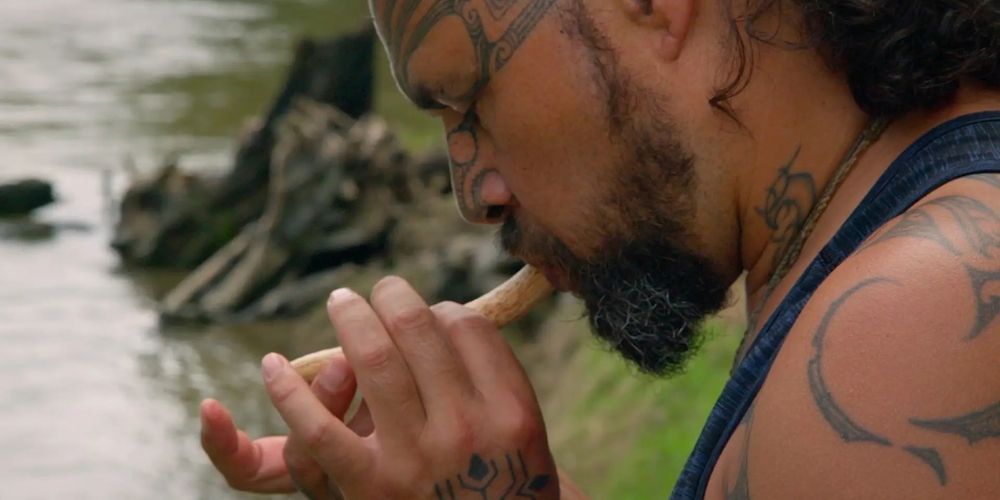
«The river is the biggest player in who I am,» says a sturdy, bronzed man with a firm gaze sporting a tattoo on his forehead and a Kiwi accent, «I feel that it is my job to ensure that what I’ve been given, I hand on to others.» As the man moves a canoe paddle, its tip glides across the surface of the greenish water, piercing through its liquid body. These words open I Am The River, The River Is Me, Corinne van Egeraat and Petr Lom’s documentary about the Whanganui River in Aotearoa/New Zealand, the first river in the world to be recognised as a legal person.
The man is the Māori elder, Ned Tapa, a community leader and cultural advisor to the Whanganui District Health Board, or, simply, a Whanganui guardian. Broadly, Lom’s new documentary dives into the philosophical quandary on the beingness of nature, the ancestral wisdom that many Indigenous cultures across the globe have always known and respected. More specifically, the film explores the fluvial poetics of the Whanganui River, this one single river, and Ned’s relationship with it.
Fluvial filmmaking
In March 2017, the Whanganui River in Aotearoa (the Māori name for New Zealand) became the first river in the world to be granted legal personhood. This legal status means the river is not only a natural entity but also a «person» with rights, powers, duties, and liabilities — a concept previously reserved for humans or corporations. The dispute that led to this legal recognition was rooted in a battle that lasted over 150 years between the Whanganui Iwi (a Māori tribe) and the New Zealand government. As a result of this historic decision, the river now has two guardians: one representing the New Zealand government and the other representing the Whanganui Iwi. This important pretext frames Petr Lom’s approach – what does it mean to tell a river’s story?
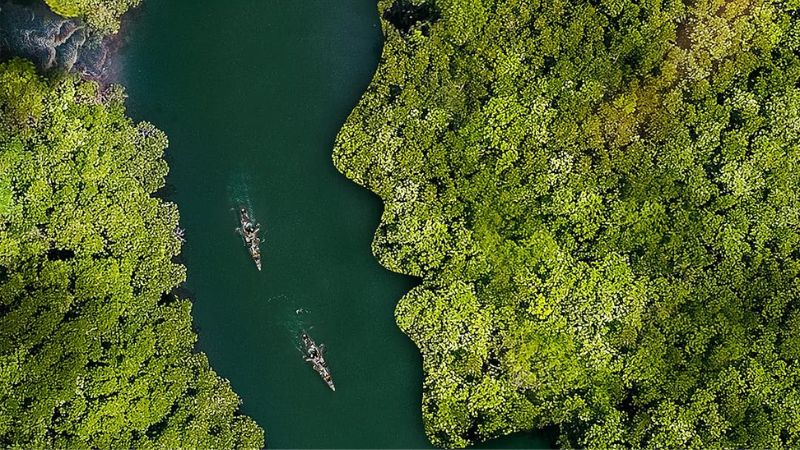
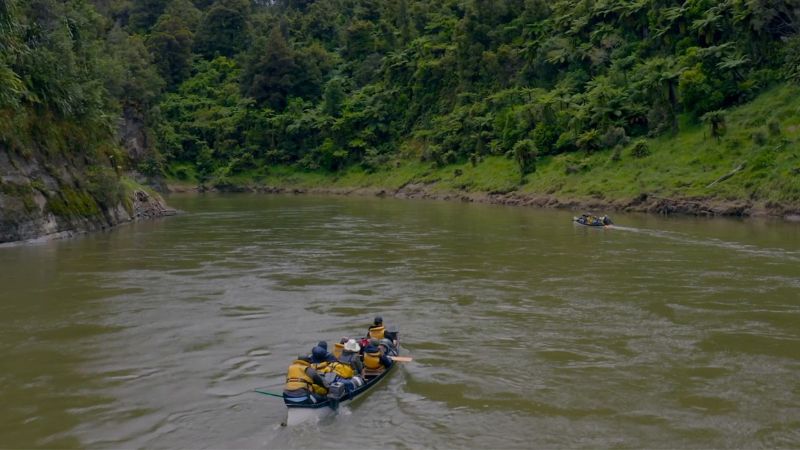
To tell its story, Lom assembles a fascinating bunch, among them is Norwegian sound recordist Ad Stoop, Brendan Kennedy (a Tati Tati guardian of the Millu, or Murray River in Australia), his daughter Melissa (herself a First Nation activist), crew members, friends of Ned’s, and most importantly Jimmy the dog who quite literally stole many a laugh from the audience. Boarding two traditional canoes, the group sets off on a five-day journey along the welcoming, shimmering body of the Whanganui, attuning to its polyvocal nature.
In his filmmaking, Lom mirrors the river’s flow and spontaneity and lets this inform the film. While he incorporates some traditional elements of blue-chip, TV-style documentaries, he also introduces what I would dub fluvial filmmaking or a fluvial approach—spontaneous filmmaking that embraces other bodies and beings. While emphasizing the abundant beauty of the scenery and enhancing it with a rich sound design that captures the sounds of birds, insects, and wind, Lom and his team elevate the film from the realm of authoritative National Geographic or BBC documentaries.
In March 2017, the Whanganui River in Aotearoa (the Māori name for New Zealand) became the first river in the world to be granted legal personhood.
In one memorable scene, the group stops for the night and lights a fire. This attracts the attention of tourists who approach to say hello. Rather than cut out the scenes with these uninvited guests, Lom and van Egeraat decided to include the footage in the film, further adding to the sense of fluviality. As Ned and his friends perform rituals, read prayers, and make offerings to the river, the film captures the enchantment of nature, subtly inviting viewers to be enchanted as well.
There is a strong sense of parity between the human and non-human beings in the group. Ned, Brendan, and their friends are not simply the objects of the documentary but equal co-creators, just like the Whanganui River, which is probably the first river in the world to be credited alongside the film crew, while Jimmy the dog trots around being his fully-fleshed, canine self.
The film is neither as stylised as Viktor Kossalovsky’s Aquarela or Architecton nor as artistically ambitious as Werner Herzog’s late-career documentaries. I Am The River, The River Is Me seeks to highlight the message embedded in its title (a literal translation of the Maori proverb Ko au te awa, ko te awa ko au) — the interconnectedness of all beings. The oral histories — the stories of Ned, Brendan and their friends — become more important than a carefully crafted artistic concept.
This, however, does not diminish the film’s visual and aural landscape. Lom captures underwater shots that seem to offer the river’s point of view, and drone footage showcases the grandeur of nature—the river winding through lush landscapes like a snake. The close-ups reveal the intricate details of nature’s patterns. The stunning visuals are accompanied by the sounds created by Puoro Jerome, a Māori sound artist who plays Taonga Puoro (Māori musical instruments) like a long flute. His music, with its crying tones, reminds us of the loss of what once was.
Ecological Stewardship
In many, if not most, cultures across the world, the relationship with nature was once sacred. Through the trials and tribulations of history, humans have been privileged over animals, ownership over stewardship, extraction over protection. The Whanganui River, for example, was once the site of all commercial waste, its gravel extracted and sold, while its guardians were not listened to.
The Italian philosopher Giorgio Agamben, known for his exploration of how sovereignty, law, and politics intersect with the biological, social, and ethical aspects of life, famously wrote about the bare life—the state to which some individuals are reduced, excluded from full political recognition but still subjected to the power of the state, like refugees and detainees in concentration camps.
Ecosystems, too, are locked within the same logic of exclusion. What Lom’s film shows, however, is an example of solidarity that extends beyond ritual and respect — a legal solidarity. Solidarity should not merely be about saving the Earth (which simply means making it a better place for humans to flourish). «This isn’t solidarity, this is infrastructural maintenance,» argues philosopher Timothy Morton. The solidarity that Lom’s film illustrates stems from years of collective action, a struggle that is now inspiring others, like Brandon and Melissa, First Nations activists from Australia who are fighting for the legal personhood of the Murray River.
Finally, the film tacitly acknowledges the link between colonisation, the extraction of natural resources, and the ongoing ecological challenges faced by Indigenous peoples. It serves as a call to action (on the film’s website, you can read the filmmakers’ manifesto), urging the recognition of the intrinsic value of nature and the importance of granting it legal protection while also emphasising the need for respect toward the natural world and its original stewards.