Right at the beginning of her documentary If Pigeons Turned to Gold, Prague-based director Pepa Lubojacki declares that only absolute honesty gives her the right to create this work. She adds that she has felt a sense of shame all her life. Indeed, her film delves deeply into a highly troubled family history that she observes at close quarters. The result is perhaps the most impressive work on the subject of alcoholism to date. Following its world premiere at the Berlinale—where it won the Caligari Film Prize in the documentary section—the film has now been screened again at the Karlovy Vary Film Festival.

Filming family ruin
Her father, brother, and cousins have all succumbed to alcoholism. A life on the streets—spent in makeshift shelters, exposed at times to extreme cold, occasionally beaten, and almost always treated with contempt—forms the reality that the filmmaker documents with deep emotional engagement. She focuses particularly on her brother David over the course of several years, driven by a single goal: to help him break free from his addiction. She provides financial aid and housing, and handles the administrative tasks necessary to get him off the streets and enable a fresh start. Yet, although these attempts sometimes appear to succeed for brief periods, the filmmaker is ultimately forced to accept the painful truth that her hope is based on an illusion.
She is ultimately forced to accept the painful truth that her hope is based on an illusion.
Addiction is not a failure
There is a common misconception that alcoholics could and should free themselves from their addiction through willpower alone — in other words, that their condition is self-inflicted. However, as Lubojacki compellingly demonstrates, this is a prejudice contradicted by medical facts. In reality, alcohol serves as a means for users to distance themselves from trauma, as well as from overwhelming situations and memories, thereby creating a relative mental zone of protection and comfort. Consumption, in turn, alters the dependent person’s biochemical system and diminishes their willpower. The vicious cycle closes.
Alcoholics often perceive their situation with startling clarity. They know they are failing, causing pain to their loved ones, and disappointing expectations. Yet, they would rather face certain death than confront the unbearable. Pepa Lubojacki repeatedly asks herself why she did not fall victim to this downward spiral herself. She cannot fully reconstruct her family’s traumas, though her alcoholic father clearly plays a pivotal role. Once a life goes off the rails and shifts into a mode of mere day-to-day survival, the traumatic experiences do not cease. She repeatedly tries to reach her brother through moments of joy—such as a trip to the seaside together—but even after such experiences, he always relapses into his chronic addiction.
In recent years, medical research has yielded valuable insights into the vicious cycle of addiction. On the one hand, the neurotransmitter dopamine generates a sense of euphoria during alcohol intoxication; mood and motivation improve, and performance capacity appears to be enhanced. Conversely, a reduction in consumption leads to a loss of motivation and drive. Lower dopamine levels increase the risk of relapse. At the same time, dopamine concentrations in the brains of alcoholics lead to a loss of behavioural control.
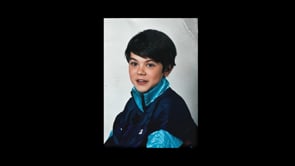
Pepa Lubojacki enriches her complex work with images—some animated—and photographs from her family history. The childhood photos of the person who later drifted away are particularly moving; nothing hints at the fate that awaited them. The filmmaker also employs an animated, talking pigeon (bearing Pepa’s eyes) that offers commentary and gives a voice to the family members themselves. The contrast is stark: while her brother often protected his younger sister Pepa during their childhood, he is now a body racked by convulsions and epileptic seizures.
Over the course of her debut documentary—dynamised and segmented by frequent cuts — the filmmaker realises she cannot truly help her brother. AI-animated photographs, brought to life and made to speak, are consistently cast as isolated fragments into a dizzying, frenetic rush of memory. The raw and at times aggressive juxtaposition of these emotional shards reflects a traumatic experience that defies interpretation, mental processing, or management. Bursts of techno music further contribute to evoking emotions that erupt uncontrollably.
The director translates this sense of helplessness into striking imagery. Fully clothed, she drifts on her back across a seemingly boundless expanse of water, her limbs outstretched. She confesses to wishing for physical pain as a way to alleviate the other kind. The uncompromising honesty that Lubojacki cited as the justification for her work extends to the fact that she not only refuses to conceal her own admission to a psychiatric hospital but actually films it.
Her brother gives her a childlike family sculpture. He has obtained candles for his deceased relatives to use in his makeshift shelter. Recently, a man with whom he shared a room died in his arms. David explicitly admits that he does not want to live this way, yet is unable to live any other way. This is the message he conveys to his sister.

Without resolution
Lubojacki incorporates other life stories into her work. At least one of the people portrayed found a way out. It is an older woman who took a person suffering from addiction off the street into her home and cared for him lovingly, motivated not by pity, but by genuine feelings for him. He succeeded in turning his life around. Her cousins, however, were denied this path.
Towards the end of the film, we see the siblings together again, in high spirits, at an open-air concert. There were moments like that, too. Ultimately, Lubojacki continues to support her brother with loving care as he follows his path, which she accepts now. And at least one thing was achieved: in Pepa’s family — the first to see the film — members are now speaking openly with one another for the first time and can say «I love you.»