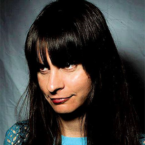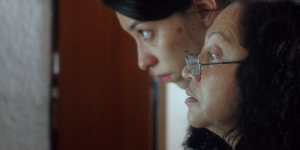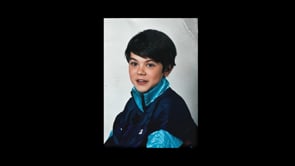
«Memory is an unreliable storyteller,» we hear in If Pigeons Turned to Gold, Czech director Pepa Lubojacki’s debut feature documentary, an intensely personal, diary-like snapshot of several members of her family, which won the Caligari film prize for innovation at the Berlinale and screens at the Karlovy Vary International Film Festival. In it, she tries to reckon with the devastating, multi-generational cycle of trauma and addiction that has pervaded her family so thoroughly. Pepa’s voiceover guides us through the collage-like, DIY account of what it feels like to be inside this family, with video spanning five years in which she pays visits to her homeless, alcoholic brother David, and hopes that her love will be enough to save him, despite evidence to the contrary. Memory might be unreliable, but it is essential to ordering experience and has integrity even in its irreducible subjectivity. Amid Pepa’s intense self-doubt over her own methods and motivations in telling a story that she is ashamed of, her candid and emotional footage, never sensationalised and always infused with love, convinces us of her declared «brutal honesty.»

AI animation
Lubojacki’s extensive use of AI animation to make childhood photographs speak is an interesting, controversial choice which aims not for disguised, seamless AI integration, but rather creates an abrasive and surrealistic sense of an uncanny world horrifyingly out of joint, where the way family members were before addiction took hold intrudes with its nostalgia for innocent potential, but also recasts everything that came before through the tendency of trauma to collapse time and warp any sense of linear normality. Her voiceover conveys an explicit awareness of the hazy ethical boundaries of filming a homeless alcoholic in his most vulnerable moments, and with his dignity so often in tatters. But her professed goal to show him through the eyes of a sibling’s love that ultimately — despite a cycle of relentless frustrations — accepts him as being whole as he is, addictions and all, confers that dignity back onto him by the end. It is little consolation in a melancholic film that lays bare pain and a fear of coming mortality that is almost inevitable, but beyond the personal, the film also becomes a thesis for recognising addiction as a disease over which willpower is not enough, and implicitly, for the need for more empathy in a society that leaves such individuals invisible as they battle against family patterns (Gabor Mate, the Canadian addiction specialist whose book In the Realm of Hungry Ghosts made the case for addiction not as a moral failing but a means to self-medicate trauma, is given thanks in the closing credits.)
Memory might be unreliable, but it is essential to ordering experience.
Never sustainable
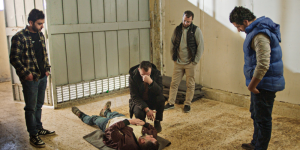
David’s daily life is far gone to alcoholism by the time we encounter him. He is living more or less on the streets, in a makeshift shelter he has thrown together on the outskirts of Prague. Through the film, Pepa will sporadically pay for him to take a room in a hostel, or bring him into her home, her instinct to care taking over from her concern she may be enabling more than reducing harm, especially when the weather turns biting cold, the COVID pandemic is in full swing, and the building he is squatting in seems more perilous and grim. But his heavy drink dependence means these situations are never sustainable. Cards on her fridge setting out what to do in the event of alcoholic epilepsy and delirium tremens underscore the stress and gravity of having this illness in her orbit; footage of David in the aftermath of a seizure conveys the extent of alcohol’s very physical hold on his health. The siblings’ mutual affection is always palpable, but Pepa’s sense of desperate futility takes a toll on her already shaky mental health, and she undergoes a stint in a psychiatric ward herself partway through filming. Hand in hand with the undertow of family history and susceptibility comes an articulated desire to pinpoint why the family is as it is; as if defining the pattern will be the magic cure for all of the grief.
Maintained humanity
As with many films that address trauma, the act of telling the story and ordering the fragmented impressions and memories into a coherent narrative is already a means of processing what has been beyond understanding and of giving it a rightful place within the history of the family and society. It is the incorporation of the taboo, and the exorcism of shame. The looping melancholia of the open-sourced soundtrack hooks us into the high emotion of these fragile and fraught family relationships. The animated filter of a talking pigeon (pigeons sharing an analogous place in the bird family as grubby, stigmatised misfits), like an inelegant creature from a hallucination, is fitting for a film that does not shy away from the alarming, monstrous faces of addiction. The generational blight of the disease, so often glamourised in cinema, here gets worthy treatment as a calamity that rips families apart, but does not erase the alcoholic’s humanity.