Laura Huertas Millán who was born in #Bogotá and lives and works in Paris has a Ph.D. in Visual Arts. She has also been involved in #Harvard University’s Sensory Ethnography Lab. With her minimalist, visually perfected, and precisely structured cinema works, she considers aesthetics and politics through a range of narratives and formats. Her distinct way of expanding documentary’s boundaries stems from an innovative approach to #visual ethnography#, defined – by herself – as ethnographic fiction. Aiming to expose colonial injustices and post-colonial realities of Latin America from within, her ethnographic fictions subvert and deconstruct the colonised gaze.
These times love narration
Digital storytelling has become a keyword in various domains from entertainment to advertising. Social media users strive to develop their own stories. We are even accustomed to journalists and scientists presenting historic events as «stories». The practice that ethnographers simply report about their research without fictionalising their accounts seems long forgotten. I can’t think of a person who was more successful in merging ethnography and fiction than #Jean Rouch#, one of the founders of visual ethnography and the inventor of «ethnofiction,» who used film as the main tool for research and presentation of results. He was later criticised for speaking on behalf of his subjects, and Huertas Millán is well aware of this impasse: On the one hand, if one considers ethnography as an ensemble of narratives rooted in colonialism, it might be understood as a form of fiction-making. On the other hand, some of the most interesting contemporary practices of ethnography have embraced a de-colonial turn, sometimes by integrating the fictional language tools within their own elaboration». Huertas Millán represents a voice from within and is, in her own words, «eager to include non-European / North American practices in my research, as well as highlight female and non-binary voices in critical dialogue with anthropology».

In the legacy of Rouch’s «ethnofictions» she, too, is introducing new views by exploring new forms of expression. Particularly outstanding is her treatment and sensitivity for space. In #Black Sun#, as the protagonists narrate about their minds, various physical spaces are investigated, reminiscent of Freud’s thesis that physical spaces within dreams represent the human mind. In The Labyrinth (El laberynto, 2018), the ruins of the mansion replica from the American TV series Dynasty, built by the former drug lord #Evaristo Porras# in midsts of the Colombian forest, provide the set on which transnational flows of global culture and the ambiguous role of the USA in #Colombia are addressed. In her early hybrid films #Aequador (2012) and Journey to a land otherwise known (2011), the contrasts between the geometry of palm leaves and the concrete architectural constructions, and between the leaves surface and the depth of tropical forests, are used to challenge the colonisers views.
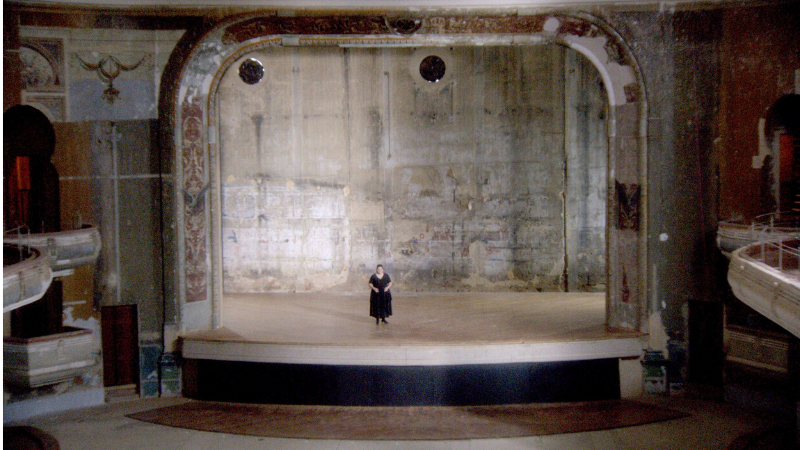
Black Sun
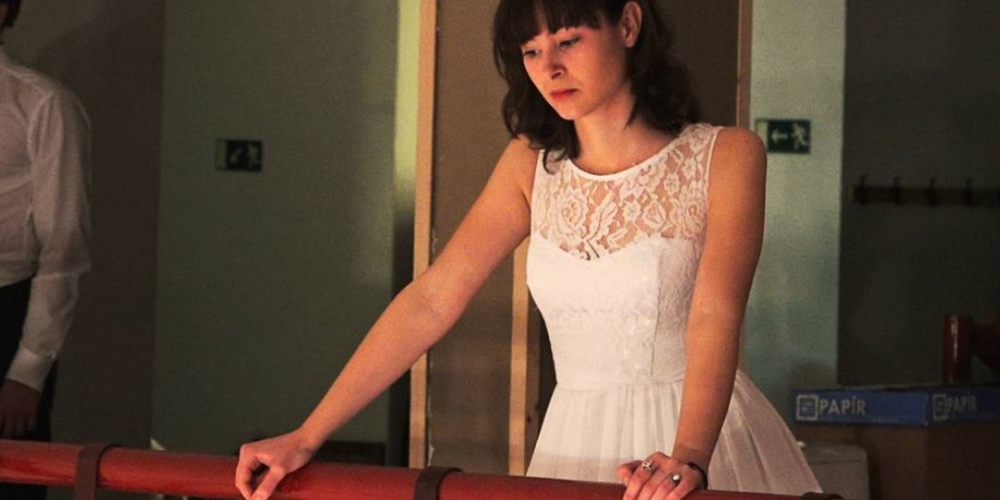
The film evolves from a breathing lesson to a soprano singing in an empty hall. The initial, irregular rhythm continues throughout the film – breathing in, breathing out –– in episodes elliptically narrating the singer’s quest to find the origins of her melancholic and suicidal drives: «an eclipse of the mind», a black sun. The echo of her beautiful voice in the huge space brings no relief. On the contrary, it further underlines the physical experience of anxiety, meticulously created throughout this hybrid film.
The singer, Antonia, is the director’s aunt and her quest for truth is simultaneously Huertas Millán’s investigation into her family’s fate. It also serves as a broader exploration of how trauma affects the community, resulting in an intimate portrait addressing the legacy of La Violencia, i.e. the Colombian civil war between 1948 and 1958.
Alters
Huertas Millán also writes fiction as Arturo Lucía, a transvestite alter ego. Her recent solo exhibitions include Maison des Arts de Malakoff (France) and Museo de Arte de Medellín (Colombia). Her films have been screened in art centres such as the Centre Pompidou (Paris), Solomon R. Guggenheim Museum (New York), Museo de Arte Moderno de Buenos Aires, and were also part of the Toronto International Film Festival, amongst others. Her work has also earned prizes from festivals like Doclisboa, Fronteira Film Festival, MIDBO, Videobrasil, and Bienal de la Imagen en Movimiento in Buenos Aires.
Laura Huertas Millán’s latest film Jiíbie will have its European premiere at the 50th #Berlinale Forum. Then, the 22 #Thessaloniki Documentary Festival will feature her in a Spotlight.