The utter, depraved brutality of imprisonment under the rule of Syria’s Bashar al-Assad – and his father before him – is revealed in The Other Side of the Sun, Tawfil Sabouni’s deeply disturbing and compassionate return to the experience of incarceration in the «Human Slaughterhouse” that was Sednaya Prison in Damascus.
Gut punch
The Other Side of the Sun is a punch-in-the-gut film that strikes blow after blow as the almost unimaginable cruelty of imprisonment under Syrian dictator Bashar al-Assad is re-lived by former inmates of a notorious prison.
Five men drive into the dusty, rubbish-strewn courtyard of the abandoned prison. Two of them are already crying. As they cross the threshold into the concrete building through a narrow metal cage, one of them breaks down. He is sobbing as he recalls finding the dead body of his brother in this very place.
The horror continues as the men scrabble and stumble their way into the deep confines of an isolation cell, a stinking, dark room beneath this hellhole. Sunlight scarcely enters this pit of despair, tiny rays filtering through holes in an iron ventilation grate.
«When they sentenced me – in a ten-second trial for a crime they did not state – I was told they were sending me to the other side of the sun,» one man recalls.
Welcome to hell. The other side of the sun, courtesy of a cowardly, trained eye surgeon turned dictator who now hides in Moscow under Kremlin protection.
More than 177,000 people passed through Syria’s prison system under the Assads. Many died, and many more emerged permanently marked – damaged physically and psychologically – by the brutal hallmarks of an apparatus designed to instil fear.
Filmmaker Sabouni was arrested and thrown into the dark pit of Sednaya after trying to record the events of the popular uprising against al-Assad that began during the Arab Spring in 2011.
He sought refuge in Belgium after his release, and it was there he began to make a film based on a reconstruction of the prison, using the testimony of fellow refugees and bleak, haunting models of emaciated naked men – the prisoners of Sednaya.
Events overtook him when al-Assad and his family fled Syria in December 2024, as a lightning week-long blitz by the Islamist rebel group Hayat Tahrir al-Sham and other anti-government forces seized Aleppo and then Damascus.
Within three weeks, Sabouni was back in Syria – and his first stop was the freshly gutted and emptied shell of Sednaya, this time with a camera.
«I was told they were sending me to the other side of the sun»
Walking through the past
Sabouni’s debut documentary now becomes an exercise in walking through the past. Finding four other former inmates – chosen from a couple of dozen candidates willing to tell their stories on camera – Sabouni recreates the truth of an experience in purgatory.
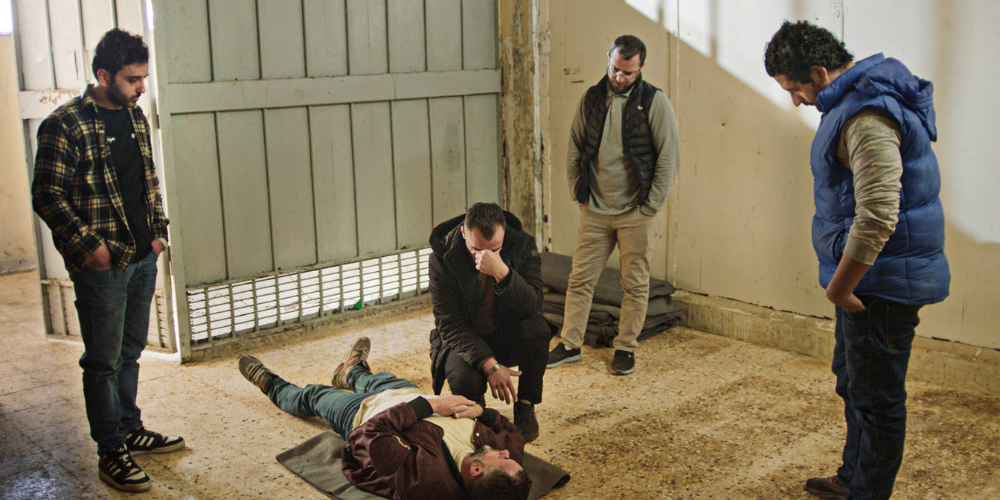
As the men walk through the empty halls of what was once hell, the memories return, and in a kind of trauma re-enactment group therapy, they begin to play out scenes from their past.
«The guards wanted to show us how to deal with a dead body – how to prepare it for removal from the cell,» one says. He lies down on a blanket and assumes a position with arms crossed over his chest and knees drawn up.
Another of the men – aged between their late twenties and mid-forties – picks up the story.
«They wanted to show us with a real corpse, so they took one man out of the cell and beat him to death before throwing him back in for us to ‘practice’ with.»
Inmates were never allowed to look at guards. One man dared take a peek once, and what he had imagined as a huge monster was simply a short, indistinctive man. Cruel punishments were meted out for the smallest infractions – naked men stacked a dozen at a time on top of a tiny toilet; their genitals crushed into the necks and faces of those below.
Men were beaten to death for slipping in hallways when they were taken for an infrequent shower, the floors deliberately slicked with soapy liquid. Many succumbed to disease or slipped into madness. Mothers permitted a rare one-minute visit; they failed to recognise their sons. Wives did not recognise their husbands.
The ingenuity of evil deployed by military guards – human beings devoid of humanity, as the men describe them – mounts step by step—the deprivations, humiliations, casual beatings. One man, seized for speaking when guards had called for silence, was beaten so savagely on his feet that he died. Prepared for removal – corpses were often left for days in crowded cells – the man suddenly revives; a tearful former prisoner recounts. He asks for a piece of the much-prized halva, a sweet treat occasionally given to inmates. His friend finds a piece of jam-sweetened bread instead. Taking it into his mouth, the beaten man sighs – and dies, this time not to return.
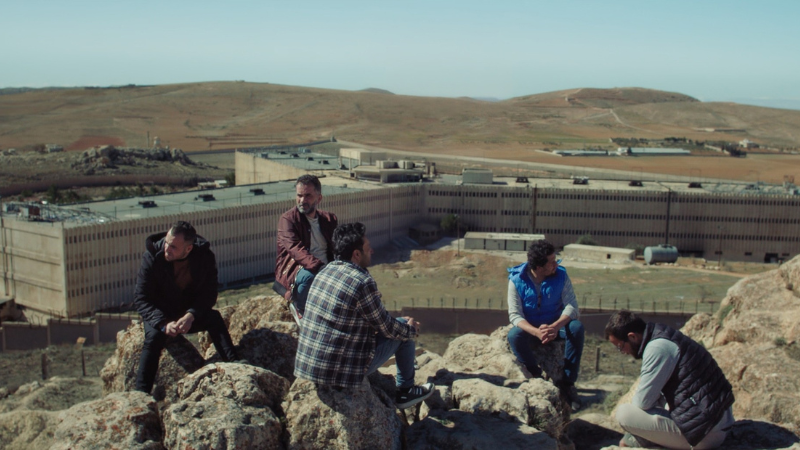
Sitting outside on a rock outcrop above the prison, the men recount the damage that incarceration has done to their relationships. One young man, desperately in love with his teenage sweetheart, when imprisoned, returns home to find her house a bombed ruin, her grave lost. The director himself returns to his lover, only for her to blame him for openly opposing the regime and getting himself imprisoned. Another marries his dead brother’s widow – honouring his dying wish that his wife be cared for.
Pain and redemption
This is a deeply painful film, but also one of redemption. When the men are presented with life-sized models of their former skeletal selves, and then of the brutal prison guards, their emotions overflow – tears, anger, trembling contempt. But none of them would kill their guards. They refuse to sink that low.
The Other Side of the Sun is set in a Syrian prison, but it speaks to the common story of man’s inhumanity to man and serves as an appeal for sanity in an increasingly senseless world.