When Sunny Side of the Doc returns to La Rochelle from 22–24 June 2026, it does so carrying a question larger than any individual market. After months of uncertainty surrounding its future, the event re-emerged through a mobilisation of broadcasters, producers, institutions, and funders who argued that the documentary sector still needed a dedicated international marketplace. The result is a leaner 37th edition built around a strategic partnership with Documentary Campus, a redesigned Meet & Match structure, and a programme focused on financing, distribution, digital audiences, and the ever-changing economics of nonfiction storytelling.
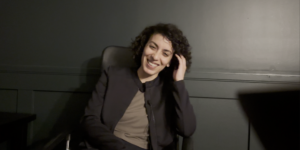
For Donata von Perfall, Managing Director of Documentary Campus, the challenges facing documentary are inseparable from the opportunities emerging alongside them. Throughout our conversation, she returns to questions of how projects are financed, how audiences are reached, and how producers can navigate a landscape increasingly shaped by digital platforms, alternative funding structures, AI, and shifting viewing habits. Beneath the discussion of market formats and industry strategy sits a broader concern: how a documentary sector experiencing fragmentation can retain a sense of collective purpose while adapting to conditions that look very different from those of even a decade ago.

From your experience with Documentary Campus and your work in the documentary industry in Europe over the last twenty years, how do you see the current moment? Do you feel like it’s another difficult cycle, or do you think it is a fundamental restructuring of how the documentary industry will operate?
I think the industry, especially the documentary industry, is under immense pressure right now. I see great opportunities, greater than ever. That is the work we are doing with Documentary Campus, since we already work extensively with these new financing models.
I think that is also what a market like Sunny Side has to do, or what training organisations like Documentary Campus have to do. They always have to go a step further into the future, show the opportunities ahead, and then discuss them.
Obviously, you do that with a festival as well, but through foundations, impact funding, impact producing, educational platforms, digital distribution, podcasts, brands, and cross-media collaborations. It’s a new way of thinking. It is a new way to put together the financing for your documentaries. Producers are no longer dependent on a single gatekeeping model to reach audiences internationally.
That being said, there is also a huge opportunity to rethink the very model of collaboration. Co-productions, in my view, are having a revival. They are becoming more important than ever in the global political situation we are facing. This focus on working in communities and shared experiences rather than traditional broadcasting structures is a huge step forward.
Creatively, it is also very encouraging. Younger audiences, especially those reached through digital channels, interact and participate. You get direct feedback from your community. I think they engage much more straightforwardly, and with much more enthusiasm, in factual storytelling across multiple platforms.
I just came back from a session myself, where I learned that it can also be on TikTok. The short form is about ten minutes, and you can even go up to thirty minutes on TikTok. On YouTube, we now go up to ninety minutes. Revenues you can get back are improving.
Of course, simply adapting to this crisis by building a sustainable framework is not easy. That is why I think organisations like ours, and markets like Sunny Side, are becoming increasingly important for the future.
Producers are no longer dependent on a single gatekeeping model to reach audiences internationally.
How important is having a physical market and meeting space?
We were organising the World Congress of Science and Factual Producers in Rio in December when I heard the news that Sunny Side would not return. Sunny Side has always been part of my career. I was really struck by this remarkable emotional response from the industry, the World Congress members, the press, and the French people who were present.
I was really impressed by the unification of the French syndicated supported by CNC to bring that market back to life. Then it was on us to say, okay, we have to be as speedy as they are. What can we bring to the floor? And altogether we had to act very quickly.
So the necessity of a physical market became clear to me through this very strong emotional response from the industry. We are living in a people’s business. We need places where we can still meet and do business effectively over a few days more than ever.
For me, it revealed that physical markets still matter enormously, and perhaps even more in an age of permanent digital communication. Online interaction is efficient, yes, but it rarely creates the trust, spontaneity, or long-term relationships that a market like ours requires. If the two of us were sitting opposite each other with a beer, we would probably bond much quicker.
It is this relationship-driven industry we work in, especially in these uncertain times. People need spaces where these conversations can happen honestly and informally, across commissioning, financing, editorial, and creative boundaries that are being lost. It is also important that new people entering the market have a quick way to introduce themselves to key people.

What is the single biggest old-school habit or assumption that may not be the best moving forward, or may not be relevant moving forward? Do you think certain ingrained habits and assumptions are preventing broader evolution in the industry?
I am a huge champion of digital-first production, as you may already have noticed, which is evident in the content of this year’s Sunny Side of the Doc sessions.
This means understanding the audience and storytelling structures, partnerships, visibility, and even financing opportunities. It also opens new routes for international distribution, particularly for independent producers who are no longer entirely dependent on a small number of traditional gatekeepers.
The industry still often treats digital as an extension of the main project, which I think is wrong these days. In reality, digital is increasingly the main entry point for audiences, especially younger generations. Producers who embrace that shift creatively and strategically will be in a much stronger position to build sustainable projects in the future. That needs to be rethought and embraced.
We also need to end the assumption that there is one correct financing path. You do not just go and co-produce with three or four broadcasters. That is very rare. Documentary filmmakers and producers should think more like entrepreneurs. They need to think about partnerships and audiences, about rights, and about long-term, sustainable outreach from a very early stage.
I am also a huge fan of impact strategies, which should always be considered alongside the project in today’s world. Plus, we need to reframe innovation. Innovation now is organisational and financial. It has shifted. How we collaborate, how we share risk, how we reach audiences, and how we build resilient structures for independent storytelling are all things we need to discuss on a different level. That is why we also reframed this year’s Sunny Side sessions to address those questions and discuss how we will continue them.
We are living in a people’s business.
As I understand, your pitch programme will be a little different this year. It will be more of a discussion-driven model. What does a discussion-driven model mean in terms of pitching projects?
When we came on board, we had just a few months to rethink the whole thing and ask, \” What do we want to target? We have CPH:DOX, IDFA, and all these fabulous pitching platforms. Documentary Campus also has its own, where public frontal pitching makes sense. But we asked ourselves, what is Sunny Side really about? Sunny Side is about business. It is a market. It is about people needing to come and work in an efficient and clear way.
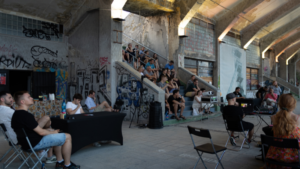
Yes, public pitching can consume enormous energy in the room, and it is great to see that. But it can produce relatively limited, meaningful exchange: you pitch, then maybe you have one-to-ones, but the outcome may not be as efficient as it should be. So we developed this more collaborative format around round tables, creating spaces for dialogue rather than performance. Again, I still believe in the other concept, but it depends on where and how you do it. For Sunny Side, which is all about business, we also had a callout for projects that require 30 percent of the financing upfront, which already limits things.
In the new Meet & Match market, we developed a very cleverly thought-through catalogue to see who needs what. If you come in with your project and you need distribution, you get meetings with distributors. If you need a co-producer from a specific country, we match you with one from that country. Whatever you are looking for, it is all about efficient, ten-minute talks. Then you can prolong those talks individually at the market.
We selected nearly 120 based on market readiness; that was the most important factor for us. The industry needed to avoid losing time when they came, because it was all about meeting as well—the curation process, therefore, balanced viability with originality, urgency, and creative risk. We had a very good selection committee, and we are aware that formally adventurous or politically sensitive work may not be easy to finance immediately. That is exactly why careful matchmaking matters, and that is why we took two months to do that matchmaking.
The goal was not simply to identify projects that were already commercially obvious, but to connect projects with the right ecosystems of partners. Selected decision-makers included people outside the industry. In the future, I would like to include brands and alternative funding bodies, so the whole thing becomes more diverse from that perspective. Those people cannot sit in a public pitch.
It needed to be more market-oriented, more business-oriented, more market-driven, rather than a showcase. For Documentary Campus, the right format is to complete the training programmes, go through a ten-month development course, and then pitch publicly. But here, major producers and distributors come to support projects. They need to do their business quickly.

Can you go through the actual matching aspect of this process?
Projects had a catalogue where they had to cross off what they had and what they were looking for. Apart from the catalogue, we are working with digital tools. It was already matched in terms of genres, whether you are looking for co-productions, a distributor, an impact producer, or something specifically targeted.
Then we had a selection committee selecting the strongest projects. We checked market relevance and the financing in the end, and whether they still need those meetings, but also whether they are in a place where they can go into production right now, or already at a stage where they need to close their financing.
Of course, we also selected based on diversity. We made sure we have a diversity of countries and genres… That is very much at the core of who we are.
We made sure we have a diversity of countries and genres… That is very much at the core of who we are.
Going back to alternative funding, I am always interested in how it presents itself. In the media industry in the USA, where public funding is almost nonexistent, funding comes mostly from private sources and foundations, so that is the traditional funding model. What do you see as alternative funding models in 2026, and is there one that is most prominent?
Coming from the US, you bring to Europe what we consider alternative funding. Independence does not automatically come from a funding source. It comes from transparency, editorial clarity, and strong ethical boundaries. The reality is that producers today often need hybrid financing structures.
For me, the question is more about how partnerships are structured. Are editorial decisions protected? Are expectations transparent? Is there alignment around public value rather than reputation management?
At the same time, this expanded funding ecology also opens important opportunities for new voices and for a more diverse range of filmmakers to enter the international documentary landscape. Alternative financing can help support projects and creators who may previously have struggled to access traditional commissioning systems.
Or we had a very successful case study where a podcast turned into a documentary. Or vice versa. Or you have an influencer with a huge community, especially on a specific subject, and then you can combine that with documentary production. As we said, you can also start to see on Instagram and TikTok what they call long-form content, which ranges from 3 to 10 minutes and, nowadays, from 10 to 90 minutes. It makes sense because the revenue is really strong. The longer the format, the higher the revenues.

From the Sunny Side perspective, are you curating conversations or panels around the ethical implications of brand partnerships?
The ethical and the legal. That is our job. We are creating sessions to start those discussions and to foster alignment on how to respond. It is not easy when it comes to brands, as we know, on all sorts of aspects, especially ethical ones. Not every project may be suitable for being funded by brands. The same goes for foundations.
We really see the project and tailor it individually to a specific funding model. We offer those platforms. That is also the experience of Documentary Campus. We come in with our long years of experience creating sessions as neutral platforms, and with a culture of discussion, even fighting about it, and rethinking it.
There is a German word, Streitkultur, which means you can have different opinions about something. But in the end, we have to work in line and find a common agreement in our industry.
we have to work in line and find a common agreement in our industry.
In this day and age, there is a tendency to fall into a binary, an absolute yes or an absolute no. Those things are not necessarily productive when there is an entire spectrum within that yes-or-no.
Let me add to that. That does not go just for brands. It also goes for AI, too. It also goes to the new technologies. How do you work with it? It can create new opportunities not only for the production workflow, but also for people to spend more time thinking creatively than executing original ideas. But where is the boundary? Technology is moving so fast, and we will not stop it. So it is on us to think about how we will work with that and how to make it transparent for our audiences as well. That is the same for branded content.
What is the Sunny Side perspective on AI usage? Recently, I have attended several talks on AI and have been surprised by how many relatively prominent industry figures are 100 percent anti-AI. But they ignore the fact that AI is accessible as well. Many filmmakers who may not have access to expensive workflows and equipment can use AI creatively. As long as there is a clear ethical breakdown of how this technology was used in the project, I do not see a problem.
We schedule, programme, and curate sessions to discuss those matters with our community. We bring expertise from diverse angles to shed light and help people change perspectives. Then you form your own opinion about it. But again, it is not just your own opinion. It is the community that also needs to direct our industry in the future.

When Sunny Side 2026 is finished, how do you gauge whether it was successful?
Of course, deals matter. Financing processes matter. Partnerships matter. Certainly, tangible outcomes matter, especially in the difficult climate we are working in.
But for me, success would also mean something less measurable. People should leave feeling that the documentary field still has a collective momentum and imagination. If producers feel less isolated, if broadcasters feel reconnected to creative risk, if new alliances emerge across sectors, and if difficult conversations happen honestly rather than diplomatically, then the market has done something important.
We are trying to rebuild confidence, not through optimism, but through practical collaboration. If Sunny Side of the Doc 2026 helps the industry move from a sense of fragmentation toward a renewed sense of shared purpose, then I would consider that a very meaningful success.
Featured Image: © Malina Ebert