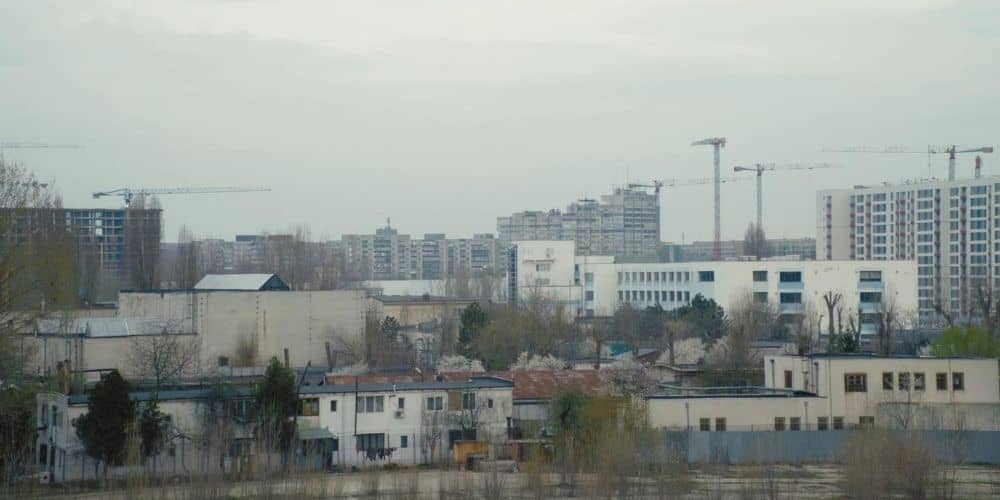
The Bucharest Delta, or Văcăreşti Nature Park, is having something of a documentary moment this year. Since its Sundance Film Festival premiere, Radu Ciorniciuc’s Delta-based film Acasa, My Home has traveled the international film festival circuit, racking up accolades along the way. It also headlined the 19th Transilvania International Film Festival (TIFF) centrepiece programme, «Romanian Days» earlier this month, but was not the only film at the festival to focus on this vast expanse of wilderness. Also on the TIFF slate was the existentially minded The Delta of Bucharest.
From Director Eva Pervolovici, The Delta of Bucharest spans decades, drawing a line from the area’s area’s dark communist-era history to its current status as protected land, with years of decaying abandonment in between. The history of this place is one of two eras in one city, the ever complex Romanian capital of Bucharest.

From church to prison
In the 1950s, Văcăreşti held one of Romania’s most notorious prisons. Originally, though, the building was one of Eastern Europe’s most beautiful, and largest, monasteries. Until Nicolae Ceauşescu destroyed it in 1984 (to make way for an expansive lake and Palace of Justice, neither of which were ever completed leaving the entire area in a state of near-total abandonment until the early-mid 2000s), it had stood since 1716. With apocalyptic imagery adorning its entrance and frescos of prisoner abuse its walls, the majestic monastery of Văcăreşti held clairvoyance for what those walls would eventually endure. By the time it housed its abundance of political prisoners – many members of the Iron Guard party, as well as prominent intellectuals of the day – Văcăreşti Monastery’s place amongst the finest religious buildings of the region, gave way to one of torture, torment, and terror, three hallmarks of Romania’s 50-year communist regime.
Specifically, the film follows a selection of female prisoners who found themselves in the unlucky position of calling Văcăreşti prison their (imposed) residence. Many faced multi-year sentences for the typically ambiguous charges of the era. These experiences were some of intense fear and pain, the kind which still can be seen on their grizzled faces today. The specifics of each woman’s story need not matter as, though different, ultimately represent the same thing – any iota of dissent (as determined by the state) resulted in brutal incarceration. To dwell further runs the risk of entering communist-porn territory and, thus, adding itself to the heap of films that have already done so.
the majestic monastery of Văcăreşti held clairvoyance for what those walls would eventually endure.
Childbirth: then and now
There is, however, one specific of a women’s experience in prison that ultimately creates an adhesive to the film’s generational juxtapositions: childbirth and the experience of children in the early years of their lives in the Delta. Of course, childbirth in Văcăreşti prison was a horrifically painful ordeal. With little sympathy and less anesthetic, women gave birth to children they would soon be separated from. In many cases, these mothers and children would wait years, if not decades (or ever), to reunite.
By contrast, The Delta of Bucharest also jumps in time to present-day Văcăreşti Nature Park, following a Roma family (one of many in the area) who call it home. Much like Ciorniciuc’s film, this family lives on the fringes of what many would call «conventional society». Though living in less than ideal conditions exacerbated by the region’s consistent oppression of the Roma community, the life of this family and its children are, however, a far cry from that of the unfortunate souls of the 1950s. They may have also been born in the Delta but, as far as family unity goes, they are about as connected to each other as it gets. Through crisp footage, we follow the modern-day Delta dwellers as they laugh and play, gather food, and head to school together. Unlike the ever-present sadness of the film’s elder women, this family is nothing but smiles.
Juxtapositions
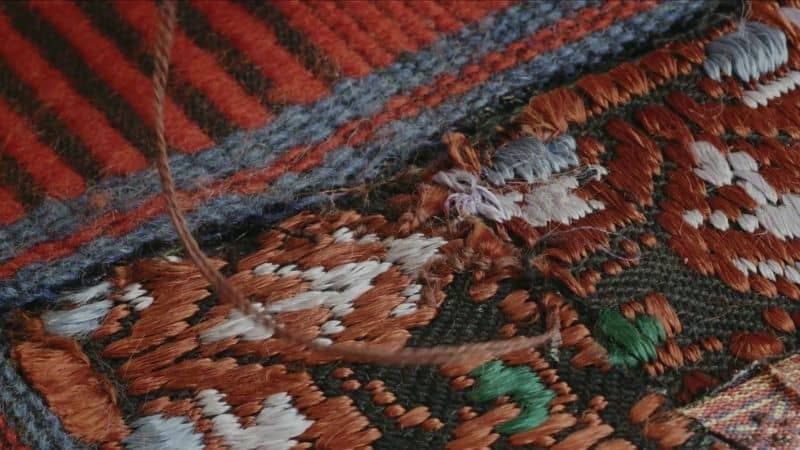
Juxtaposition is a central aspect of The Delta of Bucharest‘s narrative structure. Not only does the film juxtapose the grey, snowy 1950s with a sunny, sweltering present day. It also juxtaposes the two sides of the director’s personal experience in telling its tale. As a millennial member of the Romanian diaspora, Pervolovici is now based in France and admits at its beginning that she was not too interested in solving the issues of the past. However, a long-gone family friend’s hand-stitched tapestry finds itself in her possession, its intricate stitching providing inspiration and interest in its craftswoman, Lena. With this, Lena’s diary, as written and read in French, narrates one half of the film, ultimately leading to the many women still alive who endured prison life in Văcăreşti and a more complete understanding of her home country’s volatile history. Pervolovici’s own self-reflections narrate the film’s other half. In Romanian, she travels far beyond her birth years to a Romania few her age can recognise, let alone understand.
This deep plunge into the area and history of Văcăreşti is one that is simultaneously beautiful and cruel, isolated and robust. As a 21st Century park, Văcăreşti is representative of Romania’s natural abundance, a land of epic beauty and biodiversity. Yet, its 20th Century history is one fraught with pain that eventually yields the gross incompetence of dictatorship. Now, a dream for conservationists, artists, and architects alike, Văcăreşti embodies the 21st Century of the New East – one of a better and cleaner future.