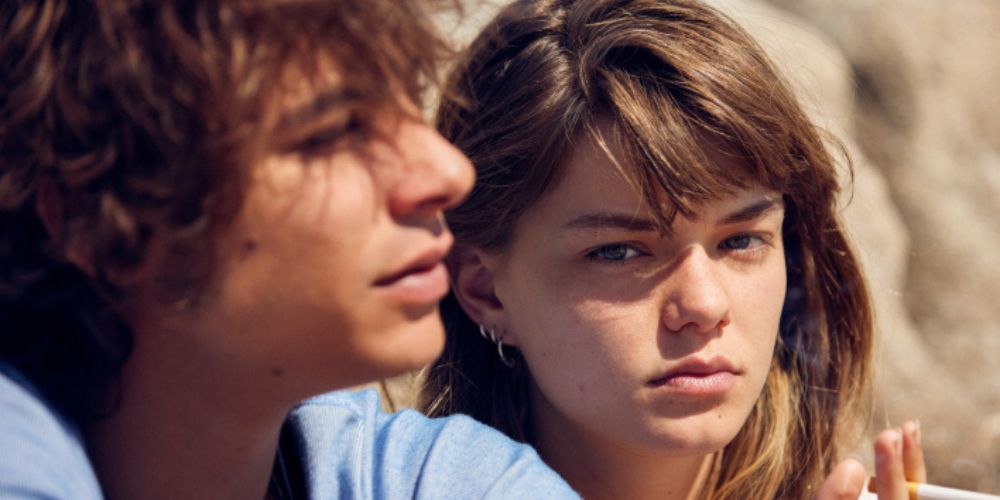
Porto/Post/Doc frames its 2025 edition around family memory and belonging, naming Carla Simón’s Romería as Opening Screening and Jim Jarmusch’s Father Mother Sister Brother as Closing Film, alongside a #Cinema Falado# competition devoted to Portuguese-language cinema across continents.
Simón’s feature extends her inquiry into autofiction and intergenerational silence. Set in 2004, Romería follows Marina, an 18-year-old orphan who travels to Vigo to secure documents for a university scholarship and, in the process, meets her paternal relatives for the first time. The film engages the afterlives of the heroin crisis, the stigma around AIDS, and a family story told in partial, conflicting ways.
Jarmusch’s Father Mother Sister Brother is a triptych of linked stories centered on adult children orbiting emotionally distant parents. Shot across three countries with a principal cast including Cate Blanchett, Adam Driver, Vicky Krieps, Charlotte Rampling, and Tom Waits, the film privileges small, awkward exchanges—a withheld confession, a misdelivered gift—over plot mechanics.
The Cinema Falado competition underscores linguistic and geographic breadth within Lusophone production, spanning Portugal, Brazil, Cape Verde, and Mozambique. Selected titles include:
- The Last Harvest (Nuno Boaventura Miranda): An intergenerational portrait of a Cape Verdean community in Lisbon, interweaving a teenager’s fear of forgetting his father, a single mother’s precarity, and a neighbour’s lost garden imagined as a portal to Cape Verde. Premiered in Rotterdam.
- Light in Darkness (Mariana Santana): A young woman and an older man travel by train to the Douro in search of a light phenomenon; a storm collapses the boundary between visible and invisible.
- Cartography of the Waves (Heloisa Machado Nascimento): A hybrid fiction-essay reframed when the director’s pregnancy mirrors her protagonist’s, becoming a meditation on refuge, motherhood, death, and creation.
- Gods of Stone (Iván Castiñeiras): Fifteen years in the making, a borderland chronicle of myths and childhood stories follows a 17-year-old weighing migration from a Galician-Portuguese village.
- Infinite Infinite, In the Imagination of Matter (Mariana Caló & Francisco Queimadela): Shot in Porto, observing children and art students in exploratory practices that link education, experiment, and collective authorship.
- Ku Handza (André Guiomar): From Maputo, a look at everyday strategies of survival and resilience among citizens living below the poverty line.
- Maria Henriqueta Was Here (Nuno Pimentel): A present-day attempt to restage Emperor Pedro II’s 1872 stay in Porto becomes a spectral inquiry into hospitality and memory.
- Infinite Samba (Leonardo Martinelli): During Rio Carnival, a street cleaner’s grief and care work converge after he finds a lost child.
- A Scary Movie (Sergio Oksman): A father–son summer in an abandoned Lisbon hotel echoes The Shining while confronting ghosts from Portuguese history.
- Zizi (or Prayer of the Fabulous Jackfruit) (Felipe M. Bragança): A suburban Rio epic centred on Dona Zizi, of Indigenous and Black descent, leading a community marked by affection and colonial scars.
- Sechiisland: Life as a Work of Art (Cláudia do Canto & João Paulo Miranda Maria): A portrait of Sechiisland—an independent postal‑art platform conceived as a “fictional island”—where creation, archiving, and communal life merge.