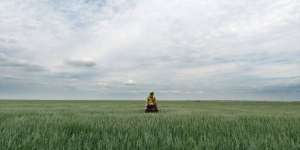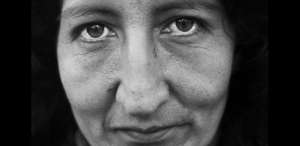
Sophia Luvarà showcases a courageous Italian experiment in cutting the pattern of criminal behaviour in Italy’s notorious Calabrian Ndrhangheta mafia family, by taking its young men off the streets for relatively minor offences and attempting to re-educate them in a secure facility.
The brainchild of Roberto Di Bella, president of the regional children’s court – who lives under police protection 24/7 because of his efforts to combat #mafia crime – the film follows the paths of five young men – four of them in the facility, the other a former inmate – as they struggle to understand themselves and forge a new path away from crime.
Sons of Honour is a brave attempt at probing a difficult subject, but like Luvarà’s last film, about gay marriage in China, Inside the Chinese Closet (2015), lacks the depth and breadth that could have been achieved.
A trip to the supermarket
The film opens with a disturbing and astounding statement: that the Calabrian Ndrangheta crime family controls 80% of Europe’s #cocaine trade and has an estimated annual turnover from criminal activities of €53 billion.
After introducing the concept of Di Bella’s experiment we are treated to a typical mafia initiation into the first kill of a young Mafiosi. This is done through an anonymous voiceover: a young man is instructed to make a kill with a handgun, to walk over the victim (unknown to him) and shoot until he is sure the victim is dead, before slowly walking away. The story is recounted as if it were a trip to the supermarket.
Luvarà then takes us into her story, with Di Bella explaining that he got fed up with judging the children of youngsters he had convicted of mafia activities in the 1990s showing up in his court and decided to try an alternative to prison.
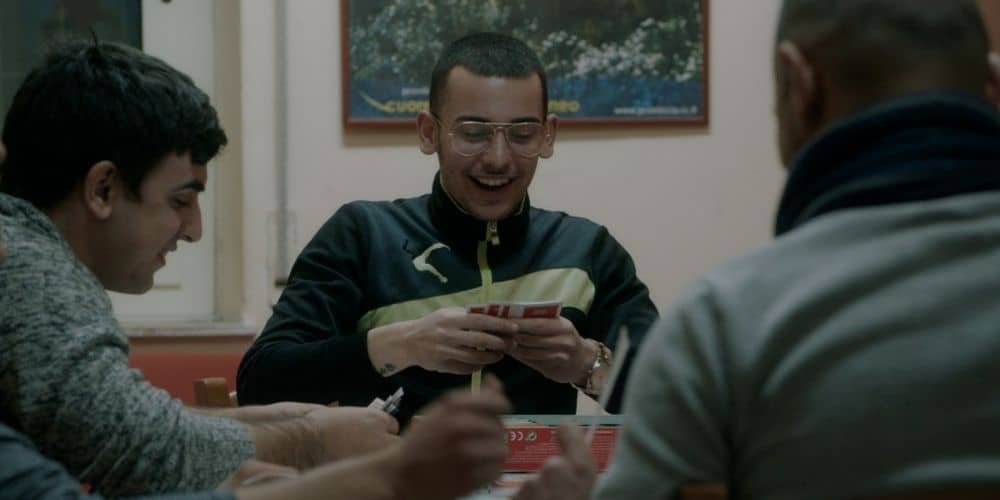
Although we meet our young characters and know their first names (only one, Alfonso Gallico, who has successfully fled the notorious family he was born into, is fully identified), we never learn precisely what crimes have brought them to this point. What we are left with is a vaguely interesting study of rather immature young men in confinement – their silly escapades, their inability to take anything seriously – that never really addresses the question of quite how they are being steered towards a legitimate path.
Sophia Luvarà showcases a courageous Italian experiment in cutting the pattern of criminal behaviour in Italy’s notorious Calabrian Ndrhangheta mafia family
Star-crossed
Structured around rehearsals for a performance of Shakespeare’s Romeo and Juliet – apparently seen as a way to draw some analogies to that tragic tale of two families locked in a cycle of hatred and revenge that eventually consumes its own «star-crossed lovers» – even this leaves one with a sense of having been fed not quite a full portion: we only ever see the rehearsals and sniggering of young men who can’t remember their lines. If the play was ever performed before an audience, we are not told; if – as is suggested – it was cancelled due to the immaturity of its cast – this is never really elucidated.
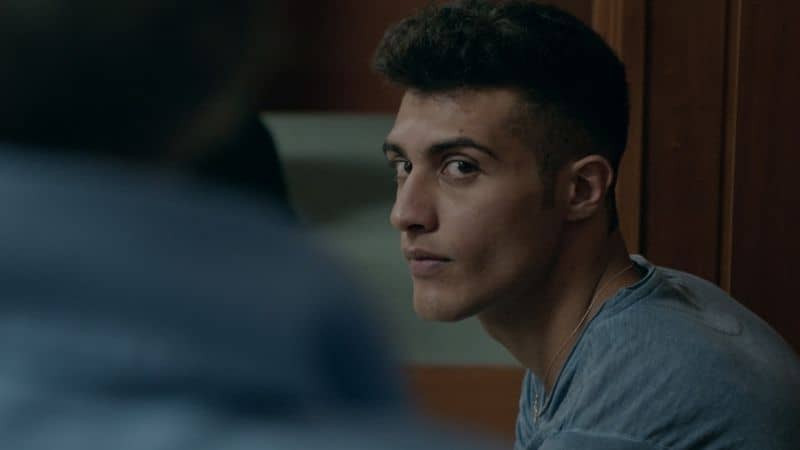
With little of a back-story for each character, we are left wondering quite who Bader, Pierpaolo, Simone, and Reda are. With Alfonso we have more luck – he comes back to ask the judge for help finding him a job and he talks of how, after being sent away, he started reading for the first time in his life. He recommends Balzac’s The Executioner (El Verdugo) which is set in the 19th century #Spain under Napoleonic occupation, although bizarrely the film’s English subtitles refers to the 14th century. Alfonso says the book changed his life, as it demonstrates how one may avoid the fate life has given them.
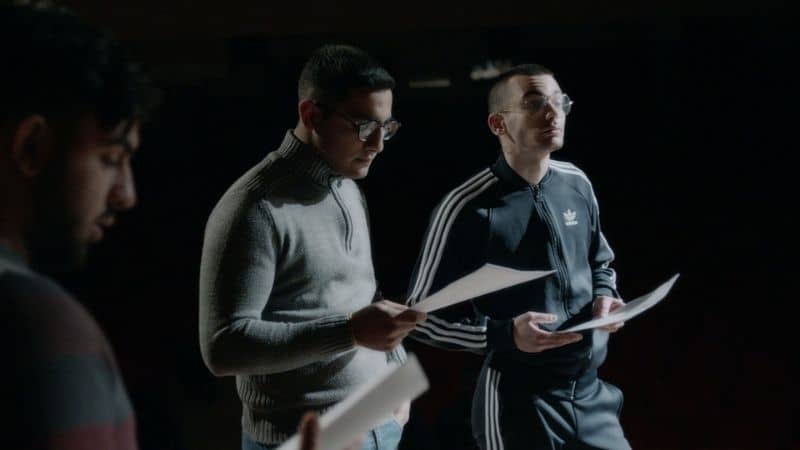
Cutting the pattern?
All the characters are engaging in their own way, but none can really explain what motivated them to engage in crime, with only one saying that he enjoyed it and would have continued had he not been caught. The director pushes Pierpaolo to explain why he won’t contact his father after his release. He has already said he has not seen him for six years and only vaguely knows where he is living, but (presumably, and off camera) Luvarà repeatedly – and pointlessly – pushes him for an answer that is never given.
Alfonso talks more eloquently about his relationship with a mafia father on the run he would occasionally meet at secretive locations: once, he spent six weeks with him, living in ruined and abandoned mountain villages. He loved being with his father, although now he cannot see him, lest he be drawn back into a life of crime.
Finally, the four characters in the facility leave and a new inmate is seen entering. The viewer is left none the wiser how this experiment in cutting the pattern of mafia activity really works.