
DOK Leipzig
-
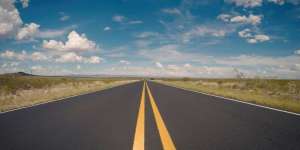
The progress and those who might be left behind
POST MODERNITY: In the shadow of the world's first commercial Spaceport, Truth or Consequences weaves the past into the present and our possible future.
-
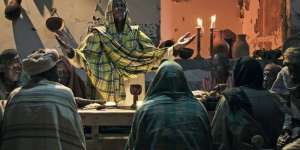
The pain of guilt
COLONIALISM: Hung on the cross of history: pain and regret stalk veterans of a controversial South African military unit in Boris Gerrets' biblically-structured Lamentations of Judas.
-
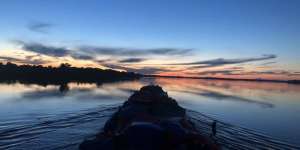
Hearts of darkness, dreams of light
CONGO: Honouring survivors of his Congo's 2000 «Six Day War» seeking acknowledgment or financial compensation for their pains.
-

DOK Leipzig completes programme for und 63rd edition; adds out of competition «Camera Lucida» section
Running 26 October-1 November, #DOK Leipzig# has announced the full programme for its 63rd edition, running in Leipzig cinemas and online. The festival will screen 150 films, which include 43 world, 11 international, 7 European, and 36 German premieres. There will also be a newly launched «Camera Lucida» section that will screen 5 films out…
-
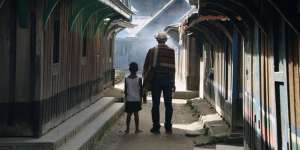
Another brick in the wall
PRISON: A picturesque hybrid documentary within a hopelessly overcrowded prison in Madagascar.
-
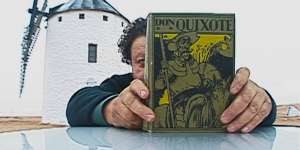
After initial postponement, Mallorca slow festival MajorDocs returns; full programme announced
After its initial postponement in March of this year due to the COVID-19 situation, Palma’s (Mallorca) #MajorDocs will hold its second edition from September 29th to October 3rd in a hybrid format. The films presented will only be available physically in order to support the cinemas. At the festival, each day two documentary features will…
-
DOK Leipzig unveils six special progammes for 2020 hybrid festival
The 63rd International Leipzig Festival for Documentary and Animated Film runs 26 October to 1 November 2020 in hybrid festival format due to the year’s #COVID-19 pandemic. With only two months t go, DOK Leipzig has begun to unveil details of its programme starting with its six specially curated programmes. Below you can read about…
-
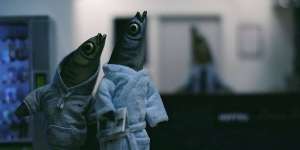
Nordisk Panorama unveils full programme for 2020 hybrid festival
Nordisk Panorama Film Festival, taking place 17-27 September, has announced details on their ten-day celebration of Nordic documentary and short films to be presented (mostly) online with a select few in-person events in Malmö, Sweden. All Nordisk Panorama Film Festival films will be streamed for free and will be available (with only a few exceptions)…
-
Krakow Film Festival 2020: The complete documentary winners
Saturday, June 6, 2020 saw the 60th Krakow Film Festival celebrate their jubilee edition with an awards gala. As with the entire film festival, the event was broadcast online, led by Maciej Stuhr. At home, a large audience gathered in proving that a pandemic does not prevent true love of cinema and this festival! Below…