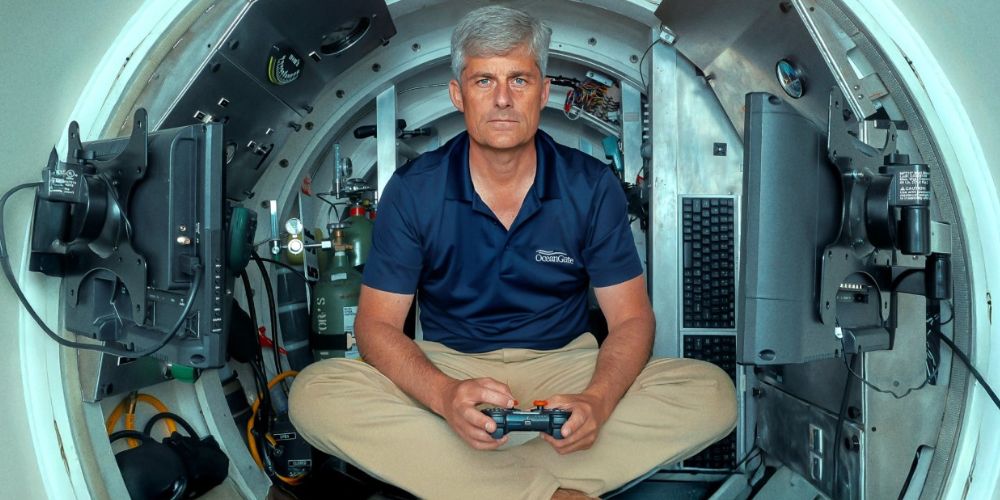
Pride comes before a fall. Arrogance and narcissism serve the ego before eventually defeating the self. Competitive and ruthlessly driven personalities tend to ignore any signs that may deflect them from their path. All of these very human and clearly negative traits could be found in Stockton Rush.
Dark allure
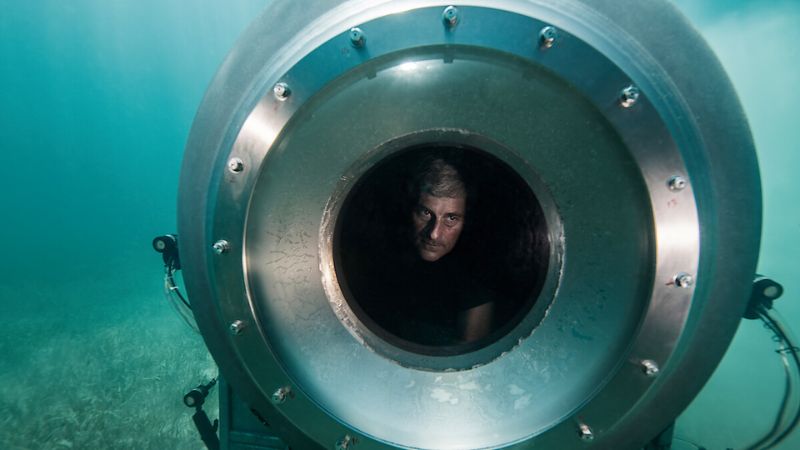
Rush was the charismatic and, in many ways, the clearly brilliant founder of #OceanGate, the US company established to design and develop a deep-sea submersible capable of reaching the wreck of the Titanic.
Why the #Titanic? The oceans are full of other, even more fabulous wrecks. But they lack the dark allure of the massive «unsinkable» luxury liner – and the depth at which it lies, 3,800 metres below the treacherous waters of the North Atlantic.
Rush, a Princeton engineering graduate who had worked for McDonell Douglas as a test engineer on its F-15 fighter jet programme, came from old money. Born in San Francisco in 1962, his ancestors included two men who were signatories of the US Declaration of Independence in 1776: Richard Stockton and Benjamin Rush.
His early dream was to become an astronaut, but he turned to deep-sea diving when he realised that unexplored dimensions are much closer to home, here on Earth, far below the foam-flecked waves of the oceans.
It is television documentary at its best.
We nnow the ending
Monroe’s documentary – now on Netflix – acknowledges that viewers know how this story ends: few of us can forget the global coverage of the loss of the Titan during a dive to the Titanic in June 2023. For days, breathless media reports on the prospects of any of the crew or paying passengers being found alive focused on a countdown of the «96 hours» of emergency oxygen available.
In fact, as Monroe’s meticulous, almost forensic, study shows, they had all died instantly when the carbon fibre hull of the sub imploded under immense oceanic pressures. The sound of the implosion was even picked up by deep-sea audio monitors 900 miles away, just 16 minutes after disaster struck.
Monroe eschews the drama of the news reports of 2023, opening with grim, grey scenes of the last moments of the crew and passengers as they speed toward the Titan in an inflatable boat before boarding for what was meant to be a trip of a lifetime. Instead, five people died: Rush, French deep-sea explorer and Titanic expert; Paul-Henri Nargeolet; British businessman Hamish Harding; and Shahzada Dawood, a Pakistani-British businessman and his son Suleman.
Cult-like environment
The director’s decision to focus on what led up to the disaster just 93 minutes into the dive allows him to build structure and detail around what some of those who worked at the company later described as a company driven by a cult-like, quasi-religious fervour.
Rush brooked no dissent in OceanGate. You either believed in the project or not – even as multiple tests and actual dive data demonstrated that the novel carbon hulls failed under pressure. Rush fired senior engineers who wrote reports demanding third-party authentication and deliberately found ways around licensing requirements. Staff turnover increased as others suggested the emperor was wearing no clothes.
Following a US Coast Guard investigation into the tragedy, we hear from all the key players in this dark story who are still alive. It is television documentary at its best.
Titan comes with an emotional punch that builds with the inevitability of a Greek drama. This is hubris, tragedy, and pathos rolled into one.