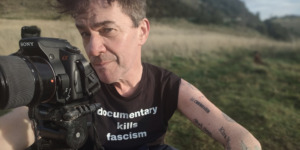
Argentinian film-maker #Jonathan Perel# has dedicated his entire career to forensically exploring the realities and consequences of the military dictatorship that dominated his country from 1976 (the year of his birth) to 1983. He came to international prominence via his award-winning 2015 feature-length work Toponymy (Toponímia), and has recently unveiled his follow-up, Corporate Accountability (Responsabilidad empresarial), in the Forum section of the Berlinale.
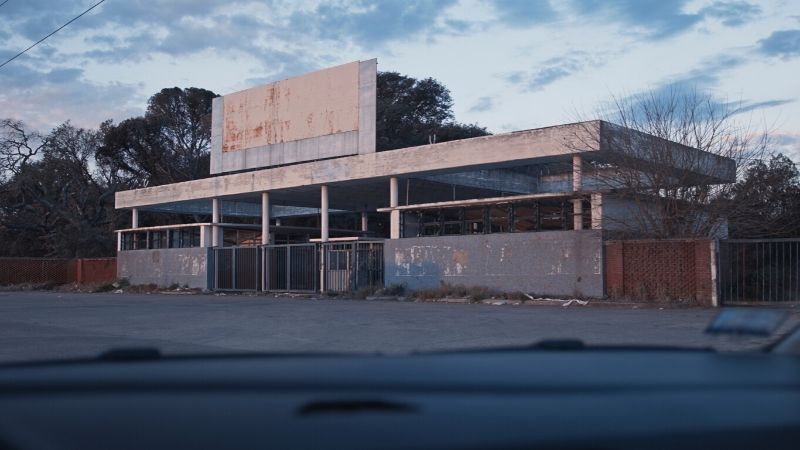
In this new film he «adapts» an official publication from November 2015 entitled Responsabilidad empresarial en delitos de lesa humanidad. Represión a trabajadores durante el terrorismo de Estado («Corporate accountability in crimes against humanity: Repression of workers during state terrorism.») Perel personally visits 25 industrial sites across Argentina, each of them run by companies who collaborated with the «civic-military» government of the junta years—including multinationals such as #Ford and Mercedes-Benz, filming them through the windscreen of his car as he narrates an official account of each enterprise’s misdeeds.

What exactly is the publication you used as the starting-point for your film?
It is an official report published by the Ministry of Justice and Human Rights of Argentina. This means it’s the state describing how these companies helped in the repression and disappearance of its own workers, mainly union delegates. This is important because it means it’s not simply myself who is investigating or deciding which companies to include, but the government itself.
And the narration is a selection of passages…
At the beginning of the film, I read the title, date, publishing house; all the information that appears on the first page. The film finishes when I read the last paragraph of the book. In between, the film consists of my readings of the whole book. But I read only the highlighted parts I marked when reading it for myself. So it’s a big condensation and summarisation that the film is doing, basically organising the information.
How much impact has the publication made in Argentina up to now?
The book was publicly presented at the end of 2015, in something of a hurry, because the government lost the elections [won by the #right-wing# «Republican Proposal» party led by former Buenos Aires mayor Mauricio Macri] and were leaving power that December. So they wanted the book to exist in public, but just a few digital copies were printed by then, to put something on the table at the presentation event. After the change of government, the book was hardly known in Argentina, although their were big efforts made by the #human rights# associations to distribute it and make it visible.
Was it immediately obvious to you, when you came across the book, that you would make a film of it?
I had the idea of making a film about the responsibility of the civil population right after I finished Toponymy. It’s what nobody wants to discuss here: how a big part of the society looked the other way. You can still find lots of people thinking: «let the military junta come back, with them everything was better». In Argentina, it seems like we had already dealt, or at least know how to deal, with the junta’s responsibility. But when we circumscribe it to only military people, it’s a way of trying to tame something that is untameable. Is our society ready to discuss and acknowledge its own guilt? What was each of us doing at that moment? But it’s not until I found the book that I was able to shape this film.
It’s what nobody wants to discuss here: how a big part of the society looked the other way.
So the book was not exactly very «high profile»…
I want the film to help make the book more visible. To create an «image» out of it. An image that can connect the past with the present. I wonder what will happen to the authors of the book when they watch the film…? Do they know the places in person? Does the present image of a factory still working have something else to say about the past? What’s the cumulative effect of seeing all the factories one after the other?
The film has a remarkably strong look considering it was all shot through car windscreens!
I believe that if the shots are going to last for more than two minutes each, and especially without a lot of action going on, at least they have to look good. In the end, no matter how slow or boring it might be, this is a cinematic experience you are proposing to the audience. But I don’t want the images to look nice just to make them more appealing. It’s because, if the only thing moving within the image is the smoke coming out of a chimney far away in the frame, you need to have the best possible material and quality to actually be able to see the smoke moving. The moment of the day has to be the best lighting possible for that smoke to be visible against the sky.
…And is there a particularly good time of the day to take such shots?
The «trick» was to shoot every factory at dawn. This alone already looks nice in terms of cinematography. It’s a very short moment of the day that lasts only a few minutes, and if I missed a good shot for any reason, my next possible opportunity was a whole day later. So the shooting period was quite slow and uncertain. But I did this not because of its cinematographical virtues, but because I relate this time of the day to the moment the workers arrive at the factory. The book explains how many workers were abducted at that moment of the day. This is some kind of strange reverse to the #Lumière brothers’ famous film, Workers Leaving the Factory [1895]: no workers coming out here.
What practical effect do you think such a film as yours can have?
What about justice starting to investigate these companies involved in the repression of their workers that are still not being investigated? How is it possible that a book published by the Ministry of Justice and Human Rights contains cases that are not yet being investigated? What about investigating, not only, the #repression and disappearance of their workers, but also their economic crimes, such as the private debt they have transferred to the state, the way they benefited themselves, and made more profits by repressing their workers? Even more, what about the very same companies acknowledging its own guilt, encouraging their own investigations, and then doing something to repair it? In Argentina, we use the term «reparation» to describe when the government has paid the victims of the #dictatorship a compensation in money, either to the survivors or to the families with a disappeared relative. Is there something they can do to repair? Can they at least ask themselves this question?
Is there something they can do to repair? Can they at least ask themselves this question?
The military continues to play a significant role in daily life, especially during the current #Coronavirus situation where they are very visible on the street. Do you think it is possible for Argentina to properly come to terms with the military dictatorship period?
«Coming to terms» is a difficult idea here. It can be easily associated with «turning over the page,» which also means forgetting, or even worse: forgiving. I find it more productive to accept that we will never come to terms, and this will always be an open and unresolvable problem. But it’s worth trying…as an ever opened and active exercise, never to be ended.
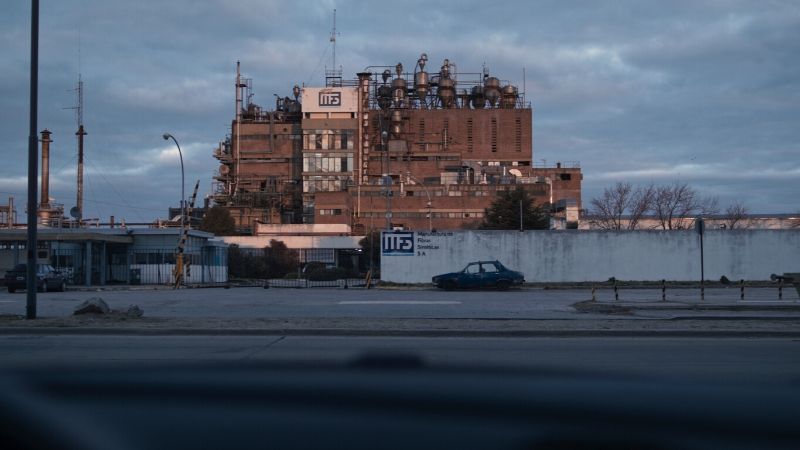
This active discussion is productive and has the capacity to question every generation all over again. The Macri administration, which was in charge of Argentina from 2015 to 2019, was a huge threat to memory and justice. Not only were all trials slowed down, but they even tried to reduce the sentence of the military people who had been convicted. There were members of the government questioning the official number of the «disappeared». Also, the Macri family itself was the owner of one of the companies showed in the film and they were involved in the nationalisation of the private #debt. It’s important to understand the dictatorship also in terms of the economic plan behind it. But the process of dealing with memory should always stay open, and not really looking for «closure» as such.
What could be the practical next steps now?
The companies could disclose documents and archives they might still have and would help not only for investigation purposes but also as a symbolic reparation. The military authorities have systematically refused to these handle documents. They were even offered a reduced sentence, in exchange for documentation. But they never accepted these documents might still exist. For the families of the disappeared, not having any information about their relatives is very difficult. Not only is there no grave to visit and bring flowers to, but there is no certain information that they were killed, not to mention when or where. Even a simple list with names of people killed would help. Seeing the name of a relative in a list can do something for the process of mourning, which is still open and impossible to conclude.