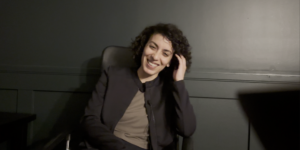
Talking with Mark Cousins is a delightful journey through time and history. In his monumental The Story of Documentary Film, he travels through cinema by refusing to separate images from the world that produced them. Across its remarkable 16 hours, the documentary becomes not simply a form of filmmaking but a way of looking at history, politics, bodies, landscapes, and one another. At the Karlovy Vary International Film Festival, Cousins presented the chapters devoted to the 1980s, a decade when documentary cinema responded to profound political and social shifts, from the final years of the Cold War to the emergence of new feminist and LGBTQ+ voices and changes in filmmaking technologies. The complete 16-part journey has since travelled to Telluride.
Our conversation this year continued an exchange with Cousins that began in 2024, when A Sudden Glimpse to Deeper Things, his essay film about the Scottish modernist artist Wilhelmina Barns-Graham, became the first, but not the last, documentary to win Karlovy Vary’s Crystal Globe. We spoke about war and tenderness, empathy, the politics of looking, the democratisation of filmmaking, artificial intelligence – and why documentary is ultimately an act of love. During our conversation, Cousins repeatedly reaches for things around him – books, images, quotations – as if the room itself were an extension of the connections he makes between cinema, literature, history and places.
Cinema is on the side of the devils as well as the angels.
Marta Moneva: What stayed with me when we first met wasn’t any single thing we talked about, but the way the conversation moved between films, politics, history and places, as if they all belonged to the same map. I also remember your extraordinary curiosity. Has the way you watch cinema changed over the years?
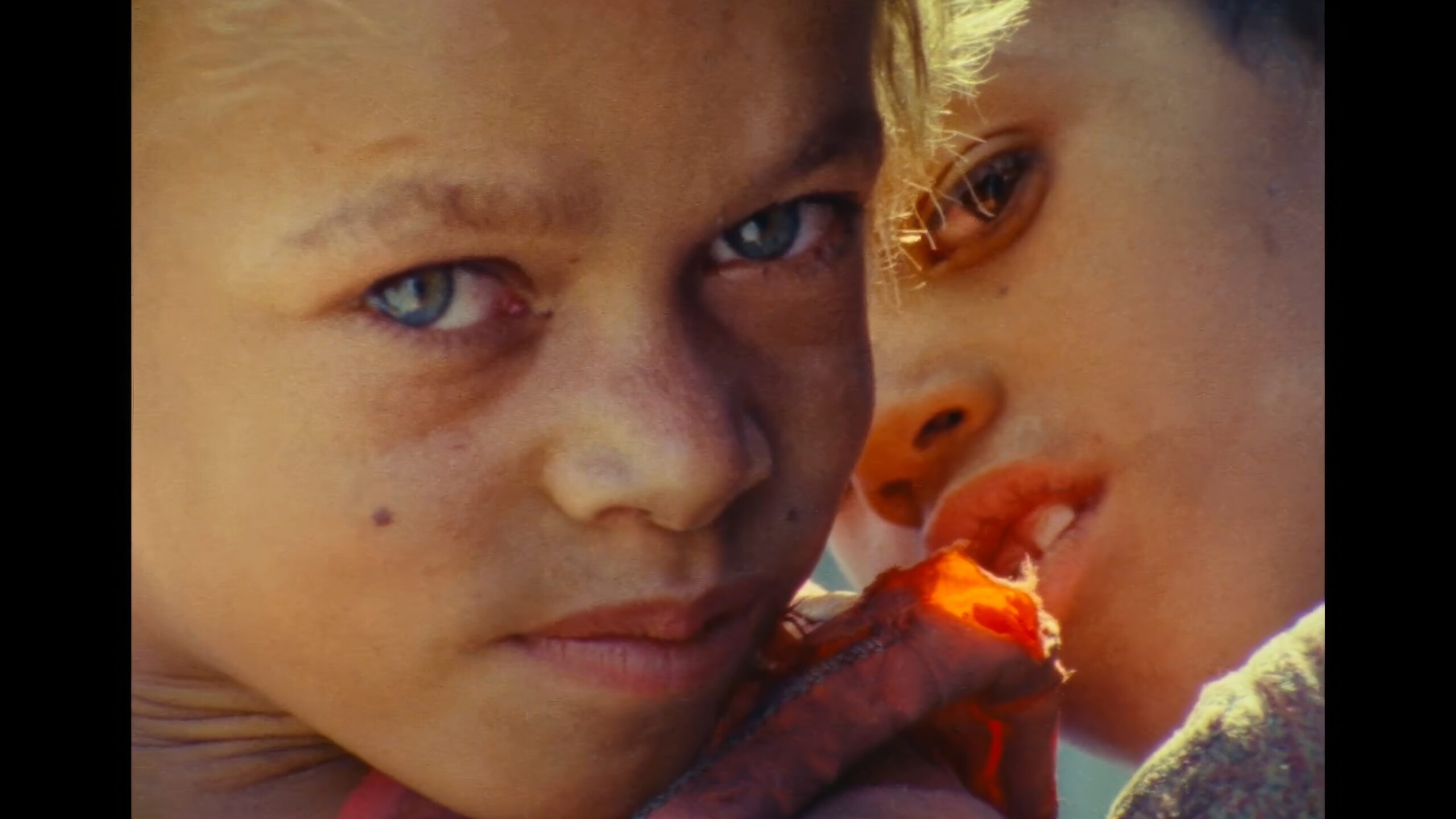
Mark Cousins: It hasn’t. I first encountered cinema when I was eight years old. I had the wide-open eyes of a child, like in that famous, beautiful film by Herz Frank, Ten Minutes Older, where the child looks up at the screen. And I’ve remained that child.
What has happened, of course, is that I’ve become an adult, and I’ve been in three war zones, and I’ve loved and lost. And I’ve seen the tragedy of life and the wonder of life. But for me, cinema is the same thing that it always was: bigger than life. Luminous. Something I always say: it’s like sitting in winter looking at summer in some way. And so cinema will always be this kind of realm of possibility.
When you talk about documentary cinema, I wrote my first book on documentary cinema 30 years ago. So I’ve been fascinated by documentary cinema for at least three decades. And it, I think, is the most complex type of cinema because it really submits to the world and to the vagaries of the world, but then shapes it through the individuality of the filmmaker.
I’ve become an adult, and I’ve been in three war zones, and I’ve loved and lost.
You mentioned three wars. Which ones?
Well, I was brought up in Belfast, and so that was the war in Northern Ireland. My mother’s Catholic, my father’s a Protestant. So that was the first war.
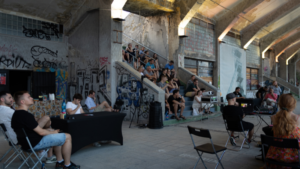
The second war: I was in the siege of Sarajevo. During the actual siege, I was running the Edinburgh Film Festival, and they asked festival directors around the world to go in solidarity to create an underground cinema as the bombs were being fired and the Serbs were shooting the guns. And I went. You remember, 10,000 people were killed in Sarajevo. I’ve got it tattooed on my hand: Sarajevo. A few years ago, I went back there, and they said, «You risked your life for us,» and they gave me this Heart of Sarajevo. I’m so moved. To see that during a war, people wanted cinema. People want not only bread but roses.
Then the third war: I made a film in northern Iraq, in Kurdish Iraq, called The First Movie, where I gave children cameras and said, «Show me your view of the world.» I was handing over the means of production to children and saying, «Show me what your life is like as a child living in Kurdistan.»
I’ve been in other wars as well, but these are the three main ones. So when you’ve lived through war, you can’t just be an innocent child, but you can’t lose the innocence, the open-eyed sense of expectation about life.
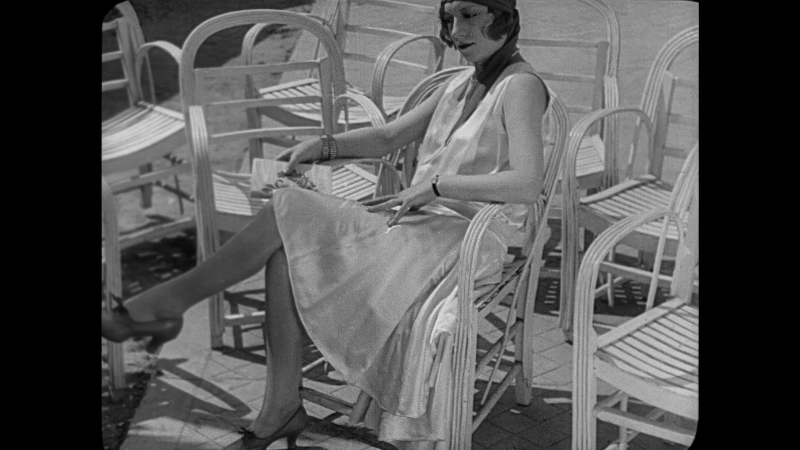
During a talk with Jasmila Žbanić a few years ago, she described the siege of Sarajevo and how films kept being shown during the bombardment, which helped them cope mentally. Did you two work together during the siege?
No, but when we met for the first time in Reykjavik, we just hugged and cried quite a lot, because we both had this in common in a way, Sarajevo. And of course, I’m a huge fan of her work, but we didn’t know each other at the time of Sarajevo. And I should be clear: it wasn’t just me there. The people who ran that cinema are the same people who now run the great Sarajevo Film Festival. But I was the festival director who went. And I’m very glad I went. It changed my life. It improved my life.
My work is certainly not academic at all.
What often strikes me is the tenderness with which you remember people and places, even when the history around them is brutal. I hear a similar tone in your voice-over: there is an intimacy to the way you address the viewer, rather than the authority we often associate with documentary narration. Is that something you consciously seek?
Yeah, I want vulnerability. I don’t want to be like some people when they make films. They’re quite didactic, and they’re full of certainty, and they speak loudly as if they’re speaking to a big audience. I want to speak quietly. I record my voice-over really, really gently, and I want you to feel that I am talking to one person only, with some warmth and tenderness and some doubt as well. So it’s not like a lecture. My work is certainly not academic at all. I never use some of those academic phrases like mise en scène. I don’t use that stuff. Partly because I come from a working-class background. There were no books in our house. We didn’t go to museums. People weren’t culturally educated to use complex language. That’s why I want my work to be available to my family and the people I grew up with.
Was there a particular moment when you began working with language in that way, or did it develop naturally?
I think several things. At school, I was very, very good at imagery and pretty bad at reading. I was a very slow reader. Probably I might have a diagnosis now; I don’t know. So language didn’t come naturally to me. Then I read Temple Grandin’s book, Visual Thinking. She’s an American. She’s basically a farmer but a teacher. She’s got autism. And she found that schools, the education system, were very focused on verbal learning, but she learned visually, and so did I. And that’s why I use words sparingly. People talk too much as well. And so you want to kind of – you want to be poetic, to be honest. I’m interested in poetry, not prose, in a way.
My first films had no voice-overs at all. I made a film about Holocaust deniers. I made a film about people who wrote to Gorbachev. They had no voice-over. And then I started to realise: look at Agnès Varda’s use of voice-over. It’s so beautiful. Look at Chris Marker’s use of voice-over. So beautiful. So I thought: this is a tool to enrich the experience.
Looking is central to my work
One idea runs through your work again and again: cinema teaches us how to look. What does it actually mean to learn to see?
Looking is central to my work. Everything I do. People think I make films about cinema. It’s the looking bit that makes me. I wrote a book called The Story of Looking. It’s a history of looking in science, art, architecture, politics, sport, and lots of different things. In history, of course, in agriculture. Everything I’ve done is about looking. And the reason is, as I say, I’ve always been uncomfortable with spoken language, but looking keeps me alive. It’s really good for my mental health. If I’m sad, I go out into the street and look. If I’m happy, I go out on the street and look. I call it the Z-axis from me out into the world. It takes me out of myself, looking.
Can cinema actually change the way we perceive the world?
Yes, for good and bad. Cinema is on the side of the devils as well as the angels, of course. Most documentary filmmakers want to improve people’s everyday lives by addressing social problems or clarifying history. For example, it’s exactly 100 years since the Scottish filmmaker John Grierson first used the word «documentary». He wanted people to watch documentaries so they’d know more about society, be better citizens, and make more informed choices when they voted for their politicians. Voilà. That’s cinema improving lives, improving societies.
But of course, cinema has always had its dream side, its fetishistic side. So it has glamorised the world and celebrated certain types of bodies more than others. We’re celebrating Marilyn Monroe’s centenary right now, for example. And look at how cinema treated her, or Judy Garland. Pretty badly. What messages did it give to young girls back then? You had to be super skinny or super sexy or pretend to be stupid, a dumb blonde.
So cinema, particularly Hollywood and Bollywood, or Hindi cinema, should I say; I prefer not to use Bollywood, has always created a kind of fantasy about romance that is naive and can be damaging. Not always, but sometimes.
That’s cinema improving lives, improving societies.
Yes, indeed. That makes me think about the younger generation. Young people today experience cinema very differently. They watch so much on mobile devices, and because of the screen size, the sound, and the surrounding distractions, they don’t necessarily have the same experience as in a cinema, where they focus on the big screen and are overwhelmed by the sound.
You know, the biggest growth area in audiences in the UK is under 25. When Béla Tarr died recently, they screened Sátántangó here, seven and a half hours long, and it was full of young people. In China, the biggest growth audience is young people. And I think I read recently that, for some other countries, the biggest growth area is young people, particularly around older films, repertory cinema, the classics of Scorsese, or the classics of old Hollywood. These people, driven in particular by Letterboxd, are going to the cinema in greater numbers than they did five years ago.
So I’m going to politely disagree. I totally agree that it’s, as David Lynch once said to me, fucking stupid to watch a film on your phone. But these young people are putting down their phones and saying there’s more to life than this tiny, tiny window on the world. And so there’s more and more evidence that Gen Z and Gen Alpha are saying, I’m going to search for a more focused, more enriching experience.
Glad to hear that.
I’m rather more optimistic than you are on the subject of young people in cinema. Wherever I go in the world, I meet people similar to me. In Ismailia, in eastern Egypt, where the Muslim Brotherhood is strong, in a conservative part of town, I gave a talk. Loads of young women came to the talk. There are film lovers everywhere. I once tried to calculate roughly how many film lovers there are in the world. And even if there are only 10 million of us, and that’s a conservative estimate, that’s a big tribe.
We have this thing in common: we love cinema, and it’s part of your job, and mine, to share that love, to give other people the opportunity to taste the magic of cinema. And if they get hooked on the drug of cinema, then they’ve got it for the rest of their life. It’s a friend for life.
Indeed, cinephilia is carrying us all. Another idea that keeps returning in The Story of Documentary Film is empathy. Why does it become particularly important in your reading of the 1980s?
That’s a good question. It’s the only time in The Story of Documentary that I used empathy as a theme, as a narrative. Of course, I argue somewhere that documentary is what I call a solidarity machine. It’s a way for us to see other people’s lives, understand them, and care. But I talk about empathy in particular in the 1980s. I think there are several reasons. In the Western world, Ronald Reagan in America, Margaret Thatcher in the UK, etc., were saying greed is good. Social inequality in the Western world increased quite a lot in the 1980s. Wall Street came along and made life more commercialised. Social inequality increased in the West, not necessarily elsewhere, which meant empathy became more of an issue. It was really more important to say, particularly from the people at the top, the very rich, to understand and care for people less well off than themselves.
But of course, it’s always been relevant. And as the Soviet empire came to an end and division started to increase, look at all those Soviet-era films, Eastern Bloc films from the 1980s, lots of them directed by women, I have to say, in the Czech Republic and elsewhere, Hungary. These films were trying to say: look, our political leaders are telling us one narrative. But the truth is different. We do not live in a Soviet socialist utopia. The real world is much, much tougher.
Also, by this stage, the feminist movement of the 1970s, third-wave feminism, was getting into everyday life. The LGBT movement, the gay rights movement, was getting into everyday life. So these were also reasons why, if I’m not a woman and I’m not gay, I have to care about women’s rights and gay rights.
Also, technology was changing. Video cameras were coming in. Grassroots people could start telling their own stories through video diaries, etc. That was another reason empathy became more of an issue in the 1980s.
The world has conflict and pleasure.
Documentaries are often described as a way of preserving reality. But do they preserve reality, or do they create memory, perhaps even create a new reality?
Documentary is half of cinema. It’s not just one genre like the Western or the musical; it’s multiple genres. It’s a multiverse. So documentary does everything that you just said. It can be a simple recording device, saying, «Look what’s happening here,» and «Look at what’s happening at this music concert, this industrial dispute, or this war zone.»
Documentary, right from the earliest years, was writing history, not only recording history, but putting it in narrative order. But documentary did other things too, because it covers the full spectrum of human experience, not just social and political issues like employment or equality. It was also dealing with desire and wanderlust, the desire to see the pyramids or Tokyo. It was also dealing with bodies, the dance films. It was also dealing with dreams and fantasies as well. What unifies all that is that the documentary is saying: look what’s out there.
The world has conflict and pleasure. It’s got food and landscape; it’s got war and suffering. It’s got grief and rapture, and documentary can describe all of that. So that’s why it’s hard to pin down. What I always say is that, overall, documentary is an act of love about the complexity of our lives and the planet.
I was telling you about this one-second film directed by Georges Demenÿ in 1891. He looks into the camera, and he says, «Je vous aime, je vous aime» (I love you, I love you). And I think that’s the best film ever made. One second.
Your film is a poem, but it is also a journey through the history of documentary. You have said that the image comes first. You don’t write the script beforehand; the script comes last. What does that process allow you to discover that writing beforehand couldn’t?
You’ve answered your own question with the word «discover.» If you write the script beforehand, I can tell when I watch a film that it was written beforehand: you go out and look for images to illustrate it. So, in other words, you’re not looking with clean, clear, open eyes to discover things. You’re looking for something to illustrate what you’ve already written. As you know, I’m my own cinematographer, so I shoot everything. Then I sit at this desk in this room where I’m talking to you now, and look at this screen. I look at the image and write to it. That’s why my writing is always in the present tense. I say here, this, now, etc. I never say, «She did this.» I say, «She does this.» So there’s a directness to it, a present-tense quality, which I think is more valuable.
It comes directly from the influence of Pier Paolo Pasolini. He made a great documentary called The Search for the Locations for The Gospel According to St. Matthew. He filmed lots of stuff, then sat in the edit suite, spoke into a microphone, and just described what he was seeing.
So the looking comes first, and the words respond to the looking. I love the freshness of that. I love the availability of that. It means that I’m not superior to the image. The image is doing the work, and I’m describing the work it does. It’s much fresher.
The image is doing the work, and I’m describing the work it does.
You once described your working process as imagining another person sitting beside you as you watch your films. Is that shared act of looking already an act of empathy? Is documentary ultimately a conversation between two people?
Here’s the way I would answer that. If you and I went for lunch today, we would be looking at each other, right? If we went on a road trip, we would both be looking at the road and talking to each other like this. And there’s something incredibly intimate about going on a road trip with another person, because you’re not looking them in the eye. You’re looking at something. You’re looking at the outside world together. The changing landscape. Maybe a dog runs across the road. Looking out at the world with another human being is really epic, profoundly moving in a way.
Whereas if you and I went to lunch, we would be looking at each other’s faces and the food. But if we turned this way, there’s, let’s use the word, something hypnotic about driving that way. And it’s that kind of, when I make a film, I want you and me to go on a kind of road trip together. Women Make Film was literally a 15-hour road trip. All those shots were something like a thousand road shots. And I want to try to get into an almost hypnotic state. And so the editing is important there.
On some streaming platforms, I could make some of that more of a streaming-style documentary. I could do it easily. You have to cut very fast and do loads of montages. But that’s different from the kind of approach I like, which is one-on-one and more about getting into a hypnotic state.
Your tattoos form another kind of map – of filmmakers, places and people who matter to you. Is there one that says something particularly important about you?
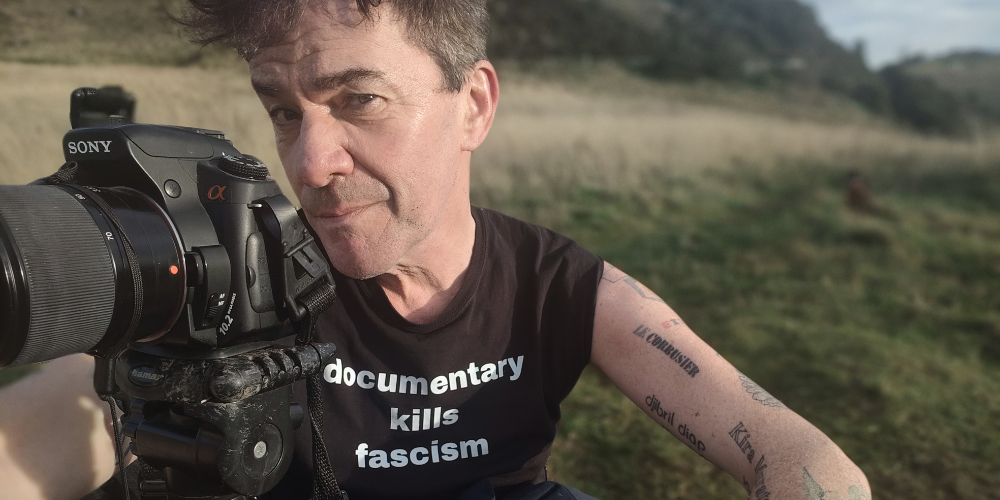
I’ve got lots of filmmakers here. I’ve got Kira Muratova. Of course, I’ve got Orson Welles. I’ve got Kinuyo Tanaka, the great Japanese director, but the tattoo that says most about me is this one: Marie Curie. I studied physics first. Marie Curie was Polish-French, criticised by society for being a modern woman. But the reason why she’s here for me is her absolute belief in the outside world. She believed that radium was out there. And all the people who said, no, it’s not – she just kept going and kept going and kept going.
That determination is wonderful. So when I’m stuck, when I don’t know what to do, I ask myself: What would Marie Curie do?
What would Marie Curie do?
Documentary is so often discussed in terms of truth. But I’ve always had the impression that you are equally interested in beauty. What does beauty mean to you in documentary cinema?
Think of a writer like Virginia Woolf and what she’s trying to do. Think of a writer like Rilke and what he’s trying to do in his brilliant poetry. In fact, I’ve got a quote from him here. This is on my desk. It says, «Maybe we’re here only to say: house, bridge, well, gate, jug, olive tree, window. But to say them in a way that the things themselves never dreamed of existing so intensely.» So I think that’s what documentary says. The documentary says: «Look what’s out there.» The Alps are out there. Other human beings are out there, but with a new intensity. And that’s what Rilke is talking about. And the third person I think of here is Ralph Waldo Emerson, the great American writer. And he says a simple thing: the poet turns the world to glass. And I think the documentary filmmaker turns the world to glass. It lets us see into the world. And that is the beauty for me: the clarity of the vision.
In our everyday lives, we can feel lost, can’t we? Or overwhelmed by anxiety or fear for climate change or the people in Ukraine or Sudan. And it’s hard to see. To see clearly. I said earlier, I love rain. It’s quite a simple thing. But the documentary helps us see clearly the reality in its brilliance and its awfulness. And that’s beauty.
You’ve said that ignorance is your best friend. How have you managed to protect that ignorance after decades of watching and making films?
It’s not only about films, but it’s ignorance about other types of human beings, ignorance about other cities, societies, philosophies, pleasures, and what you don’t know. If you know everything, you’re only half alive. I say: I’m a constant apprentice, an amateur. I’ve never, ever called myself a professional. Always learning. There’s always more to learn. There’s always more art to see. I was in Yerevan, Armenia, last week, and I saw so much. I’m 61 years old, right? But I seem quite energetic, and my energy comes from the need for new emotions, vistas, experiences, and pleasures.
Luckily, the world is big enough for you.
Absolutely. I have a nightmare that occurs about once a year: I’ve visited every city in the world, and there are no more to see.
Then we’ll have to put you on a space shuttle with a camera. What do you think about artificial intelligence? How do you approach it as a filmmaker – what should we allow it to do, and where does the artist have to resist it?
Artificial intelligence is changing medical research, for example, in disease diagnosis. But also in the creative field where I am, I think it’s really similar to what happened, say, in the 1830s when you were a painter, and you were painting portraits and landscapes, and then photography came along, and it could do it instantly.
And you think, well, where does that leave me? People don’t need painted portraits, realistic portraits anymore. They can take a photograph. And we’re at the same place with AI. When I was halfway through making this documentary film, I asked AI: «What is the history of documentary cinema?» It summarised it pretty well, but it summarised a book I wrote over 30 years ago on the history of documentary. And that was its answer. So all filmmakers and I need to stay ahead of it. We need to do things that AI can’t do.
When we get towards the end of The Story of Documentary Film, I start making more and more unusual connections between films, including fiction cinema. For example, the 1970s section at Cannes. This is, as you know, about documentary, and the first film clip was from a 1970s John Travolta and Olivia Newton-John film, Grease. And by chance, he was behind me on the red carpet as I was walking up. And I cut from Grease to Peleshyan’s beautiful film The Seasons. AI would never do that, Marta.
So that’s what we have to do. That’s our job: to be more imaginative and more original in the creative field. Also, of course, there’s the ethical side of it. If documentary filmmakers, or filmmakers in general, are using AI, they need to be honest with the audience and tell them.
We need the equivalent of the Hippocratic oath in medicine: do no harm. In the creative world, if we’re using AI, we need to label it and say what it is. It’s a scary time. But in certain fields, such as medical research and diagnostics, AI is now ahead of humans. And it could save lives.
We need the equivalent of the Hippocratic oath in medicine
You’ve spent decades introducing audiences to filmmakers from all over the world. What gives you hope when you look at the next generation of documentary filmmakers?
When I was making The Story of Documentary Film, I filmed in Brazil, Egypt, China, India, across Europe, across the US, and many, many countries. In each country, I met young people passionate about cinema in general and documentary in particular. The key reason is that documentary, even if you’re quite a working-class person, makes it possible to make something because there are so many phone cameras and things. When I was young, it did not occur to me to make a film. I thought, that’s what rich people do. Or you have to live in London, Paris, New York, or Los Angeles, or have family connections. And that was true. Now there are something like six billion cameras in the world. One of the very last film clips I use is a TikTok of a woman in Glasgow who said, «Look, I’ve just got some Chinese food, and me and my friend are eating it.» And guess what that is? That’s a Lumière film from 1895. It’s the same thing. Look, here we are. And we’re drinking coffee. That’s it. Technology has repeatedly democratized documentary – lightweight cameras made direct cinema possible, and video created another revolution. But access to cameras was historically extremely unequal.
There’s always been a slow democratisation of the process. The means of production are not controlled by colonial white men, basically. In the 1950s, as Africa was decolonising itself, unfortunately not many Africans themselves had cameras. So the process wasn’t told by the people who were benefiting from it. It was told by French men who were well-meaning leftists. And yet when Vietnam happened, we saw it every night on TV, or people saw it. When the Berlin Wall fell, we saw it on TV. So technology caught up with history.
Is there a documentary – or perhaps several – that fundamentally changed your own way of seeing?
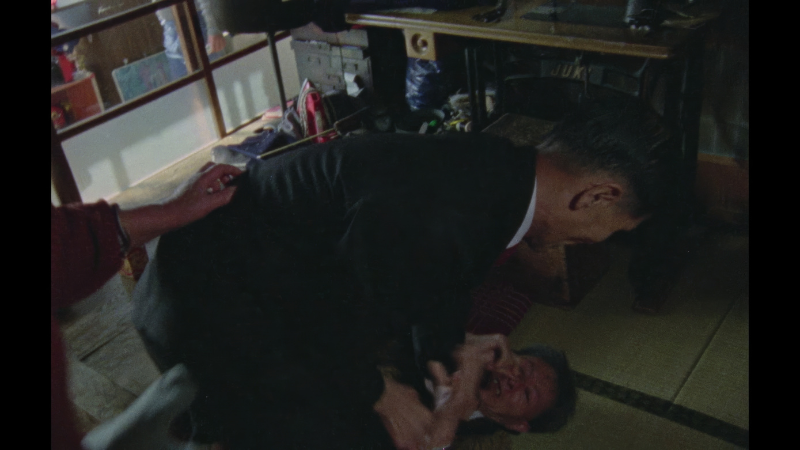
There are a few of them. The first was when I was a young, angry filmmaker, before I discovered I’m actually quite a gentle person. I saw Hara Kazuo’s film The Emperor’s Naked Army Marches On, and the rage in this film- the rage about how history lies, about how people are treated. So that really led me directly to making my neo-Nazi film, where I went undercover with neo-Nazis and took them to Auschwitz to show them the thing they deny the existence of.
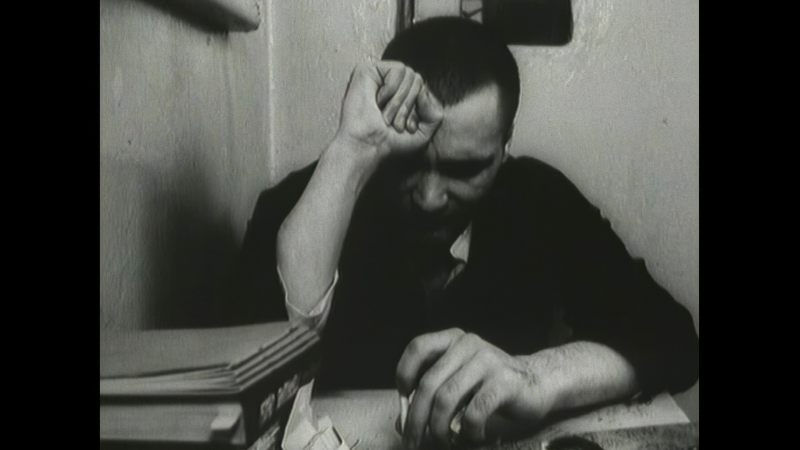
More recently, I could mention The Mosquito Problem and Other Stories, that great film. But I’m also going to mention The Last Judgment by Herz Frank. I think perhaps it’s the greatest documentary ever made because it’s about a guy on death row. And he admits to the crime. He killed two people. He’s horrified by what he did. And he says towards the end: I even love the executioners who will put me up against the wall.
And it comes – it brings us back to this question of love: Je vous aime, Georges Demenÿ, the first great film. So I think it all comes back to this idea that humanity has something in it that cares for other human beings and for questions of solidarity.
Thank you. May The Story have a great journey.