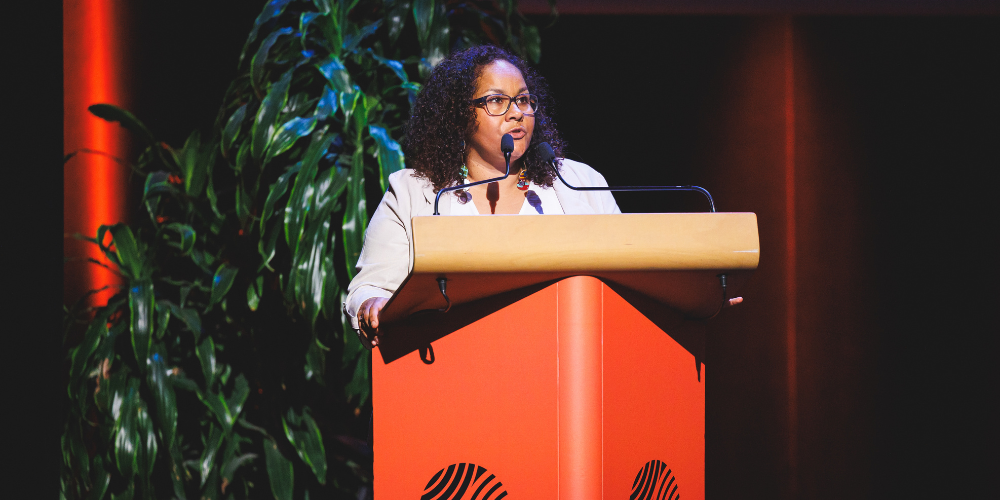
Sunny Side of the Doc’s 2026 edition opened in La Rochelle in the days surrounding the summer solstice, as France endured a record-breaking heatwave and temperatures pushed beyond 40°C. The conditions gave the event an almost surreal atmosphere, with a compressed three-day market taking place in exceptional heat, only months after its future had seemed uncertain.
Yet the return was also a farewell. The announcement that the market will move to Strasbourg in 2027 shifted attention from immediate recovery to questions of continuity, governance, and public support. For Managing Director Aurélie Reman, the transition comes amid a broader contraction in European cultural funding, with particular consequences for producers in lower-capacity countries. Speaking with Modern Times Review midway through the edition, she reflects on Sunny Side’s survival, the limits of the current financing ecosystem, the unresolved role of Documentary Campus, and the need to bring platforms such as YouTube into fairer negotiations with independent documentary producers.
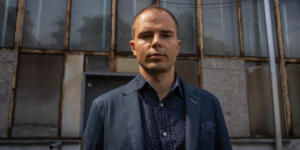
 ©Hugo la Fitte
Now that you are halfway through this year’s edition, what has surprised you most?
I don’t know whether I would call it a surprise, but I am very relieved to have had this moment of reunion. I was really looking forward to seeing the community gathered again and to receiving their firsthand feedback on an edition we managed to put together in only five months.
What has emerged from that feedback is that people clearly recognise the edition’s international character. We still have 50 nationalities represented, as well as a strong quality of decision-makers. We promised that the right partners, commissioners and buyers would be here, and that promise has been fulfilled. People are very grateful for that.
It may not be a surprise, since we worked hard for it, but it’s good to see the evidence on-site.
I am very relieved to have had this moment of reunion.
How has the shortened three-day format worked?
If I’m really honest, considering the temperature here in La Rochelle, three days may be the right format. It is more than 40 degrees, which I do not think we have ever experienced in Sunny Side’s history in La Rochelle.
More seriously, it has helped us refocus the programme and leave more room for the market itself, for the business exchanges taking place in the exhibition hall, and for the key discussions we need to have.
Questions around financing, funding, and business models have been spread across the three days, with perspectives from producers and distributors. We have also pushed broadcasters to be more concrete and straightforward about their digital shift.
This is a difficult moment for the industry. We knew the community needed more time for debate and reflection. It is useful for a French producer to realise that a Brazilian producer’s situation may be similar in certain respects, and that they may be able to find solutions together.
Overall, I think the three-day format works as long as there is a good balance between business meetings and time for reflection and dialogue. We need both to build the new financing models the industry desperately needs.
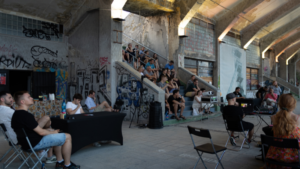
 ©Hugo la Fitte
The crisis facing documentary is clearly international. No market or territory seems immune. Having come so close to cancellation, is Sunny Side now financially secure, or has the problem merely been postponed? How does Strasbourg affect that?
There were different factors involved. Some were organisational, while others were connected to the economic model of an event like this.
What is certain is that Sunny Side was able to return because there is nothing similar on the international circuit. There is no other documentary market of this kind that is not attached to a festival. People see it as essential to their businesses, projects, and professional relationships.
The other question concerns the strong financial foundations needed to organise an event like this. Since the beginning of the year, there have been many discussions with different territories in France. The CNC made a strong commitment to maintaining an international documentary market in France, and consultations took place with several regions.
That process developed at roughly the same time as we were preparing this edition because the objective was continuity. We also organised this edition to make sure the event could have a future.
Strasbourg brought together several elements. There was its cultural and political strategy, the arrival of a new mayor in March and the fact that the territory already had a strong delegation at Sunny Side. There was already local interest.
There is also the international reach that comes with being a European capital. It sends an important message from France to Europe. That is reassuring. We’re much more confident about the financial foundations that could allow Sunny Side to be reinvented, adapted, and opened up.
There is no other documentary market of this kind that is not attached to a festival.
You describe the move as a message to Europe. This year has been particularly difficult due to funding cuts, including across the media sector. What does this crisis reveal about the way Europe supports documentary and its institutions?
I am an optimistic person by nature, but I can read the signs, and they are not good.
I grew up and studied with a strong belief in European values. We have reached a moment in history when Europe needs to rise to what is not simply a challenge, but a democratic urgency on many different fronts.
Culture and the creative industries remain a form of soft power. They are probably among the best means we have of sharing democratic values, supporting a diversity of voices and demonstrating what can emerge from a united Europe.
I cannot hide the fact that I am worried about documentary filmmakers, storytellers and platforms like ours, which are dedicated and committed to supporting the sector.
 ©Hugo la Fitte
Governments increasingly seem to forget the distinction between soft and hard power.
Our cameras are weapons, but peaceful weapons. They can have a real impact on societies and civil society.
As a citizen, and not only as an event organiser, I cannot hide how worried I am. At the same time, this is why we have had to find solutions outside the existing framework.
Some filmmakers no longer apply for European funding, not because they think it is irrelevant to their stories, but because of the administrative burden involved in making those applications. There is uncertainty, and sometimes a lack of clarity, surrounding certain policies.
This has a direct effect on producers and on whether a story will reach any screen or audience. Whatever is decided concerning the AgoraEU budget will have a direct impact on our industry, and particularly on the documentary community.
Culture and the creative industries remain a form of soft power.
How does this affect European co-production? Could productions from outside Europe become more hesitant about collaborating here, potentially opening space for other regions?
I don’t think international producers will necessarily become more hesitant, but it depends greatly on the territory.
Consider what are described as lower-capacity countries, including those in Central and Eastern Europe. Documentary producers in those countries often depend more heavily on this support. When they enter the international market, the amount of national or European financing they have already secured helps reassure potential partners, whether they are broadcasters or co-producers.
That is where the crucial part of the process begins. Co-productions now involve multiple partners, and producers have to work extremely hard to make them happen.
Coming to Sunny Side without any local or European support, at least during the development phase, would make it much harder to have efficient conversations that lead to real outcomes.
Everything is linked. As I said in my opening speech, we are also part of this ecosystem. We provide a platform that brings people together, and sometimes we help them travel here. That is a very concrete form of support that Europe should not abandon.
 ©Hugo la Fitte
Will the Sunny Side name remain in Strasbourg? What role might Documentary Campus play in future editions?
The partnership with Documentary Campus was established within the framework of the 2026 edition. Nothing was already in place or projected regarding the future.
It has been an interesting collaboration, and we need to wait until the end of the event to assess it and gather participant feedback on the new formats we introduced this year.
Some of those formats emerged because we had so little time to prepare the usual programme. Others were part of a more deliberate transformation. These included having more conversations about digital-first production and its actual impact on revenue streams. That is something we developed together with Documentary Campus.
It is therefore too early to say how Documentary Campus might be involved in future editions.
Regarding La Rochelle and Strasbourg, the CNC strongly emphasised the importance of preserving the Sunny Side spirit during Monday’s announcement. That spirit may not depend only on the name. It comes from the atmosphere and from keeping the event at a human scale, with perhaps 2,000 or 2,500 people, but no more than that.
It means creating the right connections through carefully designed events, networking and matchmaking. These are methods that we have developed over almost 37 years.
At the same time, we need to recognise how much the industry has changed. Expectations are different now. This year has been pivotal because of the need to bring everyone back into a global conversation about the ecosystem.
Producers should not feel alone. Distributors need to retain the ability to do their work, including through windowing. Broadcasters should reconnect with their editorial missions and take more risks, even in an environment increasingly driven by advertising.
We also need to acknowledge how people now consume content, particularly on platforms such as YouTube. YouTube has been everywhere here in La Rochelle.
The next challenge is to bring platforms like YouTube to the negotiating table, put agreements in place and determine whether they are prepared to invest in original documentary content.
We are beginning to see agreements between broadcasters and YouTube. But if you are a producer and your content appears on YouTube without you receiving any money, that is not a viable or sustainable model.
Producers are open to these opportunities, but they also want to ensure that the models being developed are beneficial across the entire value chain.
 ©Hugo la Fitte
Are you more confident about the future of documentary or more conscious of how fragile it has become?
I have never lost confidence in the value of the work we do at Sunny Side of the Doc.
We are now reaching the end of a cycle in terms of location, but the vision that Yves Jeanneau had almost 40 years ago regarding international co-production remains very much alive.
In that sense, I am still confident. People here believe they are stronger together and can find realistic, concrete solutions by coming together in person as a community, even if only once a year.
That is the source of my confidence. At the same time, there are still many question marks. We will need to be very careful about how we communicate over the coming weeks. We need to convince the community that this next chapter will not only be as relevant as what came before, but potentially even more relevant.
There is room for transformation. I see it as an opportunity not only for us as event organisers, but also to create something new and different while preserving the DNA that has made Sunny Side unique for so many years.
The atmosphere here has been revealing. Everyone arrived quite worried. They may not leave entirely optimistic, but they will at least leave knowing that they are not alone and that they share common ground and common interests. That can help people continue moving forward.
It has the same effect on me personally.
I have never lost confidence in the value of the work we do at Sunny Side of the Doc.
I am a strong believer in the power of a change of scenery
It is like a phoenix. It comes back differently each time.