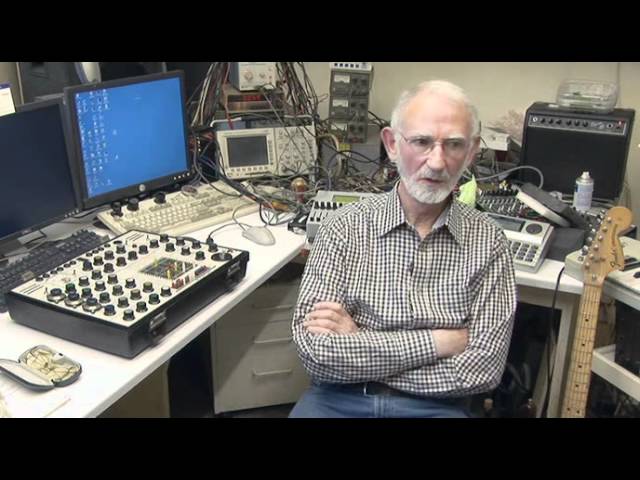
Surprise! Despite it`s sometimes quite technical aspects, difficult to appreciate for the neophyte in this area, What the Future Sounded Like turned out to be a fascinating and even entertaining and funny portrait of one of the most exciting periods in post-war British music, and the people behind one of the world’s most advanced computer music facilities at that time. This radical group of avant-garde electronic musicians, who played a key role in the cultural revolution of the ’60s, used new technologies and experimentation to compose a futuristic electronic soundscape for the New Britain, changing the sound of some of the most popular artists of this period, including Brian Eno, Pink Floyd, Hawkwind, Gong, and the German group Kraftwerk-names that immediately brought back a whole epoch to me.
https://youtu.be/8KkW8Ul7Q1I
Before 1970, EMS founders had already envisioned most of the electronic music equipment on the market today, ten to twenty years ahead of their time. Nowadays, for a generation brought up with 32-bit computers and digital signal processors, it may be difficult to appreciate just how revolutionary EMS’s projects were. However, in the 1960s it was rather unusual for anyone working outside the military or academic context, when most people still used punched cards for programming, to have access to a 12-bit computer with 1K of memory, or a video screen. On top of that, working with these sophisticated devices for the sole goal of music was simply unheard of.
A mix of interviews, animation, super 8 film, photographs and archival material from the UK, Europe and Australia, the thoroughly researched documentary brings back to life this forgotten music history in a wider historical context, honouring at the same time EMS founders: Dr Peter Zinovieff, an ingenious pioneer in the field of using mini-computers for musical applications; Tristram Cary, who already in 1945 as a wartime naval radar officer conceived the idea of electronic and tape music and later became a pioneer of classical electronic music and a composer for film and broadcast; and, David Cockerell, a famous analogue-digital designer.