On Monday, Se og Hør is celebrating its 20th anniversary, with a couple of thousand celebrities and readers setting off on a cruise aboard the SS ‘Norway’. Cruise manager Tande-P. is leading the trip to the neighbouring monarchy – England. The crowd around Se og Hør loves a royal party.
Back when King Haakon reigned over Norway, the Frenchman Roland Barthes wrote about ‘The “Blue Blood” Cruise’ in Mythologies. He described how the royals guard their own racial purity, just as one does with puppies; a family clan protected aboard a modern ark. The floating cruise ship allowed no mongrels; they reproduced amongst themselves. This sanctuary, reserved for the ‘sacred’, had blue blood to spare, but the species began to degenerate. This cruise ship also had a cabin for King Haakon (i.e. the Danish Prince Carl) and his cousin Maud.
The monarchy is a banal relic, an anachronism that should long since have been abolished – meritocracy is its natural successor. The monarchy is a grand saga from the sagas that should have ended with King Olav. He was a beloved king, a unifying national symbol in post-war Norway – the very embodiment of modernity, a constant presence, a role model. But the process of the bloodline’s dissolution began with Harald and Sonja, Carl Gustaf and Silvia – the start of today’s banal monarchical narrative. As a symbolic, nation-unifying narrative, we adorn stamps, coins and chocolate bars with these smiling faces – whilst leaving the banknotes to Collett, Grieg and others. For surely, with one’s wits about one’s head – rituals notwithstanding – one cannot believe in the qualities of blue blood? Blood and genes do not confer the ability – to become head of state.
Symbolic value
The royal family’s symbolic value, or exchange value, is a commodity that is shamelessly cashed in on by the likes of Se og Hør and Dagbladet. They have long since ceased to reflect ‘real-life experiences’. Their irrational propaganda is not merely about showcasing Haakon Magnus and his female acquaintances. The media strategy is clear; they build a bridge from their magazine to the reader via verbal and visual symbols. The reader wanders blindly from the harsh facts of life into compensatory dreams, where they ultimately lull themselves into the illusion that the lives of princes and celebrities really do concern them.
The proponents of traditional high culture, on the other hand, criticise popular cultural experiences as experiences of no value. The French scholar Barthes thus points out that the buyer of Se og Hør – Norway’s most widely read magazine – tends to reflect the reader’s existing experiences rather than expand them. When one merely confirms one’s own prejudices, where popular culture says the same thing about the same subject, one gains no new experience – just as the royal family, for example, is always old news.
Norwegian values
The royal family’s popularity amongst the people is also due to their ability to reflect shared Norwegian values. King Olav stood for frugality, Sonja and Harald now for opulent palace renovations, and their son Haakon Magnus, as an academic, will engage with the knowledge society.
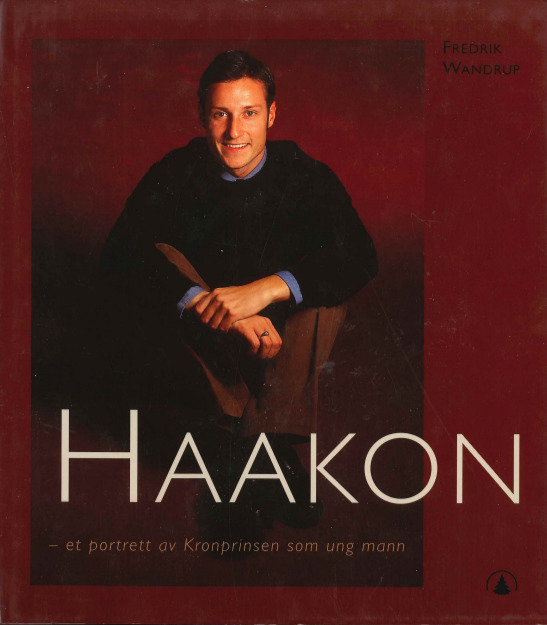
Fredrik Wandrup of Dagbladet, with his book Haakon – a portrait of the Crown Prince as a young man, was published this week to coincide with the #Crown-Prince’s 25th birthday. He is the sole candidate for the symbolic role of head of the military, the state and the church – a profession still practised by only five per cent of the world’s countries.
So what of this week’s birthday boy and populism? In fact, he may well be the salvation of the ailing monarchy. The man with diluted royal blood is thoughtful and culturally minded. It is precisely here that his challenge for the future lies.
One cannot help but acknowledge the Berkeley student’s interest in political philosophy. He thoughtfully refers to philosophers such as Mill, Montesquieu, Rawls, Machiavelli and Nozyck – the latter two being names that Dagbladet’s Fredrik Wandrup cannot even spell.
Haakon Magnus has, in his own words, ‘always been a thinking and searching person.’ As early as the age of fifteen, the Prince was referring to #Nietzsche’s assertion of ‘the death of God’; he is fascinated by the fundamental idea of anarchism and follows Wittgenstein’s emphasis on questions rather than answers. The future head of the armed forces adopted the pacifist maxim ‘If you kill others, you kill yourself’ at an early age.
Today, he regards religion as ‘a walking stick’ and tends to interpret the Bible metaphorically – nor does he likely take the Constitution’s stipulation that ‘the person of the King is sacred’ entirely seriously either.
In the Platonic sense
The Crown Prince could assume the position of a symbolic philosopher-king in the Platonic sense. Our future king could use his reflective nature to demand ethical or cultural justification from government ministers – those who were once merely the King’s advisers.
Haakon Magnus should let the cruise ships sail their own course and be a politically active individual. The self-proclaimed ‘citizen of the world’ ought to be the stick behind the mirror, a royal voice of reason posing uncomfortable questions, a ‘troublemaker’ who breaks with convention and calls for the cultural refinement our government continues to lack.
King Harald will soon reach retirement age. Could it not be time for renewal, for a philosophical radicalism, in which the son who calls for ‘people who are passionate’ could ascend the throne at the age of 30 – whilst the Crown Prince is still young enough to get involved?