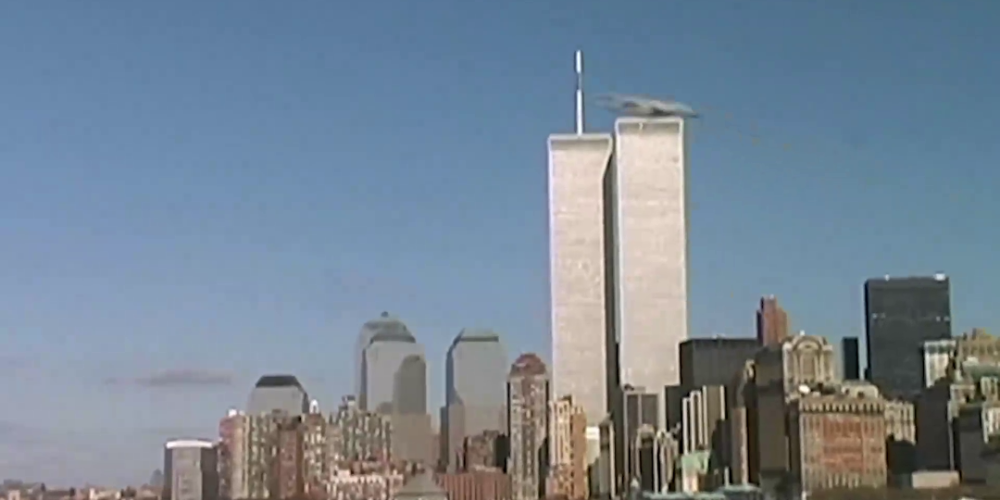
Every anniversary brings its harvest of 9/11 films, and the 25th has yielded a bumper crop. Two of this season’s documentaries work the same ground at the foot of the towers and land at opposite ends of the evidentiary scale. The Responders: Breaking the Silence gathers firefighters, paramedics, and police to describe explosions they heard, saw, and felt that morning, and calls for 9/11 to be reopened as a criminal case. Its director, John Kirby, and producer, Libby Handros, have credits running from PBS’s Inside Story to the Tribeca favorite The American Ruling Class, and are now at work on Four Died Trying, a series on the assassinations of the 1960s. 32 Frames: A 9/11 Mystery, from the investigative journalist Jon Walczak, whose podcasts Missing in Alaska and Missing on 9/11 trained him in the patient work of tracing the vanished, follows a single roll of film out of the rubble toward the person who shot it. One film asserts. The other investigates, and knows exactly where its knowledge stops.
The Responders has one great asset: its witnesses. These men and women came to their jobs from the military and dug through the pile for months, which makes them hard to wave off. The film’s thesis arrives late, when Graeme MacQueen, the retired McMaster University scholar who found 118 of roughly 500 FDNY oral histories describing explosions, sits down with Det. Sgt. Susan Keane of the Port Authority Police. Working from her handwritten statement, he walks her through six signatures of a blast: the sound; the pressure wave that threw her; the vacuum that «sucked the breath out of my lungs»; the rush of air and debris coming back; burns on her face and chest; and shrapnel that, she says, is still working its way out of her body. Other voices fill in each category, down to a lobby turnstile burned and twisted. «At least I know I’m not crazy,» Keane says, adding that 150 others described the same thing. Bob McIlvaine describes the remains of his son, Bobby, killed, he believes, by a blast in the North Tower lobby seconds before the plane struck. It is the film’s strongest stretch, and it arrives more than an hour in.
The hour before it is the problem, and from filmmakers with this pedigree the loose construction is a surprise. The responders deserve every accolade, and their grief is real, but the long retelling of the day offers footage most viewers could narrate by now. A thesis this serious needs evidence built toward it, and Building 7 shows the cost of skipping that work. The film plays archival clips of NIST’s lead investigator, Shyam Sunder, lets the responders reject his fire-induced collapse on the strength of their own eyes and ears, and moves on. Testimony against an engineering report is a standoff. The government’s own paperwork offered better ammunition: NIST’s final report conceded 2.25 seconds of free fall. MacQueen’s opening dismissal of «an absurd story about foreign terrorists» reaches further still, and the film never tries to support it.
The Camera in the Rubble
32 Frames shows what building a case looks like. A camera pulled from the rubble was handed in to a small Staten Island memorial in 2002, and its 32 frames were displayed there for two decades without a name attached. An obituary, a battalion chief’s 2001 interview about sheltering under a portico beside «a dispatcher from the Jersey City Fire Department» taking pictures, and a car antenna glimpsed at the edge of a frame led Walczak to Joseph Lovero, a 60-year-old Jersey City fire dispatcher and lifelong fire buff whom a heart condition had kept off the trucks. Lovero hitched a ride through the Holland Tunnel at 85 miles an hour, bolted toward the North Tower with his camera, survived the South Tower’s fall, and was fatally injured when the North Tower came down. He died that night at St. Vincent’s Hospital.
What distinguishes the film is its restraint. Walczak once pinned the photos on another man and says so. The chiefs who knew Lovero put their confidence at «90 plus percent.» The camera itself, which might settle the question through DNA testing, vanished from the memorial sometime between 2016 and 2022. Walczak even sets aside the heroic legend that Lovero died dismantling lobby turnstiles to free trapped people. «We know he took photos,» he says. «Everything else is speculation.» The film ends with responders listing their cancers and remembering being told the air was safe.
That coda points toward the case The Responders wants to make. Roughly 3,000 people were murdered that day. Murder carries no statute of limitations, and the file stays open until the crime is solved. Yet the White House took possession of the story within hours, converted a crime into a war, and the war into invasions abroad. The one criminal track, the Guantánamo military commissions against Khalid Sheikh Mohammed and his co-defendants, has stalled for two decades and never examined how the buildings fell. Meanwhile, the primary physical evidence was hauled off and sold as scrap, much of it shipped to China and India. As early as January 2002, Fire Engineering editor Bill Manning protested the destruction of the steel. Whatever one thinks of the thermite question, the steel was where it could have been settled. The film’s best closing moment belongs to Commissioner Christopher Gioia, standing beside the turnout gear of a fallen firefighter as his fire district backs a new federal grand jury. That is the right demand. The flag-waving laments around it mostly preach to the persuaded, and for audiences beyond the United States they may close more minds than they open.
For the responders, 9/11 remains an open wound. They ran toward an abomination, lost 343 of their own that morning, and have since buried hundreds more to illnesses from the dust. The suspicions voiced in The Responders double that burden. If they are right, their comrades died in a crime whose authors have never been named, and the sacrifice becomes even harder to bear. People whose calling is order and rescue do not arrive at such a conclusion lightly. The wound will keep festering until an investigation takes in what the 9/11 Commission left out: the oral histories, the lobby testimony, the steel. A day of unprecedented failures, first-time events, and improbable coincidences should have woken the country up. Instead we went to war, and Brown University’s Costs of War project puts the bill for the post-9/11 wars at roughly $8 trillion. For what?
Both films handle wreckage from the same pile. Walczak lets a roll of film, an antenna, and a chief’s memory carry the argument, and he stops where the evidence runs out. Kirby has braver witnesses and a graver claim, and he asks us to take the rest on trust. The responders spent months working what they knew was a crime scene. They deserve a film that treats it as one, with the patience of 32 Frames and the courage of its own subjects. The Responders is worth seeing for Keane and the lobby testimony. The film that does them justice is still waiting to be made.